Categories
News

The Euro-Arab Foundation participates in training on violent radicalisation and jihadist extremism

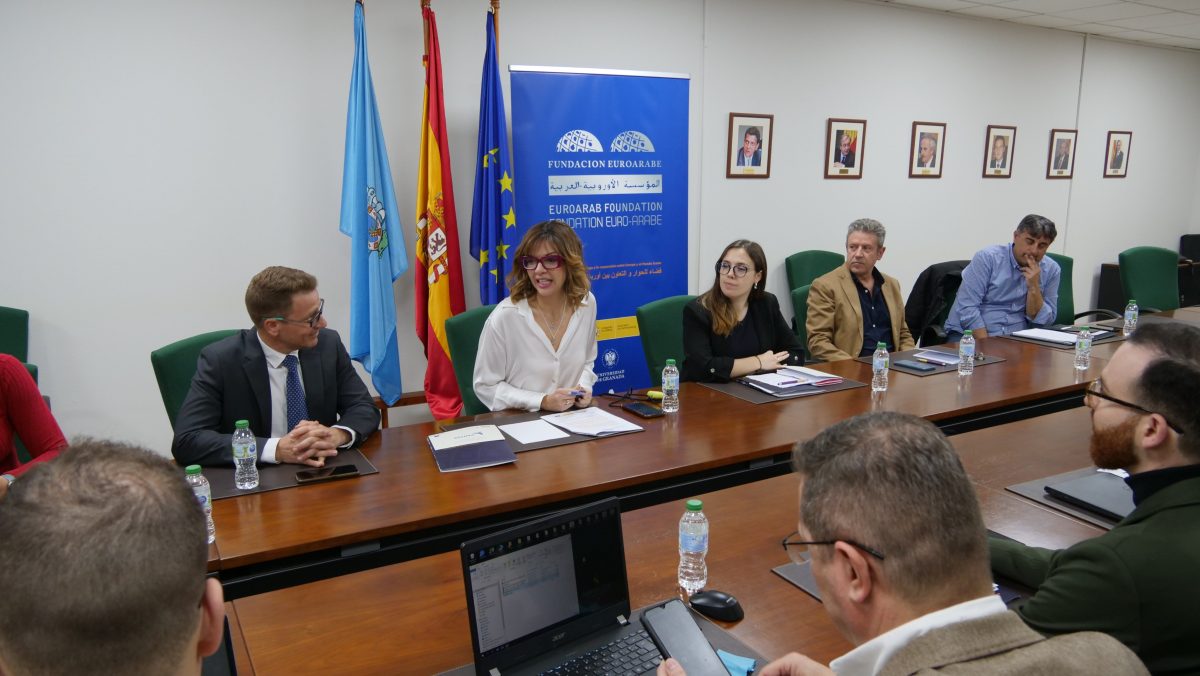
This Thursday, the Euro-Arab Foundation gave the seminar Prevention of Radicalisation in the EU and Member States: policies, strategies and areas of action from multi-level and multi-agency approaches, as part of the University Course on violent radicalisation and jihadist extremism organised by the University Centre of the Civil Guard, attached to the Carlos III University of Madrid, and aimed at the Civil Guard, the judiciary and local authorities.

Javier Ruipérez, Director of Research and Projects at the Euro-Arab Foundation, and Daniel Pérez, researcher at the same, were in charge of this training, whose objectives were to contextualise the launch and consolidation of European prevention policies; to review the evolution of the psychosocial models that explain radicalisation and to address the multi-agency and multi-level prevention approach.

Spanish National counter-terrorism strategy

In this seminar, the Spanish National Strategy against Terrorism (ENCOT-2023), which was approved this week by the National Security Council, served as an example within the state plans that reflect the strategic recommendations of the European Commission.

The researchers from the Euro-Arab Foundation, both belonging to the Area of Prevention of Radicalisation and Violent Extremism, stressed that prevention policies, whether European, national or local, ‘must be based on scientific knowledge, for which it is essential to study both risk indicators and protection indicators, and that it should be a cross-cutting approach that can be used for jihadism as well as for multiple ideologies’.

On the one hand, the need to invest more in primary prevention, the first level of the pyramidal representation of society to which the majority of the non-radicalised population belongs, was stressed. The second level covers the population susceptible to radicalisation and the third level covers radical or terrorist individuals.

For the Euro-Arab experts, there is a risk of population transfer from the first level to the third, due to the current process of polarisation, and the measures to be taken in that case would be much more difficult to implement and much more costly. To avoid this, they said, “it is essential to focus on prevention policies in protection and on people’s resilience and autonomy”.

Finally, the importance of “bringing European policy down to the local level”, through national plans, and ensuring that there is feedback, i.e. “that the local level also inspires national plans and European policies to combat violent radicalisation and extremism”, was also highlighted.

The Euro-Arab Foundation, through its research group, has carried out various training activities on the prevention of radicalisation in European projects in which it participates, in Spanish universities or through the European Radicalisation Awareness Network (RAN).

Prevention and coping with violent radicalisation. A guide for frontline practitioners. Published by the University of Cordoba and co-published by CIFAL and the Euro-Arab Foundation.

Categories
EN Mirad News Projects RADICALIZACION EN

MIRAD project ends bringing together research, policy and practice in the fight against multi-ideological radicalisation

The final event of the European MIRAD project ended two years of work dedicated to assestment and prevention of radicalisation. The objectives of the MIRAD project were achieved thanks to the cooperation of the project consortium partners, to which the Euro-Arab Foundation belongs,  from seven European countries, together with a group of experts from the MIRAD Advisory Board, the KES Advisory Council and members of the Expert Boards on Jihadist Extremism and Right-wing Extremism.

The event was opened by Christiane Hoehn, Principal Advisor to the EU Counter-Terrorism Coordinator, who acknowledged the good work of the MIRAD project and its alignment with the strategic orientations of the European Commission. The final conference was attended by leading practitioners, prison staff, security forces, probation officers, NGOs and policy makers from different EU and non-EU countries.

During the event, the results of the project were presented, such as a tool to assess the reliability and capacity of NGOs to support de-radicalisation processes. Among the most expected results, the adaptation of the IRS risk assessment tool to consider the role of gender and ideology in the radicalisation process with a focus on right-wing extremism and jihadist extremism stands out.

Besides, a series of collaborative protocols for multi-agency transition were presented, stemming from the key role played by CSOs/NGOs and volunteers in promoting reintegration programmes, fostering inter-agency cooperation. The results of mixed-method training courses (training of trainers, e-Learning course, virtual reality training scenarios) to maximise the results of radicalisation disengagement and reintegration programmes were also made public.

Some of the conclusions reached at the final MIRAD event were the still high threat of islamist terrorism and the growing danger of right-wing extremism. The need for rehabilitation outside and inside prison and the need to assess what happens after prison was also addressed, as well as the identification of prisoners vulnerable to radicalisation as a basis for prevention and disengagement, and the promotion of models and protocols for inter-sectoral and inter-institutional collaboration.

Categories
EN Hatedemics News

The Center for Andalusian Studies and the Euro-Arab Foundation will work to combat hate speech in a common European project

The Andalusian Studies Centre (CENTRA), based in Seville, and the Euro-Arab Foundation for Higher Studies, based in Granada, have held a meeting at the headquarters of the latter to coordinate the latest aspects of the European project HATEDEMICS, which will unite them in the task of preventing and combating polarisation and the spread of racist, xenophobic and intolerant discourses and conspiracy theories through technologies based on Artificial Intelligence (AI).

The project, funded by the European Commission, will be coordinated by the Fondazione Bruno Kessler and has thirteen partners: the Euro-Arab Foundation, CENTRA and Maldita. es in Spain; Saher Europe (Estonia), European Association for Local Democracy (France); CESIE, the Fact-Checking Factory SRL and the Commune of Trento (Italy); Solidarity and Overseas SErvice and the Ministry of Home Affairs, Security, Reforms and Equality (Malta) and the Centre for Citizenship Education, the National Research Institute and the Association of Demagogues (Poland).

The Euro-Arab Foundation will lead the work package that will define the approach, the socio-technical requirements and the methodology to be used, considering both the current trends of hate speech and disinformation, online multi-target discrimination and the needs of the target groups of this project, NGOs and CSOs, policy makers, legal authorities, IT companies, journalists and fact-checkers, the academic and research sector and the general public using the Internet and social networks.

The Andalusian Studies Centre, for its part, will be in charge of the report that will form the basis of the future HATEDEMICS Platform with which to prevent, tackle and denounce multi-target discrimination, online hate and misinformation, with updated, specific and effective indicators for better management of hate speech phenomena, applying the results of focus groups and semi-structured interviews, with recommendations for transferability and adaptability for the promotion of alternative narratives.

One of the main goals of HATEDEMICS is to improve the capacities and critical thinking of the target groups with reliable AI tools, combined with advanced data collection methods, will allow for more tailored online interventions resulting in more efficient and effective efforts of both professionals and volunteers. The vision is to maintain fairness and balance by applying appropriate measures and ensuring compliance with legal and ethical standards.

The launch of the HATEDEMICS project is scheduled to take place on 17 April in the city of Trento with a kick-off meeting attended by all partners.

Categories
EN PARTES News Projects

The Euro-Arab Foundation organises a conference in Melilla on interreligious dialogue and hate crime prevention

Participatory approaches to the protection of places of worship is the title given to the forum hosted by the Government Delegation in Melilla on Thursday, organised by the Euro-Arab Foundation for Higher Studies in the framework of the PARTES project funded by the European Commission. The Government Delegate, Sabrina Moh, opened the event by thanking Melilla for having been chosen as the venue for this forum and pointing out the importance of working for the prevention of hate crimes, inter-religious dialogue, tolerance and respect.

“We are witnessing the emergence of messages of polarisation and tension, and I think it is vital to work to prevent hate crimes, which is something that we must do together institutions and entities while focusing on this issue so that society is aware of this problem and tools are put in place to put an end to it”, Moh indicated.

On his part, the Executive Secretary of the Euro-Arab Foundation, Antonio Sánchez Ortega, recalled that the aim of the organisation he represents is to create bridges of collaboration, knowledge and research. He therefore recognised that Melilla is a “privileged” place, as it is an “estuary of civilisations and cultures which perfectly demonstrates this coexistence and this model of participation”. Sánchez stressed that the results of these conference “will feed into the PARTES project and it will serve as a model for transfer to civil society”.

The working session was also attended by the representative of the European Commission’s funding programme, Tamara Muñoz, representatives of the State Security Forces and Corps, and members of the city’s religious communities, among other civil society organisations.

The PARTES project

The European PARTES project started on 31 March 2023 and is scheduled to end in April 2025. It proposes to develop, through an empirical, inclusive and participatory methodology, a comprehensive prevention model for the protection of places of worship (synagogues, mosques, and churches) in the European Union, thus also preventing hate crimes against religious communities.

The Euro-Arab Foundation leads the “Threats and Responses Overview” Work Package which coordinates the research to establish an overview of attacks on religious communities, hate crimes against them, and existing protection measures. It identifies also good practices for cooperation between religious institutions and public authorities, for the protection of places of worship. The Euro-Arab was also in charge of organising the participatory workshop in Melilla, held on Wednesday at the UGR, and the inter-religious forum on Thursday at the headquarters of the Government Delegation in Melilla.

Euroarab researcher and organiser of the PARTES conference in Melilla, José Luis Salido, giving the participatory workshop, held at the UGR.
Euro-Arab Foundation’s researcher and organiser of the PARTES conference in Melilla, José Luis Salido, giving the participatory workshop, held at the UGR.
Inauguración del taller participativo, celebrado en la UGR, a cargo de César Solano, decano de la Facultad de Ciencias Salud (UGR), Tamara Muñoz, responsable de programa de la Dirección General de Migraciones y Asuntos de Interior de la Comisión Europea y José Luis Salido, investigador de la Fundación Euroárabe y organizador de las jornadas.
Opening of the participatory workshop, held at the UGR, by César Solano, Dean of the Faculty of Health Sciences (UGR), Tamara Muñoz, Programme Officer at the European Commission’s Directorate-General for Migration and Home Affairs, and José Luis Salido, researcher at the Euro-Arab Foundation and organiser of the conference.
Meeting of the Euro-Arab researchers, José Luis Salido and Daniel Pérez, with Fadela Mohatar, Councillor for Culture, Cultural Heritage and the Elderly of Melilla and Marta Marzol, advisor for Culture of the Council, in the framework of the PARTES project conference.
Inauguration of the forum 'Participatory approaches to the protection of places of worship' at the Government Delegation of Melilla, with the Government Delegate, Sabrina Moh, and the Executive Secretary of the Euro-Arab Foundation, Antonio Sánchez Ortega.
Opening of the forum ‘Participatory approaches to the protection of places of worship’ at the Government Delegation of Melilla, with the Government Delegate, Sabrina Moh, and the Executive Secretary of the Euro-Arab Foundation, Antonio Sánchez Ortega.
Categories
EN Shield News Projects

The SHIELD project comes to an end with a Guide for the Protection of Places of Worship

On 28 February, the final conference of the European SHIELD project took place in Brussels with the presentation of the results as a formula for coexistence between people of different faiths. The event was attended by the programme manager of the European Commission’s Directorate-General for Migration and Home Affairs, Tamara Muñoz, as well as representatives from ten European countries and the three monotheistic religions (Judaism, Christianity and Islam). The project has aimed to identify and propose concrete solutions to burning issues of common interest, such as assessing the risk and vulnerability of places of worship to potential terrorist attacks, providing a comprehensive guide (downloadable here) to increase security.

SHIELD Handbook
SHIELD Handbook

During the two years of the project, SHIELD has hosted a number of dialogue meetings with the aim of countering religious extremism, with the co-participation of state security forces, society and security technology companies. The final recipients of the results of the SHIELD project, the representatives of religious communities, have played a decisive role in providing advice and suggestions based on cultural reflection when talking about the physical security of infrastructures, aspects such as the environment, culture, social inclusion and inter-religious dialogue are underlined.

José Mª Riera, researcher at the Euro-Arab Foundation for Higher Studies, participating in the final SHIELD conference.

At the final conference it became clear that synagogues, churches and mosques are of vital importance for social coexistence and cohesion in the European Union. However, they have been and can become targets of potential terrorist attacks, as witnessed in the last decade. For those involved in SHIELD, it is necessary to create a cultural shield that defends individuals and religious communities, but it is also necessary to create opportunities to work and take part in projects that facilitate encounter and knowledge sharing. The establishment of projects such as SHIELD between diverse faith identities promotes mutual understanding and increases respect, a synergy that culminates in the development of a common strategy for the reduction of threats and the enhancement of religious freedom.

Categories
News Projects

Euro-Arab Foundation participates in a new project to develop VR skills of vocational training students in Albania

The kick-off meeting of VR Digivet, a European project whose main objectives are to improve the quality and responsiveness of Vocational Education and Training (VET) to economic and social developments, in order to increase the relevance of skills supply for the labor market, while empowering VET providers to strengthen cooperation between private and public stakeholders, took place in Tirana (Albania) on Thursday, February 15 and Friday, February 16.

The project has been developed based on the needs expressed by the Albanian government’s policy document, in particular the NESS 2019-2022, and the recommendations of the European Training Foundation in the framework of the Turin process, with the coordination of the Agenfor International Foundation (Italy) and a consortium including the Euro-Arab Foundation (Spain), HfÖV (Germany), NAES (Albania), Fan S.Noli (Albania), and Service Factory Solutions (Albania). Representatives from all of them have participated in the first project meeting in Tirana, which was attended by the Albanian Government, and where all technical procedures were addressed and the next steps were discussed. VR Digivet representatives also made a study visit to an IT VET center in Gjergji Canco to check the VET center model in which the project will be developed.

The project’s success hinges on active involvement from key stakeholders in developing and overseeing Albania’s VET sector. This collaborative effort includes the Albanian government, VET providers, private sector representatives, experts, and VET students. By engaging in co-designing specific technical solutions, this approach ensures strong local ownership, enhancing its long-term sustainability. To achieve this goal, a public Albanian VR Metaverse for VET will be designed, implemented, and managed by the National VET Authority. Here, national, European, and international partners, along with their trained personnel, will create and deliver immersive training programs, transforming traditional VET roles in the digital realm.

Categories
EN Standup News Projects

European hate-crime battling project STAND-UP put an end with a seminar in Brussels

Brussels, 11 January 2024.- The closure event of the European STAND-UP project, the seminar “Stand Together Against Hate: A Multi-Agency Initiative”, has taken place this Thursday in the Residence Palace, Brussels, with the intervention of experts on hate speech crime, and the handout of the Victim Support Handbook as an efficient tool to hate monitoring and reporting. The morning session also included the presentation of the EU policy recommendations on supporting multi-agency cooperation in countering hate crime, making a special mention of the use of technologies for this purpose.

The seminar presented the results of various training programmes in different countries included in the project, creating an environment for in-depth discussions and exchanges. Experts such as Menno Ettema, Magdalena Adamowicz, Nataša Vučković, Akis Karatrandos will spoke on the topic of hate speech crime.

The six European project’s partners – National Commission for Human Rights (Greece), Euro-Arab Foundation (Spain), European Public Law Organization (Greece), Agenfor International Foundation (Italy), and European Association for Local Democracy (France), under the coordination of the Public Prosecutor’s Office at the Ordinary Court of Trento (Italy) –  have shared the afternoon session’s panels on interagency cooperation to tackle hate crimes and hate speech, as well as local pilot success stories and results developed in Veneto, Athens, Andalusia and Trentino-Alto Adige.

The STAND-UP project, co-funded with 748,780.66 euros by the European Commission Directorate General for Justice and Consumers, has taken place from January 2022 and January 2024 and it has focused on public authorities and Civil Society Organizations (CSOs)’ responsibilities and relationships with victims. It has enhanced multi-agency cooperation by establishing harmonized definitions of hate crime, embedded within a blueprint framework for cooperation, and it standardizes reporting procedures through the co-design and validation of reporting forms for law enforcement agencies, and CSOs/NGOs. STAND-UP has deepened the relevant actors’ point of view of hate speech and hate crime, including the sentiments behind them on a local level.

Project’s web page.

Categories
EN Unchained News Projects VANGUARD VANGUARD

VANGUARD: Reinforcing the fight against THB

Twenty-two organisations from twelve different countries joined forces for a new Research and Innovation EU project, VANGUARD (adVANced technoloGical solutions coupled with societal-oriented Understanding and AwaReness for Disrupting trafficking in human beings).

VANGUARD is a three-year project, funded by the European Union under the Horizon Europe programme, which aims to strengthen the fight against trafficking in human beings (THB), at the nexus of advanced technological solutions of understanding, awareness raising, and training to disrupt the trafficking chain (online and offline) at an early stage and to address the culture of impunity. In addition, it aims to provide an improved intelligence picture of THB, with particular focus on THB for purposes of sexual exploitation, labour exploitation, and forced criminality.

This will be achieved through developing a modular and trustworthy suite of tools for detecting, identifying, investigating, and preventing online-facilitated THB activities and THB-related activities at (border) checkpoints based on the analysis of online multimedia content and multimodal streams, by leveraging the latest advancements in Artificial Intelligence (AI).

CERTH-ITI, and in particular the Multimodal Data Fusion and Analytics Group (M4D), being the Coordinator of the VANGUARD project, together with the Visual Computing Lab (VCL) of CERTH-ITI, hosted the two-day kick-off meeting of the project on November 7 and 8, 2023 at their premises in Thessaloniki, Greece. More than 30 attendees representing all the partners from research and academic institutions, technology-oriented companies, and civil society organisations, as well as Police and Border Guard Authorities, had the opportunity to set up a clear action plan for the upcoming months, thus facilitating the fruitful and successful implementation of VANGUARD objectives. The kick-off meeting was also attended by the European Commission Project Officer who welcomed this attempt, underlining in parallel the need for continuous collaboration and a multidisciplinary approach to effectively tackle THB behaviours, resulting in effective policy making initiatives.

The Consortium

Coordinator: CERTH (EL); Partners: GGMH (DE), UCSC (IT), WAT (PL), KU Leuven (BE), ΚΕΜΕΑ (EL), CEA (FR), ICCS (EL), FUNDEA (ES), ENG (IT), ATOS IT (ES), ITTI (PL), RAD (RO), BayHfoD (DE), MJ (PT), MCH (ES), GPI (MD), HELLENIC POLICE (EL), EPBGB (EE), RBP (RO), GIBP (MD), CENTRIC (UK).

Categories
News Projects VANGUARD

VANGUARD launches its efforts aimed at combating human trafficking

The VANGUARD project focuses its efforts on advanced technological solutions, combined with actions to raise awareness and understanding within society, aiding in the dismantling of human trafficking.

This week, on November 7th and 8th, the new European project in which the Euro-Arab Foundation participates, the VANGUARD project on human trafficking, was presented in Thessaloniki, Greece.

The VANGUARD project centers its work on advanced technological solutions, coupled with actions aimed at understanding and raising awareness within society to help dismantle human trafficking. Various interdisciplinary activities will be carried out throughout the program’s implementation, designed for the next three years, incorporating research and specific transfer and training actions.

VANGUARD, funded by the Horizon Europe Programme, is supported by a consortium of 22 organizations – universities, technological development centers, civil society organizations, and public authorities – from twelve European countries: Germany, Belgium, Spain, Estonia, France, Greece, Italy, Moldova, Poland, Portugal, the United Kingdom, and Romania. The Spanish partners in this project are the Euro-Arab Foundation, ATOS, and the Local Police of Murcia.

A team from the Projects Department of the Euro-Arab Foundation attended the sessions in Thessaloniki, including researchers José Riera and Karen Hough, and the head of the Projects Department, Javier Ruipérez. Ruipérez presented the different projects in which the Euro-Arab Foundation has been working in recent years on the specific issue of human trafficking, such as INTERCEPTED, UNCHAINED, or BIGOSINT.

Intervention by the Director of the Projects Department of the Euro-Arab Foundation, Javier Ruipérez, on Human Trafficking:

“Trafficking in human beings (THB) is a serious transnational organized crime with diverse dynamics that can take various forms: trafficking for sexual exploitation is the most common form in the EU (60%), followed by labor exploitation (15%), while other forms include forced criminality, forced begging, organ extraction, forced marriages, and others.

Between 2008 and 2019, the number of identified victims of human trafficking more than tripled worldwide, and the total number of victims is much higher than recorded.

Human trafficking not only affects EU Member States but it also has a multidimensional international impact, violating the fundamental rights of individuals and creating security issues in all areas.

Almost 46% of trafficking victims are adult women, and 2 out of 10 are underage girls. Additionally, one-third of all detected victims are girls and boys, and 20% are adult men (UNODC, 2020). More than half of trafficking victims within the EU are EU citizens, and most are victims of internal trafficking within their own country.

As indicated by UNODC, traffickers take advantage of certain vulnerabilities of the victims, caused not only by personal factors but also by economic, social, and societal factors (for example, economic recession, COVID-19 pandemic, conflict-induced migration, etc.), targeting marginalized individuals in difficult situations.”

Categories
EN Standup News

«Stand Together Against Hate: A Multi-Agency Initiative»

On January 2024, the EU STAND UP project final meeting will be held in Brussels. Registration is open.

On Thursday 11 January 2024, the seminar “Stand Together Against Hate: A Multi-Agency Initiative” will take place in Brussels, at the Residence Palace, as part of the European project STAND-UP, an initiative to combat hate crime in the European Union.

This event, organised by STAND-UP project, will bring together organisations and experts in the field, with the aim of preventing and combating hate crime through the cooperation of law enforcement agencies and organisations working on these issues.

The seminar will present the results of various training programmes in different countries included in the project, creating an environment for in-depth discussions and exchanges. Experts such as Menno Ettema, Magdalena Adamowicz, Nataša Vučković, Akis Karatrandos will speak on the topic of hate speech crime. 

The Victim Support Handbook, developed within the framework of STAND UP activities in collaboration with public authorities and NGOs and CSOs, will also be presented in order to empower people affected by hate crimes.

The afternoon session is dedicated to a panel debate led by EPLO, GNCHR, TNDJUPOL, AGENFOR and FUNDEA.

In addition, the Greek National Commission for Human Rights (GNCHR) will present a policy paper outlining effective strategies and policies to combat hate crimes in the European Union.

Link to register for the seminar:

https://docs.google.com/forms/d/e/1FAIpQLSe7Yi1RkCc_OYIchUt_AcPFay9JZgP3lsKfsEFyay9i4gdYMg/viewform

The main objective of the STAND-UP project is to improve inter-agency cooperation in the fight against hate crime through the design, development and implementation of a new inter-agency model led by public authorities.