Categories
News VANGUARD VANGUARD

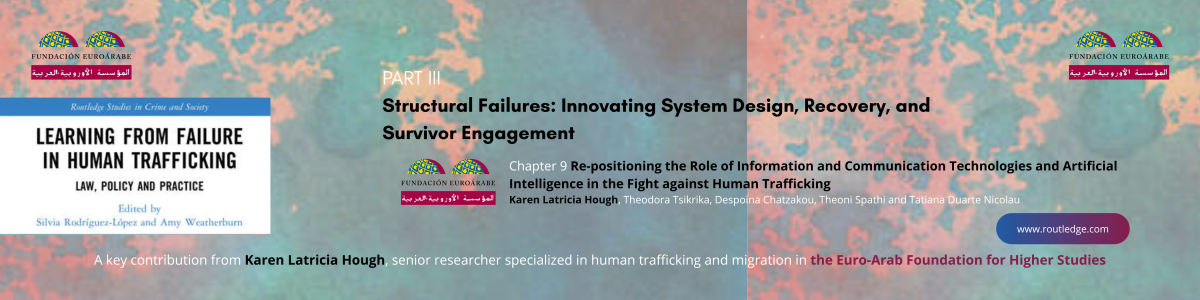
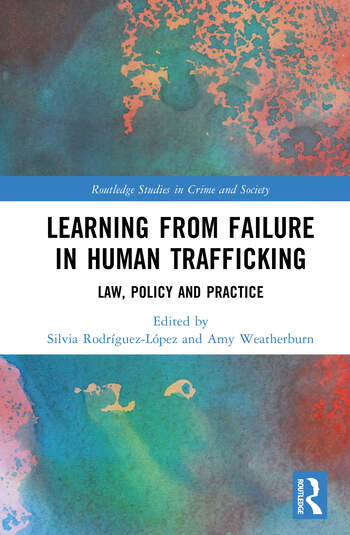
Karen Latricia Hough, VANGUARD project’s researcher, contribute to the volumen ‘Learning from Failures in Human Trafficking’

Hough co-authors chapter 9 ‘Re-positioning the Role of Information and Communication Technologies and Artificial Intelligence in the Fight against Human Trafficking’

Karen Latricia Hough, senior researcher at the Euro-Arab Foundation for Higher Studies currently developing VANGUARD project, has analyzed the importance of information and technological advances—such as artificial intelligence—alongside fellow researchers Theodora Tsikrika, Despoina Chatzakou, Theoni Spathi, and Tatiana Duarte Nicolau.

The article co-authored by Hough, Tsikrika, Chatzakou, Spathi, and Duarte Nicolau constitutes Part III of a publication supervised by Silvia Rodríguez-López, a senior researcher in criminal law at the University of A Coruña, and Amy Weatherburn, an FWO Senior Postdoctoral Fellow at the KU Leuven Institute for European Law, specializing in human trafficking, forced labor, migration, and fundamental rights law.

A collection published by the prestigious Routledge, structured around three core pillars

This monograph lays the groundwork for a paradigm shift in the anti-human trafficking literature, identifying where current approaches fall short and how these shortcomings might be addressed. Its approach is accessible and multidisciplinary, bringing together academics and legal practitioners to identify critical gaps in global response systems.

The volume is structured around three foundational pillars. The first part challenges outdated definitions of exploitation, particularly with regard to the criminal exploitation of minors, sex work, and labour trafficking. The second evaluates operational failures in victim identification and protection, drawing on recent, real-world case studies from across different continents, including cross-border drug smuggling in Chile, cyber-scam compounds in Southeast Asia, and the high-profile case of Dominic Ongwen at the International Criminal Court. Finally, the monograph turns to structural failures, highlighting the role of artificial intelligence in the fight against human trafficking, as well as the importance of integrating survivor testimony and lived experience into research, legislative, and policy-making processes.

The ultimate aim is to analyse why past measures have failed and to provide actionable, evidence-based, survivor-centred solutions to redefine future legislation, policy, and practice worldwide.

Categories
News VANGUARD VANGUARD

Red Flags: a serious game against child trafficking developed by VANGUARD

Accessible online for all audiences

The VANGUARD project, focused on developing technological solutions against human trafficking, has launched the game ‘Red Flags’, whose development involved the Euro-Arab Foundation in the design and oversight of the content script, a key piece given that it is an interactive, role-based game built around a series of dialogue sequences.

VANGUARD is a highly innovative, interdisciplinary project running over three years, involving a total of twenty-two partners from twelve countries, and backed by €4.5 million in funding. Part of this budget has been allocated to ‘Red Flags’, a serious game that adopts an engaging format prioritizing broad, straightforward accessibility aimed at social and educational professionals as well as parents and adolescents.

The goal is to educate people about one of the most common strategies used to recruit victims: the ‘loverboy’ method and the ‘love bombing’ tactic, which use supposed romantic relationships to attract, persuade, and ultimately subdue those who end up in a situation of risk until they are sexually exploited.

A campaign against the recruitment of minors through social media

The ‘Red Flags’ campaign has been designed for social media with one of the groups at highest risk of being recruited online in mind: adolescents and minors. Using accessible language, an informal style, and a series of short videos shared on the channels that are part of this population segment’s everyday life, ‘Red Flags’ is being introduced to young people in Spanish, English, German, Italian, Portuguese, and Greek.

Categories
News Projects VANGUARD

The Euro-Arab Foundation Presents VANGUARD’s Intelligence Analysis Conclusions to GRETA

On June 24, researcher Karen Hough, representing the Euro-Arab Foundation for Higher Studies, presented the conclusions of the VANGUARD Project’s intelligence analysis on human trafficking to the sixteen independent experts of GRETA (Group of Experts on Action against Trafficking in Human Beings). This Council of Europe body is responsible for monitoring the implementation of the Convention on the matter in Strasbourg.

This presentation is part of the project’s contribution to advancing intelligence-led responses to trafficking across Europe. Drawing on multidisciplinary research, the analysis examined emerging trafficking dynamics, the adaptation of organized crime, and shifting exploitation patterns. The findings provide a strategic evidence base to inform policy development, operational decision-making, victim identification, and the responsible deployment of advanced technological tools to support the prevention, detection, and disruption of trafficking networks in both national and transnational contexts.

A central focus of the presentation was the epistemological and operational value of survivor expertise within intelligence-led responses to human trafficking. Rather than positioning survivors solely as recipients of protection and assistance, the analysis recognized them as critical repositories of knowledge whose lived experiences generate unique forms of intelligence that are often inaccessible through conventional research methods.

Survivor-informed perspectives provide valuable insights into recruitment mechanisms, coercive control, exploitation pathways, barriers to reporting, and institutional responses, strengthening both strategic and operational intelligence. Furthermore, the presentation argued that survivor expertise must be integrated not only into policy and operational practice, but also into the design and monitoring of technologies aimed at combating human trafficking.

The subsequent discussion with GRETA underscored the importance of interdisciplinary collaboration among intelligence professionals, researchers, survivors, law enforcement, civil society, and technology developers. Integrating these perspectives can reinforce early victim identification, enhance intelligence collection and analysis, support responsible technological innovation, and optimize the disruption of organized trafficking networks, while promoting the sustainable recovery and resilience of survivors.

Human Trafficking for the Purpose of Forced Criminality on the Rise in Europe

In its latest annual report, GRETA expressed concern over the increase in human trafficking for the purpose of forced criminality, urging European Union member states to step up victim identification and effectively apply the non-punishment principle. The report, which reviews progress in implementing the Council of Europe Convention on Action against Trafficking in Human Beings, highlights that people’s vulnerabilities are increasingly being exploited to force them into committing crimes, ranging from shoplifting and forced begging to cannabis cultivation, drug trafficking, and online financial fraud.

Victims are typically recruited through fake job offers on social media and internet platforms, with minors and individuals in situations of extreme social exclusion or precarious migration status being the most affected groups. The report emphasizes that many of these victims are not recognized as such by law enforcement and judicial authorities, which causes them to end up being arrested, prosecuted, and convicted for the crimes they were coerced into committing, rather than receiving the protection and assistance they are entitled to under the Council of Europe Convention on Action against Trafficking in Human Beings.

Categories
News Projects VANGUARD

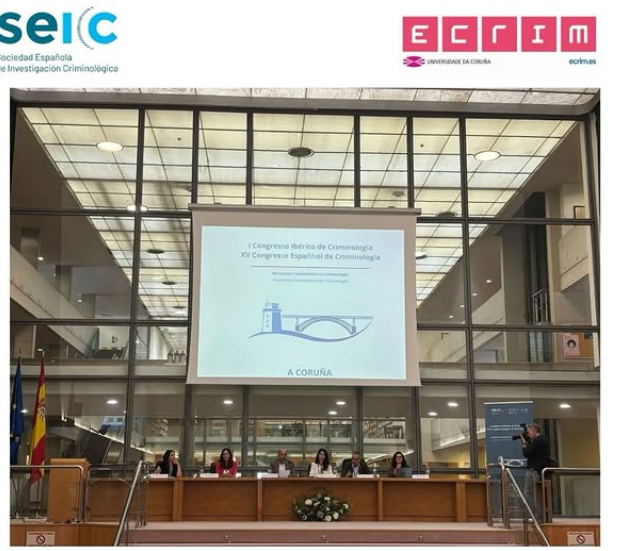
The Euro-Arab Foundation Presents VANGUARD Project Research at the XV Spanish Congress of Criminology

On June 10, the 1st Iberian Congress / XV Spanish Congress of Criminology (SIEC) hosted the presentation of the research paper “Repositioning the Role of ICTs and AI in Combating Human Trafficking.”

The study was conducted by Karen Latricia Hough and Noelia Gómez Bosque (Euro-Arab Foundation), Theodora Tsikrika, Despoina Chatzakou, and Theoni Spathi (CERTH), alongside Tatiana Duarte Nicolau (University of Granada), in collaboration with KU Leuven. Drawing from the findings of the Horizon Europe VANGUARD project, the research analyzed how anti-trafficking efforts have struggled to respond to the growing digital dimensions of human trafficking, while perpetrators increasingly weaponize AI and digital technologies to facilitate recruitment, coercion, and exploitation.

Based on more than 220 sources and 67 in-depth interviews with survivors, perpetrators, law enforcement, border guards, policymakers, NGOs, and experts, the study identified major vulnerabilities in current anti-trafficking responses. These include:

  • Fragmentation of data systems.
  • An over-reliance on reactive policing approaches.
  • Limited involvement of survivors.
  • Risks posed by algorithmic bias and the misuse of surveillance technologies.

The presentation also highlighted how online trafficking and poly-exploitation (which encompasses sexual exploitation, forced criminality, and labor exploitation) continue to evolve faster than many institutional responses. To address this, the VANGUARD project introduced AI-driven tools, co-developed with key stakeholders, to help anticipate and disrupt digital trafficking pathways.

However, the researchers emphasized that technology alone cannot solve systemic challenges. The presentation called for stronger human rights protections, enhanced training for front-line staff, refined regulatory frameworks, and more inclusive, survivor-centered innovation processes.

The paper concluded by advocating for a paradigm shift: moving from fragmented and reactive anti-trafficking strategies toward coordinated, evidence-based, and ethically grounded approaches that are better adapted to the realities of the digital age.

The 1st Iberian Congress / XV Spanish Congress of Criminology, organized under the slogan “Shared Horizons in Criminology” between June 10 and 12, is promoted by the Spanish Society for Criminological Research (SEIC) alongside its Portuguese counterparts. This scientific gathering serves as a strategic forum to debate the most pressing methodological, theoretical, and practical challenges within the discipline.

Categories
News Projects VANGUARD

University of Granada Master’s Students Engage with VANGUARD Project Through “Red Flags” Awareness Game

On 28 May, the Euro-Arab Foundation’s researcher, Karen Latricia Hough, in collaboration with Marina Garcia Carmona (UGR) delivered a seminar for students enrolled in the Master’s Programme in Peace and Cooperation entitled “From Coercion to VANGUARD: Advanced Technological and Societal Solutions to Disrupt Trafficking in Human Beings” at the University if Granada.

The seminar presented the VANGUARD project, its methodologies, and its anticipated impact in addressing trafficking in human beings (THB). The session actively engaged students and other stakeholders present, in reflection and discussion on the challenges posed by THB and the role of innovation in prevention and detection.

The seminar introduced the multidisciplinary approach of the VANGUARD project in combating THB and demonstrated how trustworthy artificial intelligence could support the detection and prevention of online-facilitated trafficking activities, including those occurring at border checkpoints. Participants also explored the societal, ethical, and behavioural dimensions of THB, while being encouraged to think critically about their own role in prevention and responsible engagement.

A particularly innovative aspect of the seminar was the presentation of awareness-raising tools developed within the project, including the serious game Red Flags.

The game, created entirely from the innovative research conducted within the VANGUARD project with survivors of THB, frontline practitioners, policy makers and perpetrators, provided students with an interactive opportunity to engage with the subject matter. During the session, students tested the game’s usability, played through its scenarios, and provided valuable feedback and recommendations. Their participation represented an important contribution to the ongoing development and refinement of the project’s educational and awareness-raising activities.

Categories
News Projects VANGUARD

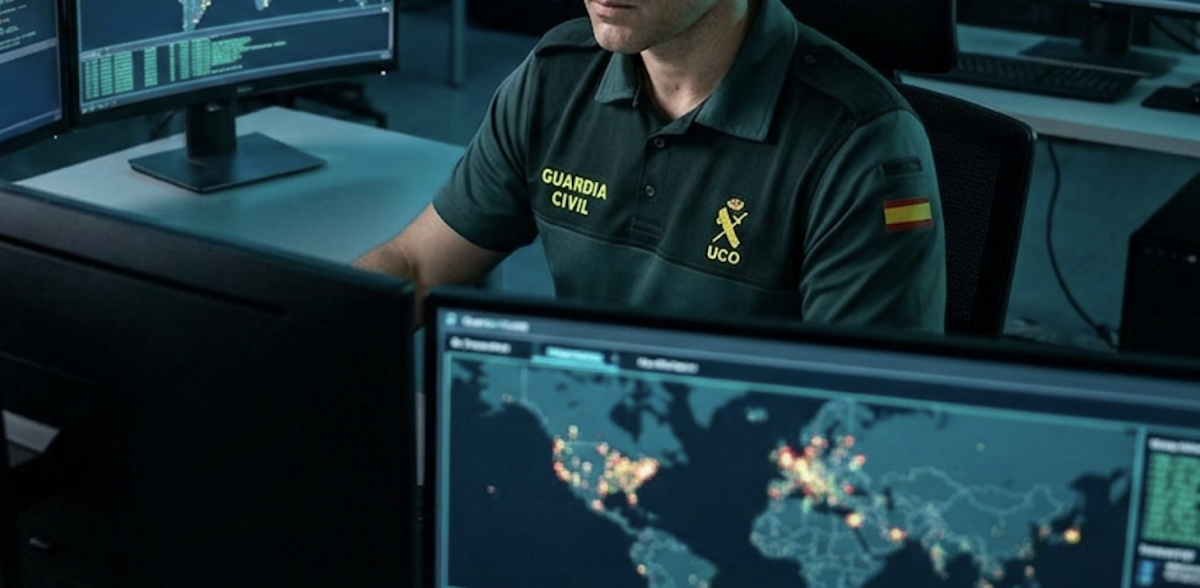
The Euro-Arab Presents the VANGUARD Project to Guardia Civil Anti-Trafficking Unit at Madrid

On 22 May 2026, the Euro-Arab Foundation researcher, Karen Latricia Hough, alongside Despoina Chatzakou and Theoni Spath from CERTH, Roberto Acquaviva (ENG) and Sara Diez and Jiang Zhicheng (Bull), delivered an online presentation of the Horizon Europe VANGUARD Project to the Anti-Trafficking Unit of the Guardia Civil at Madrid Headquarters.

The session showcased the project’s innovative approach to combating trafficking in human beings through the integration of advanced AI-supported technologies, operational intelligence tools, and multidisciplinary social-scientific research. The presentation highlighted how the VANGUARD project is developing ethical, human-centred, and technologically advanced solutions to strengthen the prevention, detection, and investigation of trafficking networks across Europe.

Key social-scientific findings emerging from the project’s ongoing research activities were presented, including insights into evolving trafficking patterns, victim protection considerations, and policy recommendations aimed at enhancing operational responses and cross-border cooperation among law-enforcement and security stakeholders. Researchers also conducted an online demonstration of the VANGUARD ToolSuite, presenting capabilities designed to support law-enforcement authorities in identifying trafficking activities, analysing complex criminal networks, and improving intelligence-led investigations.

Funded under the European Union’s Horizon Europe Programme, the VANGUARD Project brings together leading research organisations, technology providers, and security stakeholders to advance innovative, ethical, and collaborative solutions against trafficking in human beings.

The Euro-Arab Foundation is part of the consortium of this project, which began in 2023 and is scheduled to conclude in December of this year, 2026.

Categories
News Projects VANGUARD

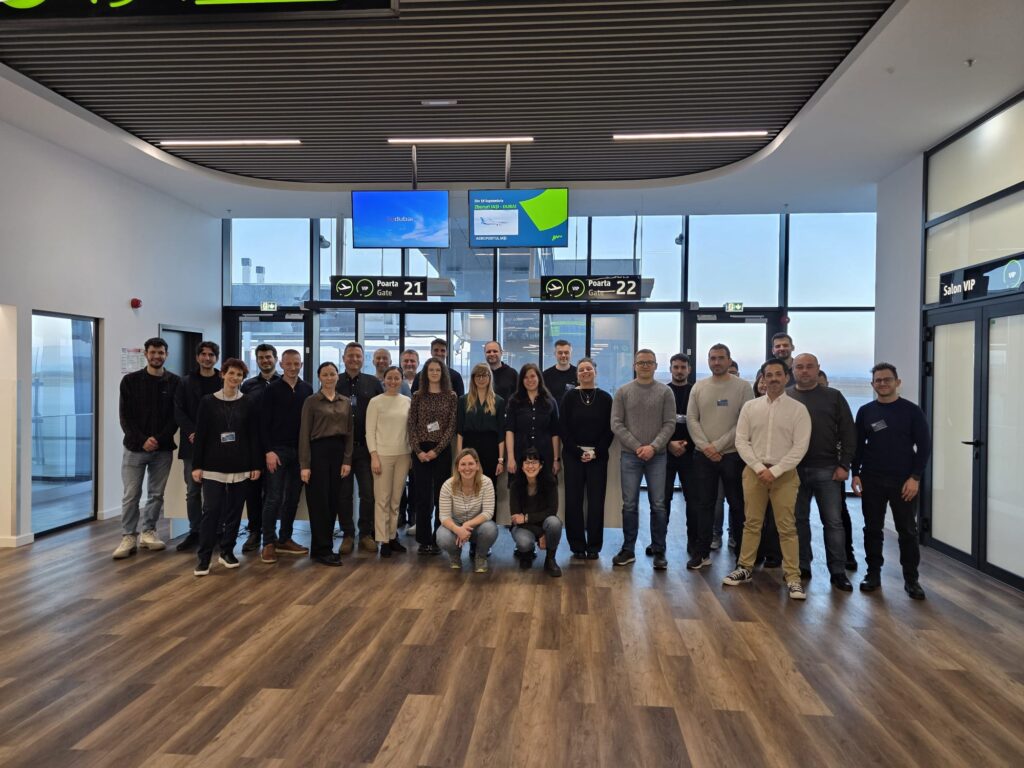
Strengthening the Fight Against Online Trafficking Through Specialised Training for Law Enforcement in Romania

On 4 March, researcher Karen Hough from the Euro-Arab Foundation for Higher Studies delivered a specialised training session for police and border control officers in Romania, focusing on the growing risks of human trafficking in digital environments. This initiative was directly informed by the research results of the VANGUARD project, which analyses how exploitation is increasingly shifting into online spaces.

The training aimed to equip frontline professionals with advanced knowledge and practical tools to identify, prevent, and disrupt trafficking activities at their earliest stages. Drawing on evidence generated by VANGUARD, the session addressed key risk factors, vulnerability indicators, and emerging strategies used by criminal networks, such as online grooming, misuse of digital platforms, and concealment techniques. It also emphasised the practical application of this knowledge, translating project findings into operational solutions to strengthen detection capabilities, improve victim protection, and enhance cross-border cooperation between agencies.

The Fundación Euroárabe de Altos Estudios is actively involved in the European Horizon Europe VANGUARD project, an international initiative aimed at strengthening the fight against human trafficking through advanced technological solutions, specialised training, and collaboration between key stakeholders. The project brings together a broad consortium of European research institutions, law enforcement agencies, and civil society organisations, and focuses on improving the detection, investigation, and prevention of trafficking, particularly in its online and cross-border dimensions, through the development of artificial intelligence and data analysis tools.

Categories
News Projects VANGUARD

Strengthening the Fight against Online Trafficking through Specialised Training for Law Enforcement in Romania

On March 4, Karen Hough, a researcher at the Euro-Arab Foundation for Higher Studies, delivered specialised training for police and border control officers in Romania, focusing on the growing risks of human trafficking in digital environments. This initiative was directly supported by the research findings of the VANGUARD project, which examines how exploitation is increasingly shifting toward online spaces.

The training aimed to equip frontline professionals with advanced knowledge and practical tools to identify, prevent, and dismantle trafficking activities in their early stages. Based on evidence generated by VANGUARD, the session addressed risk factors, indicators of vulnerability, and new strategies used by criminal networks, such as digital grooming, the misuse of online platforms, and concealment techniques. In addition, the session emphasised the practical application of this knowledge, transforming the project’s findings into operational solutions that strengthen detection capabilities, improve victim protection, and promote cross-border cooperation among agencies.

The Euro-Arab Foundation for Higher Studies is actively involved in the European Horizon Europe VANGUARD project, an international initiative aimed at strengthening the fight against human trafficking through advanced technological solutions, specialised training, and cooperation among key stakeholders. The project brings together a broad consortium of European research institutions, law enforcement agencies, and social organizations, and focuses on improving the detection, investigation, and prevention of trafficking (particularly in its online and cross-border dimensions) through the development of tools based on artificial intelligence and data analysis.

Categories
News Projects VANGUARD

World Day Against Trafficking in Persons

Human trafficking involves the recruitment, transportation, transfer, harbouring or receipt of persons by means of threats, use of force or other forms of coercion, for the purpose of exploitation, which may be sexual, labour-related, or for the removal of organs, among others.

The United Nations General Assembly designated 30 July as World Day Against Trafficking in Persons in 2013, with the aim of mobilising resources and efforts to combat this crime and support victims.

The Euro-Arab Foundation is involved in projects funded by the European Commission, such as VANGUARD, which aims to break the chain of human trafficking from a human rights perspective and put survivors at the centre of policies.

Categories
News Projects VANGUARD

Vanguard Project Shares Groundbreaking Anti-Trafficking Research at KU Leuven Workshop

On 16the June, researchers from the Vanguard project convened a hybrid workshop at KU Leuven University presenting the latest findings from their academic research on the prestigious Horizon Europe anti-trafficking initiative.

The workshop featured a presentation by Karen Hough from the Euro-Arab Foundation and Teresa Forlitti from Hart and Stand in the United States about their collaborative paper, “Creating sustainable models for the inclusion of lived experience experts in anti-trafficking preventative measures and policy making: insights from the Vanguard project”.

Attended by a diverse group of experts, including representatives from the European Commission, academia, and NGOs, the workshop fostered a highly productive and formative discussion. The research results were very well received, highlighting the project’s impact in the fight against human trafficking.

The Vanguard project, a European-financed initiative, is dedicated to strengthening the combat against human trafficking (THB). It achieves this by providing an improved intelligence picture, delivering an advanced and trustworthy suite of tools, and implementing innovative training activities.

Further workshops are planned in the coming months to continue sharing the project’s vital research and foster ongoing collaboration.