Categories
News victory

Inclusive Digital Repository by VicTory to Centralise Knowledge on Support for Victims of Hate Crimes and Extremism

The consortium of the European project VicTory, coordinated by the Euro-Arab Foundation for Higher Studies in Granada, has launched its Information Repository (information-repository.victoryproject.eu) on its website to support victims of hate crimes and extremism. This digital platform was created with the mission of becoming a leading resource library in Europe for the protection and support of victims of violent extremism and hate crimes.

The repository is a key infrastructure for facilitating victims’ rapid access to specialized contact points and support services, as well as ensuring that the knowledge generated during the project is easily accessible to legal professionals, law enforcement agencies, academics, and third-sector organizations across Europe. The platform has been designed to provide a smooth user experience, allowing users to filter information by country, types of crime, and professional profiles.

Among the core contents of this repository are an up-to-date compilation of legal frameworks and case law on victims’ rights at both European and national levels, as well as best-practice guides featuring examples of successful interventions in restorative justice and psychosocial support. The platform also provides direct access to specialized training materials, including the technical manual Manual of Best Practices and Promising Practices (in English) and informational flyers specifically designed to guide the work of justice professionals and social sector workers.

The VicTory project, funded by the European Commission’s Justice Programme, recognizes that mitigating violent extremism necessarily requires proper support for its victims. The repository not only documents the past, but also offers tools for prevention and awareness-raising to help avoid the escalation of violence and to protect social cohesion in vulnerable communities.

Categories
News Projects SHIELDed EN

Women from Diverse Faiths advocate Feminism as a Transformative Axis of Belief at the Euro-Arab Foundation

The Euro-Arab Foundation in Granada held, on March 17, the participatory roundtable “Faith and Feminism: Interreligious Dialogues among Women.” The event, organized by the Euro-Arab’s Chair of Gender Studies under the SHIELDed project, brought together nine experts and leading figures from various spiritual traditions to discuss identity, power, and women’s resistance within spaces of faith.

Introduced by Euro-Arab researcher Rascha Albaba Acosta and moderated by the institution’s project coordinator, José Luis Salido, the event was structured around three cross-cutting themes: intergenerational dialogue, feminist reinterpretations of religion, and the building of alliances in the public sphere.

The right to spirituality and autonomy

During the session, the speakers agreed that faith and feminism are not only compatible, but that their union is a tool for empowerment. Shankari Shaktini, a lecturer in Vedic philosophy, was unequivocal: “Spirituality is mine; if I want to belong to another religion, it is my freedom as an individual,” also denouncing how institutionalized dogma has historically stigmatized the feminine.

For her part, young Christian activist Valentina Pérez Cerezo (Mag+s and Women’s Revolt in the Church) highlighted the internal diversity of Catholicism and the struggle to overcome the “secondary role” to which women are relegated: “We are still Christian and feminist.”

Re-reading texts to reclaim dignity

One of the central points of the debate was the distinction between the original spiritual message and later patriarchal interpretations. Zoraida Alí Morell, a graduate in Philosophy, recalled that “the first believers were women” and that sacred texts, in their essence, dignify the female figure. In this vein, Paloma Medina and Rowan Aly emphasized that the problem lies not in the texts themselves, but in biased readings that reinforce male power structures.

From the perspective of Islam in Europe, lawyer Omayma Boughlala offered a critical reflection on the paternalism of certain sectors of Western feminism: “There are feminists who do not include me because they think I have no voice. How can I participate if it is assumed that I need to be ‘liberated’?”—thus asserting the autonomy of Muslim women to decide on their own symbols and practices.

Education against extremism

The event concluded with a call for religious literacy as an antidote to hatred and exclusion. Susana Lorente, from The Church of Jesus Christ of Latter-day Saints, stated that “knowledge is freedom” and proposed integrating religious diversity into educational curricula. Lola Parras Chica (Tibetan Buddhism) and Medha Tyagi (Vedic tradition) stressed the need to unlearn patriarchal models and restore women’s central role in the transmission of values.

The meeting closed with a shared commitment: the need for women not only to practice their faith, but to become its interpreters and creators of inclusive spaces, transforming religion into a tool for social justice. Read the full post on our blog dedicated to this event.

Categories
News PARTES-COM EN

Free Training for Leaders of Religious Communities on Security and Incident Prevention in Granada (Spain)

Participation in the training is free of charge, although places are limited. Interested individuals can register through the following form:
https://forms.gle/Z11YACeySvFV2RxT8

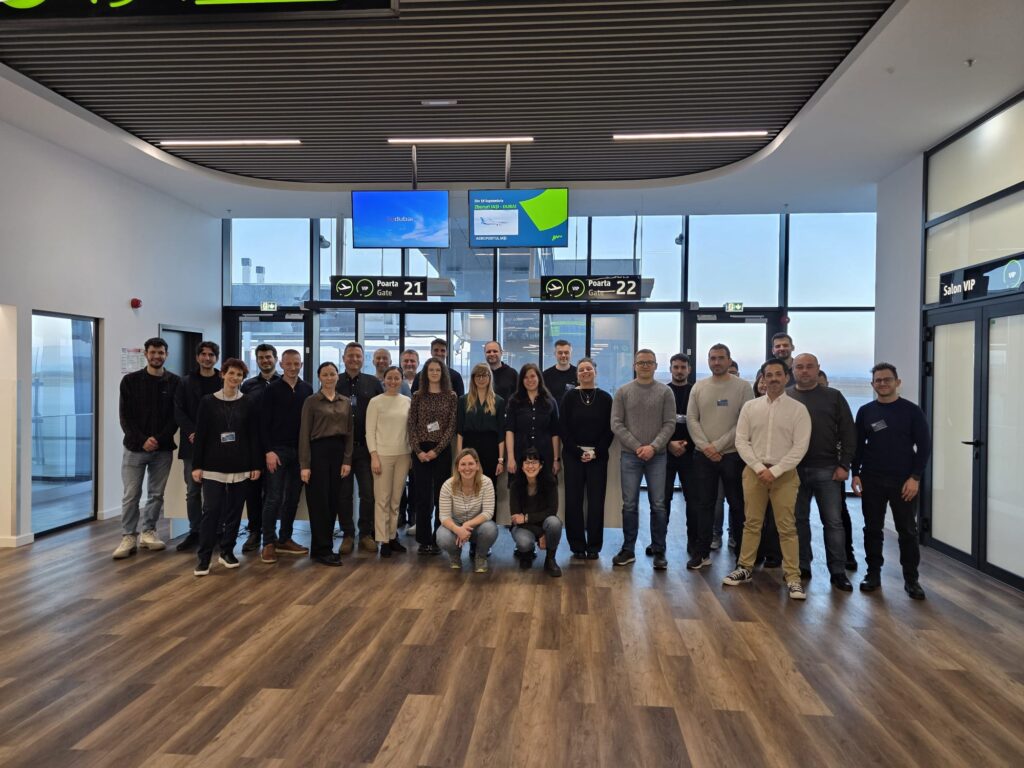
The Euro-Arab Foundation for Higher Studies will hold a free training session on 16 April at its headquarters in Granada (C/ San Jerónimo, 27). The session is aimed at leaders of religious communities and will focus on preventive security and incident management. The activity is organised within the framework of the European project PARTESS-COM and is open to representatives of all religious denominations.

The training will be delivered by the specialized organization Enhancing Faith Institutions, which has extensive experience in training on community security and the protection of religious institutions. The event will be conducted in English and Spanish, with simultaneous interpretation to facilitate the participation of all attendees.

During the session, participants will address several key aspects related to the security of places of worship and community centers, including:

  • Concepts of preventive security
  • Development of crisis communication plans
  • Basic vulnerability assessment
  • Practical application of security resources
  • Reporting security incidents through a new digital platform
  • Exchange of good practices among religious communities

The objective of this session is to strengthen prevention and response capacities regarding security incidents, while also fostering cooperation between religious leaders, local communities, and security specialists.

The PARTESS-COM project (“Participatory Approaches to Protect Places of Worship, Schools and Community Centres”), in which the Euro-Arab Foundation participates, works to prevent hatred, extremism, and terrorism by collecting good practices in preventive, protective, and reactive security. It also promotes the training of community representatives and law enforcement officers in their practical application.

As part of this initiative, the project has developed a European digital platform that brings together security resources, facilitates exchanges among religious leaders from different countries, and enables citizens to report security-related incidents in places of worship.

Participation in the training is free of charge, although places are limited. Interested individuals can register through the following form:


https://forms.gle/Z11YACeySvFV2RxT8

Categories
EUKH EN News Projects RADICALIZACION EN

New Yearbook on Jihadist Terrorism: A Key Analysis of the Global Threat’s Evolution

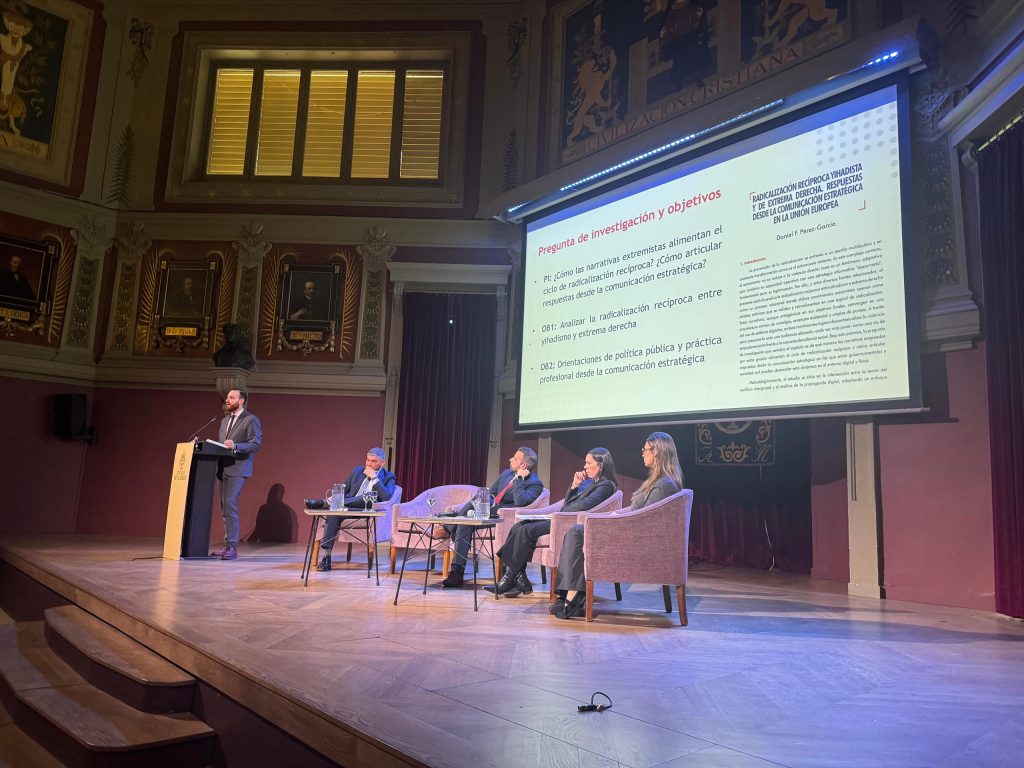
On February 27, the Euro-Arab Foundation for Higher Studies participated in the presentation of the Jihadist Terrorism Yearbook 2025, a benchmark publication edited by the International Observatory for Studies on Terrorism (OIET). This edition once again features the contribution of Daniel F. Pérez, researcher and project coordinator at the Euro-Arab Foundation.

The report, which consolidates monitoring data from the past year, reveals a significant transformation in radicalization dynamics and a shift in violence hotspots—with a particular impact on the African continent and the persistent threat within digital environments.

In this edition, Daniel F. Pérez-García provides a fundamental academic and strategic perspective, examining the complex relationship between Jihadism and the Far Right. The core of Pérez-García’s contribution focuses on the phenomenon of “reciprocal radicalisation,” where both extremisms operate as “rhetorical allies” that feed into each other in a vicious cycle of hatred. According to the researcher, although their ultimate goals are antagonistic, these movements converge through a shared architecture of nostalgia, existential threats, and utopias of purity.

The study highlights a concerning “mirror effect”:

  • Supremacist racism is instrumentalised by Jihadism to denounce an alleged crusade against Islam.
  • Radical Islamist rhetoric is used by the Far Right to justify a threat to national identity.

Ultimately, both ideologies target democratic institutions and social pluralism.

From Reaction to Resilience

As a response to this challenge, Pérez-García advocates for a transition from the current “culture of reaction” toward a “culture of resilience” based on strategic communication. He proposes an operational roadmap utilizing advanced tools, such as Artificial Intelligence for early detection and the creation of hyper-personalized counter-narratives.

“The goal is to connect emotionally with younger audiences in the digital environment before a cognitive fixation on extremist discourses occurs, thereby strengthening social cohesion against the polarization that defines the current geopolitical landscape,” states the Euro-Arab researcher.


Yearbook Links: