Hough co-authors chapter 9 ‘Re-positioning the Role of Information and Communication Technologies and Artificial Intelligence in the Fight against Human Trafficking’
Karen Latricia Hough, senior researcher at the Euro-Arab Foundation for Higher Studies currently developing VANGUARD project, has analyzed the importance of information and technological advances—such as artificial intelligence—alongside fellow researchers Theodora Tsikrika, Despoina Chatzakou, Theoni Spathi, and Tatiana Duarte Nicolau.
The article co-authored by Hough, Tsikrika, Chatzakou, Spathi, and Duarte Nicolau constitutes Part III of a publication supervised by Silvia Rodríguez-López, a senior researcher in criminal law at the University of A Coruña, and Amy Weatherburn, an FWO Senior Postdoctoral Fellow at the KU Leuven Institute for European Law, specializing in human trafficking, forced labor, migration, and fundamental rights law.
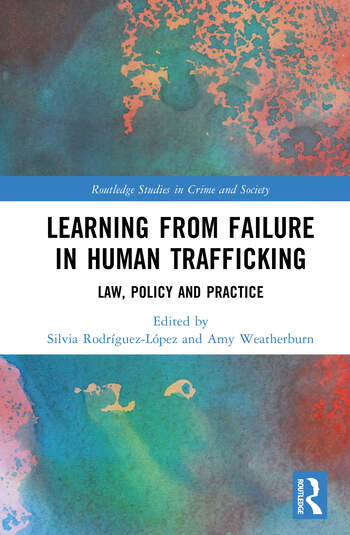
A collection published by the prestigious Routledge, structured around three core pillars
This monograph lays the groundwork for a paradigm shift in the anti-human trafficking literature, identifying where current approaches fall short and how these shortcomings might be addressed. Its approach is accessible and multidisciplinary, bringing together academics and legal practitioners to identify critical gaps in global response systems.
The volume is structured around three foundational pillars. The first part challenges outdated definitions of exploitation, particularly with regard to the criminal exploitation of minors, sex work, and labour trafficking. The second evaluates operational failures in victim identification and protection, drawing on recent, real-world case studies from across different continents, including cross-border drug smuggling in Chile, cyber-scam compounds in Southeast Asia, and the high-profile case of Dominic Ongwen at the International Criminal Court. Finally, the monograph turns to structural failures, highlighting the role of artificial intelligence in the fight against human trafficking, as well as the importance of integrating survivor testimony and lived experience into research, legislative, and policy-making processes.
The ultimate aim is to analyse why past measures have failed and to provide actionable, evidence-based, survivor-centred solutions to redefine future legislation, policy, and practice worldwide.