Categories
News VIRTUOUS en

Key insights and recommendations from the ‘European Conference on Security in Public Spaces and Protection’

The Euro-Arab Foundation, a key institution for the protection of places of worship

The document Building Safer Public Spaces: Key Learnings and Recommendations from the 2026 European Conference on Security in Public Spaces and Protection sets out the main conclusions of a conference held on 12 June 2026 in Nicosia, Cyprus. The event brought together more than 180 participants from 60 organisations based in 14 European countries, joined by representatives from Brazil, Japan and China.

In the words of Zenonas Tziarras, Professor in the Department of Turkish and Middle Eastern Studies at the University of Cyprus, “the imperative is not to imagine a world without risk, as none has ever existed, but to cultivate the capacity to live with uncertainty without allowing it to erode trust, deepen social fragmentation or undermine democratic life. All of this requires preparedness, effective institutions and robust security policies.”

“the imperative is not to imagine a world without risk, as none has ever existed, but to cultivate the capacity to live with uncertainty without allowing it to erode trust, deepen social fragmentation or undermine democratic life. All of this requires preparedness, effective institutions and robust security policies.” Zenonas Tziarras

Among the cases examined in the document was the attack that took place in the centre of Modena, Italy, on 16 May. Several organisations had received advance warnings, which highlights the absence of official channels for sharing such information, channels that could have triggered a coordinated intervention.

As a result of the various panel discussions, six actions were recommended:
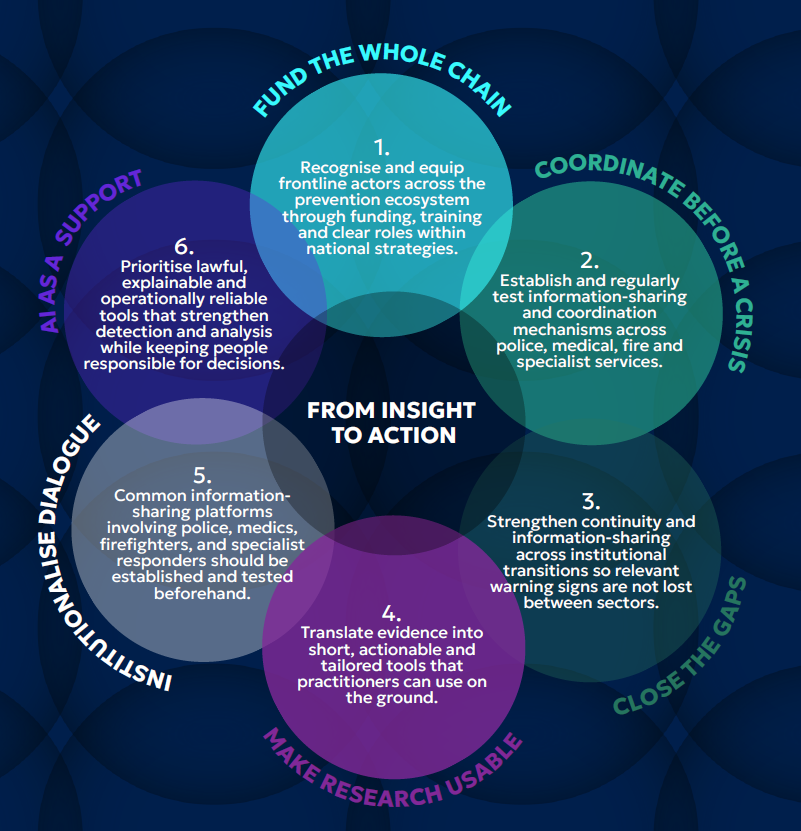
  1. Establish the full chain for training, detecting and responding to risk situations, with frontline personnel and clearly defined roles within national strategies.
  2. Ensure crisis coordination through shared-information exercises and coordination mechanisms across law enforcement, medical personnel, and rescue and emergency services.
  3. Close existing gaps by strengthening the continuity and sharing of information when risk warnings are issued, in order to prevent loss of information between parties.
  4. Design practical, evidence-based tools for professionals working in the field.
  5. Institutionalise dialogue through platforms that connect law enforcement, medical professionals and first-response teams.
  6. Prioritise reliable, accessible and operational tools for risk detection and analysis, while preserving human responsibility in decision-making.

The convergence of these six pillars enables these findings to be translated into action in support of cooperation, preparedness and resilience across the entire security ecosystem.
Categories
News Projects SHIELDed EN

New SHIELDed Study Examines Security Risks and Needs at Places of Worship in Spain

The Euro-Arab Foundation (Fundación Euroárabe), a consortium partner in the EU-funded European project SHIELDed, presents the factsheet outlining the main findings for Spain of a multi-level study on the vulnerabilities, risks and security needs of religious communities and their places of worship.

The research, conducted between March and June 2026, covers eight European countries (Austria, France, Germany, Ireland, the Netherlands, Poland, Portugal and Spain) and combines desk research, interviews, focus groups and an anonymous open call for contributions. A total of 256 stakeholders took part, 53 of them in Spain, including religious leaders, law enforcement agencies, public authorities, civil society representatives and academics.

From Physical to Digital Protection

Participants agree that protecting places of worship requires addressing not only vandalism and physical attacks, but also the growing threats posed by hate speech, disinformation and polarisation in the digital environment. Key findings include:

  • Growing social polarisation: Law enforcement agencies in Spain have highlighted a 25% increase in hate crimes, identifying social polarisation as one of the main emerging risks leading to exclusion and confrontation.
  • The stigma of being perceived as “foreign”: A recurring issue is the perception of certain religious communities, particularly Muslim communities, as “foreign” or outside the national fabric, despite the fact that many of their members are Spanish citizens.
  • Risks of mistaken identity: A lack of religious literacy means that some groups are targeted on the basis of assumed identities. For example, the Bahá’í community is occasionally mistaken for the Muslim community and subjected to the same prejudices.
  • The normalisation of hostility: Religious leaders report experiencing daily “microaggressions”, including mockery and verbal abuse, which are often normalised and consequently remain chronically underreported.
  • Digital hostility: Online hate speech represents a major challenge. Social media platforms are the main channels through which narratives targeting certain communities are spread, and 65.3% of stakeholders acknowledge that their communities need greater support to protect themselves in the digital environment.

Recommendations

The factsheet recommends strengthening local and cross-sector cooperation mechanisms between religious leaders, civil society and law enforcement agencies; implementing integrated action plans that include tackling disinformation and online polarisation; promoting awareness-raising campaigns and reporting mechanisms; providing police officers and frontline personnel with training on religious diversity; encouraging interfaith and intergenerational dialogue; standardising threat assessments; and fostering proactive public communication, including statements of solidarity following incidents and the recognition and celebration of different religious festivals.

Find Out More

The Spain factsheet is available here:

https://shielded-project.eu/wp-content/uploads/2026/10/T3.1-SPAIN-FACTSHEETES.pdf

For a more in-depth understanding of the findings, the full report is available here:

https://shielded-project.eu/wp-content/uploads/2026/10/T3.1-Comprehensive-Report_SHIELDed_FINAL.pdf
Categories
VANGUARD

The Euro-Arab Foundation brings its work on AI and human trafficking to the University of Brescia

The Euro-Arab’s researcher, Karen Hough, contributed to the doctoral programme reflects the importance of interdisciplinary research and academic exchange

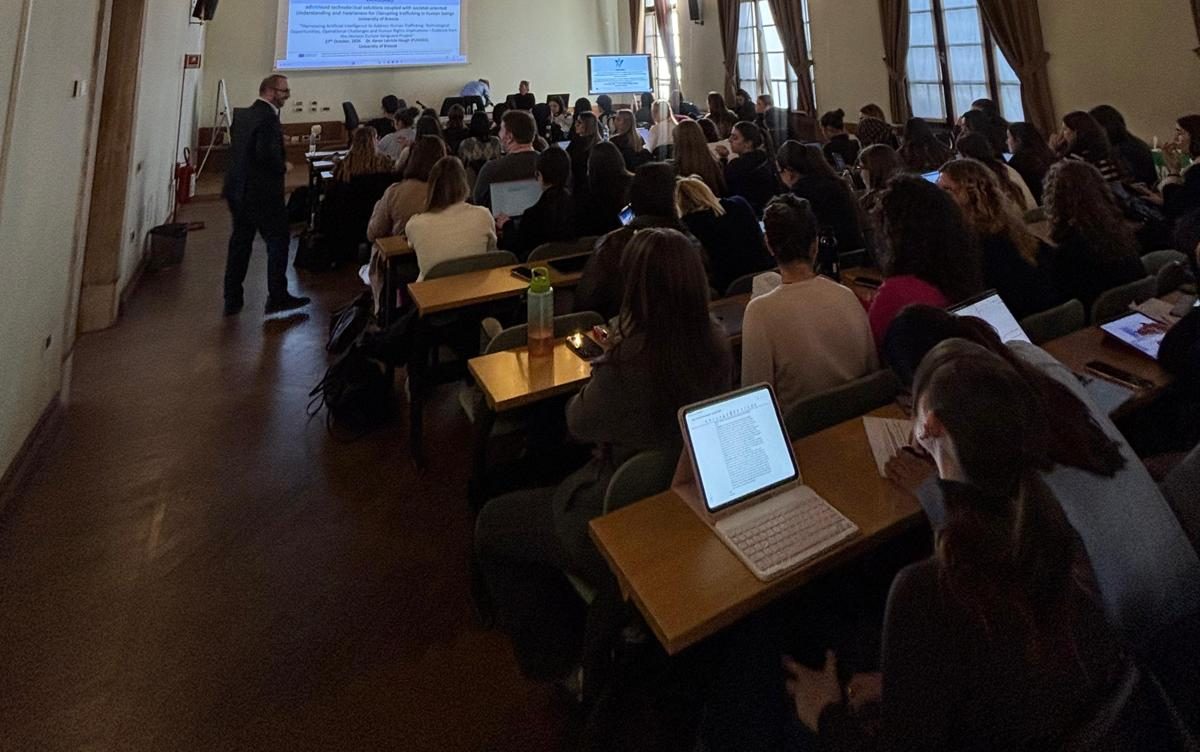
On 27 October, Karen Latricia Hough, researcher at the Euro-Arab Foundation , delivered a presentation at the University of Brescia (Italy) as part of the PhD Programme ‘Rights, Person, Innovation and Market’; hosted by the Department of International Law .

The lecture, entitled ‘Harnessing Artificial Intelligence to Address Human Trafficking: Technological Opportunities, Operational Challenges and Human Rights Implications—Evidence from the Horizon Europe Vanguard Project’, explored the growing role of artificial intelligence (AI) in tackling human trafficking, as well as the opportunities and challenges of deploying emerging technologies against it.

Drawing on evidence from the Horizon Europe Vanguard Project, Hough examined how AI-powered tools and technological innovation can strengthen efforts to identify, prevent and respond to human trafficking. She also addressed the operational challenges of implementing these technologies, alongside the critical human rights considerations that must guide their development and use.

As AI continues to reshape approaches to security, justice and human rights protection, the discussion highlighted the importance of ensuring that technological solutions are effective, ethical and grounded in human rights principles. It also underscored the need for collaboration between researchers, policymakers, legal experts and practitioners to ensure that innovation translates into meaningful, responsible action against human trafficking.

The importance of ensuring that technological solutions are effective, ethical and grounded in human rights principles

Hough’s contribution reflects the value of interdisciplinary research and academic exchange in addressing pressing global challenges at the intersection of technology, international law, human rights and social protection. This visit also gave the Euro-Arab Foundation the opportunity to share the Horizon Europe VANGUARD Project with the academic community and to contribute to the debate on how emerging technologies can support more effective and human-rights-centred responses to human trafficking.

Innovation in human rights protection

For the Euro-Arab Foundation, this participation is part of the ongoing analysis of AI as a technology with a dual nature: it can be misused by criminal networks but it can also propels the protection of trafficking victims The doctoral programme, which combines cultural, technological and methodological innovation, is closely aligned with VANGUARD, particularly with the design of ‘Red Flags: a serious game’, a video game for children and teenagers that takes into account their environment: family, educators, friends and social communities.

VANGUARD project, which concluded on October with a final conference at the Center for Security Studies (KEMEA), puts in practice innovation not only on the process of developing tools, but also in how to ensure the accessibility of these tools reinforced by the design of engagement and awareness actions, with the involvement of science communicators with a more approachable and age adequate to the targets digital languages.

Categories
News Projects

Meeting between the Al-Rasheed Center for Development and the Euroarab Foundation

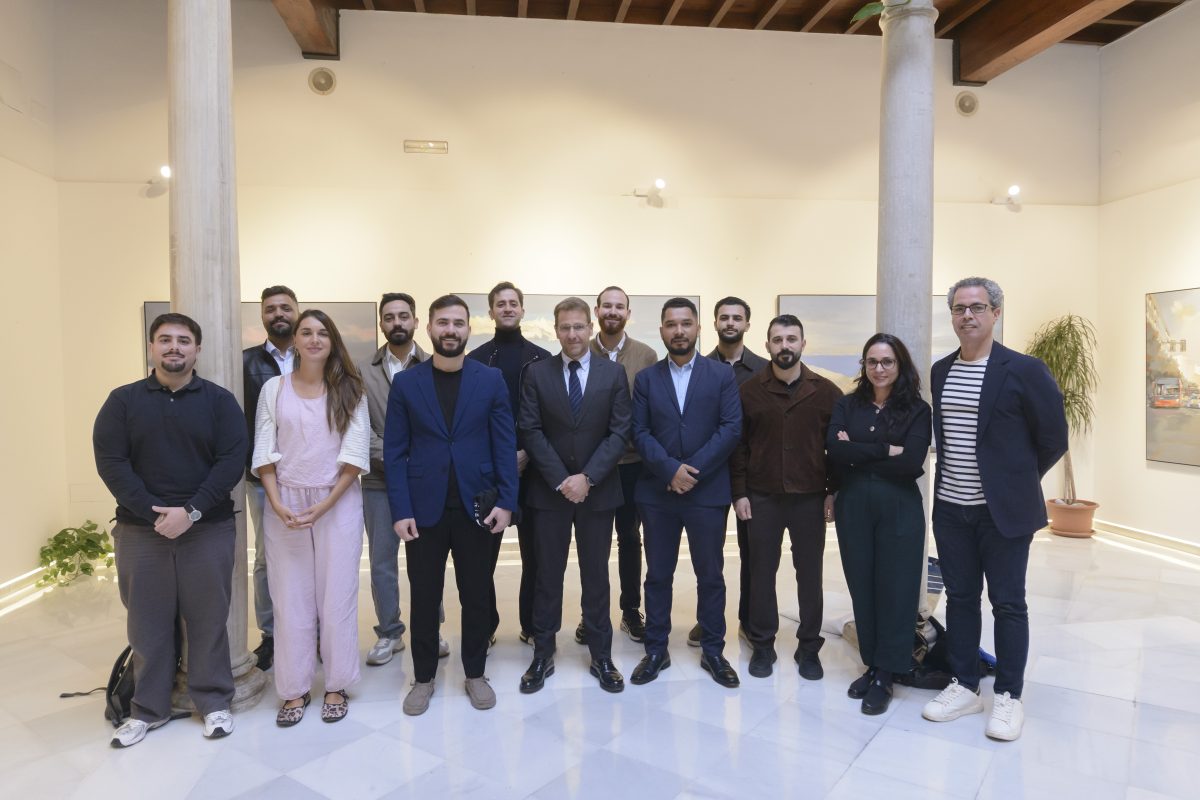
On Friday, 30 October, the Euroarab Foundation hosted a visit from a delegation of six representatives of the Al-Rasheed Center for Development (Iraq). The delegation is visiting Spain under the scientific and research cooperation agreement and the Spain–Iraq Youth Leadership & Cultural Diplomacy 2026 programme, both coordinated by the AIISD Association, which was founded in Spain and now has a presence in Iraq.

The Al-Rasheed Center for Development is based in Baghdad and works on national dialogue, citizen participation, democratic strengthening and civil society development. The aim of this first meeting was mutual understanding and institutional exchange.

The Foundation was represented by its Executive Secretary, Antonio Sánchez, who gave a brief presentation of the organisation, and by Hassan Laaguir, Director of Cooperation and of the Amazigh Chair, who presented both areas together with the Foundation’s training programmes, developed jointly with the Princess Al-Anood Foundation. Daniel F. Pérez, Project Coordinator, outlined the research lines of the Research and International Projects Department.

Researcher Lucía Alonso highlighted the Foundation’s commitment to combating hate speech through the development of educational tools in projects such as ECLIPSE and Hatedemics, and its participation in collaborative networks that promote civic resilience, support victims of hate and strengthen social cohesion. Researcher Javier Montilla presented the projects on the protection of places of worship and local initiatives, such as the Interfaith Dialogue Roundtable of Granada. The «Diálogos de la Euroárabe» series was also discussed, in particular its reflections on social cohesion.

The meeting laid the groundwork for continued exchange of experiences and for exploring potential synergies between the Euroarab Foundation, the Al-Rasheed Center for Development and AIISD, especially in the fight against hate speech.