Categories
EN Hope News Projects

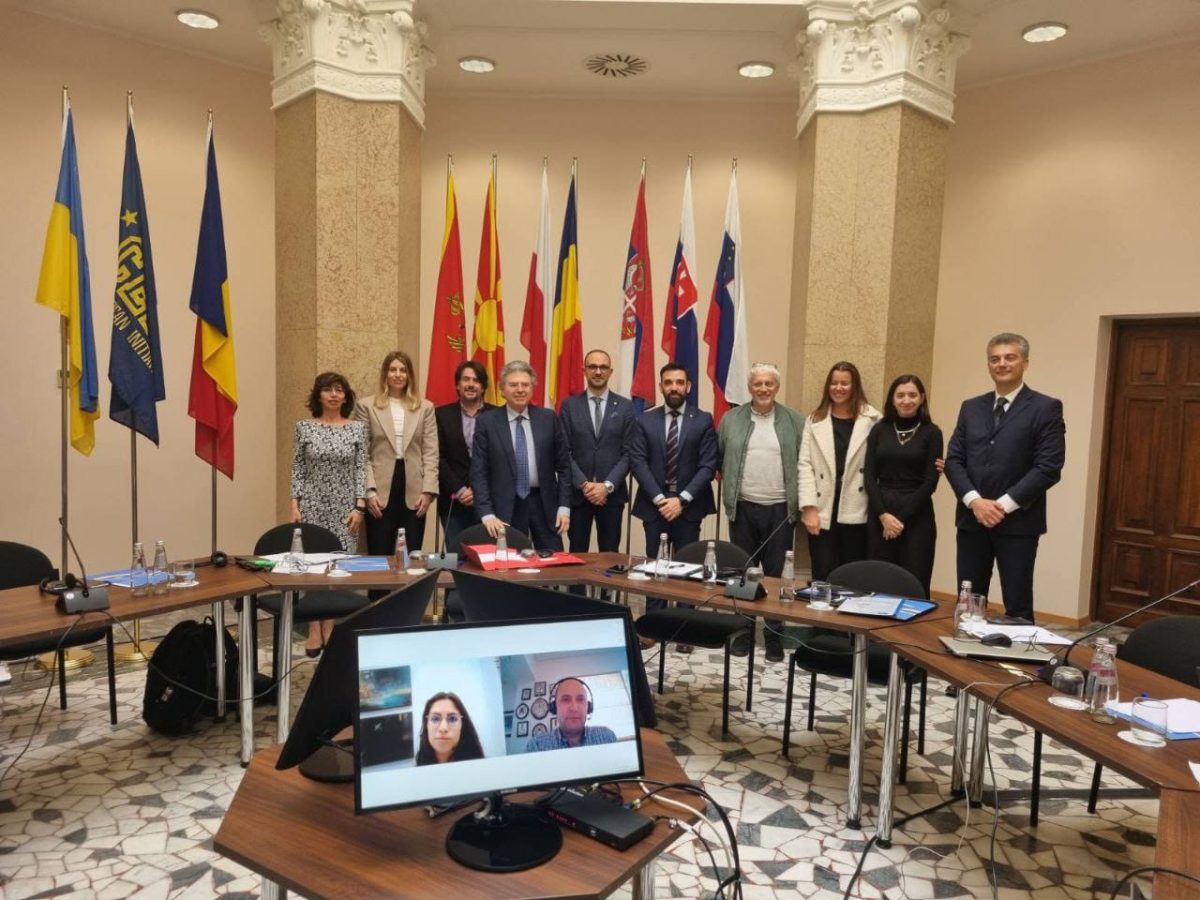
The project HOPE holds Transnational Policy Forum and Dissemination Workshop in Albania

On 19 and 20 April, a Transnational Policy Forum and a Dissemination workshop were held in Albania within the framework of the HOPE project “Holistic Prevention of Radicalization Initiative”, a project of which the Euro-Arab Foundation is a member of the consortium along with its partners from Portugal, Norway, Italy, Bulgaria, Serbia, Slovenia, Bulgaria and Romania.

On 19 April , the Transnational Policy Forum (TPF) kicked off the day with a presentation on the approach of the HOPE project, and a talk on best practices in training and cooperation in preventing and countering violent extremism, as well as the results presentation of needs assessment conducted by the project. The first roundtable of the Forum focused on the topic of “How to coordinate CVE activities in the Western Balkans from a policy perspective”, which was followed by a panel on the tangible results of HOPE. The day concluded with a second panel discussion on “Challenges of implementation for endusers: A regional approach”.

On 20 April the Dissemination Workshop was held, divided into a panel on the main results of the HOPE project, and a round table on the “The Future of CVE Training: The Albanian
Context”. The first panel featured Josep Garcia Coll, Euro-Arab Foundation researcher, with the topic “State of the art analysis & European Survey: A regional Approach”.

After three years of implementation, HOPE is coming to an end with a focus on continuous training and knowledge sharing in the countries of the Balkans, Southern and Eastern Europe, as well as on improving the transition process between the prison and/or probation systems and the community, for those prisoners at risk of radicalization or who have been radicalized.

The HOPE project, in which the Euro-Arab Foundation participates, is led by IPS-Innovative Prison Systems, and is funded by Iceland, Liechtenstein and Norway through the EEA-Norway Grant Fund for Regional Cooperation.

Categories
EN Pave News Projects

Project clip on PAVE’s main outputs

The Horizon 2020 research project PAVE investigated the root causes and driving factors of violent extremism and radicalisation over the last three years. Now with the project drawing to a close, a brand-new animated clip has just been released. While highlighting the global issue of radicalisation, it shares the findings from the project’s intense research. The video includes short video snippets from project partners highlighting particular aspects of the research such as the role of the state and education, resilience and the collaboration between civil society, religious actors and policy makers.

Over the last three years, the consortium has greatly enjoyed the collaborative engagement on this timely project, with a diverse set of experienced and complementary partners. Despite the severe challenges posed by the COVID-19 pandemic, PAVE partners managed to build a real team spirit and collegial atmosphere across borders and regions.

Thanks to the dedication of the involved researchers, PAVE results are important milestones on the way to making the prevention of violent extremism more responsive to contextual needs, more tailored to contemporary threats and emerging radicalisation trends, and moving away from securitised approaches. Our practical tools can further contribute to building community resilience from the bottom up.

The video is available on YouTube (https://www.youtube.com/watch?v=NoMq_o2rVG8) and on the PAVE website (https://pave-project.eu), where you will find more information about the project and the results obtained.

Categories
News

Holding the final PAVE conference in Brussels and publication of the Policy guideline and recommendations report

The PAVE project presents news in its final stretch. On April 18, it is holding its final conference in Brussels, where it will present its findings and policy recommendations on the prevention of violent extremism (PEV) to the European Commission along with the PREVEX project, both funded by the European Union’s Horizon 2020 program, and with the same line of research. The joint presentation of the final findings allows them to show the depth of the research and to take advantage of the important synergies that have emerged from discussing the findings obtained, collaborating on activities and developing follow-up plans.

The conference will feature two main panel discussions: the first about “The journey to violent extremism – drivers and enabling environments” and the second on “Shortcomings of hard security measures and added value of community-based resilience approaches“. They will present multiple findings obtained, such as the low interest in radical views held by people living in the most radicalization-friendly environments in the Sahel or the Middle East, even showing resistance, in subtle ways or exposing themselves to risk, to the influences of violent extremism.

This final PAVE and PREVEX seminar will take place from 13:00 to 16:45 at Scotland House in Brussels, and can be attended in person or online. Registrations for both forms are available at the following link: https://www.nupi.no/en/events/2023/preventing-violent-extremism-strengthening-local-community-resilience

Presentation of the Policy Guidelines and Recommendations report

The PAVE project has published its report on policy guidelines and recommendations, focused on multi-agency cooperation, to strengthen community resilience against violent extremism. To achieve this goal, six main conclusions are set out:

  1. Identify and Promote Inclusive Local Ownership and Coordination
  2. Apply Conflict Sensitive Lens and a Peacebuilding Approach to P/CVE Measures
  3. Design Inclusive and Context-Sensitive Policymaking Approaches and Processes on the Prevention of Violent Extremism
  4. Address the Online/Offline Divide Within P/CVE Efforts
  5. Support and Promote Sustainable Community Ownership Within Deradicalisation and Reintegration Efforts
  6. Foster Community Harmonization and Social Cohesion

The PAVE project is coming to an end after 3 years of research with populations in the Mena region, the Balkans and the diaspora in Europe on the prevention and treatment of violent extremism through community resilience. The research has been developed in empirical studies and comparative analyses focused in Bosnia and Herzegovina, Kosovo, Tunisia, North Macedonia, Iraq, Serbia and Lebanon.

If you want to know all the reports developed, they are available on the official PAVE website: https://pave-project.eu/publications

Categories
EN Standup News Projects

The project “Stand-Up: fighting against hate crimes in the EU” is holding 4 online seminars in February

In the framework of the project “Stand-Up: fighting against hate crimes in the EU”, they are going to celebrate 4 webinars: 3 national webinars held in Greek, Italian and Spanish, developed by the partners Euroarab Foundation (FUNDEA) from Spain; Fondazione Agenfor Internacional from Italy, and the European Public Law Organization (EPLO) along with the Greek National Comission for Human Rights from Greece. In addition, a fourth webinar will also be held at an pan-european level. The topic of these seminars are about the use of technological tools to monitor hate speech, identifying hateful feelings, areas of intervention, groups at risk and hate narratives on social networks.

The main objective of these seminars is to establish a comprehensive and holistic framework in the fight against hate crimes and hate speech based on the RIPP model (complaint-investigation-prosecution-prevention) from a victim-centered approach. Within the seminars, technological tools as OSINT (Open-Source Intelligence) and FALKOR platform will be presented and the results of monitoring hate speech in every research field.

Pan-european webinar invitation

The pan-european webinar is about “Tackling and monitoring hate phenomena in Europe: right-wing extremism, islamophobia and antisemitism” and it will be held on 22 february. The seminar will be initiated by Viviana Gullo presenting STAND-UP and the preventive and investigative model to tackle the hate phenomena; Yuval Sanders and Lior Mordechai will address the technologies OSINT and Falkor supporting the model. As more, regional OSINT reports will be presented by Katerina Charokopou, Thanassis Dimopoulos, Fabio Frettoli, Lucía García del Moral and Viviana Gullo. Finally, Sergio Bianchi will raise a debate and future opportunities.

Spanish webinar invitation

As for the national online events, the Spanish webinar by FUNDEA, “Narratives and right-wing hate speech and Islamophobia in Spain”, Lucía García del Moral will present the project STAND-UP. As in the Italian seminar, it will also participate Yuval Sanders and Lior Mordechain presenting the tools for hate speech monitoring online OSINT and FALKOR. Finally, Lucía García del Moral and Jose Luis Salido will explain two case studies from Spain: “Islamophobia in social networks: the World Cup in Qatar” and “Narratives of the extreme right: monitoring 20-N and 25-N dates”. The inscription is done by this form.

Italian webinar invitation

The Italian webinar managed by AGENFOR will talk about “Contrast and tracking of hate phenomena in Italy: Veneto Front Skinheads and anti-semitic climate” and it will be on 14 february. The speakers, as the pan-european webinar, will be Viviana Gullo; Yuval Sanders and Lior Mordechain; Fabio Frettoli and Sergio Bianchi, exposing the topics mentioned in the pan-european event. The inscription is done by this form.

About the Greek seminar, EPLO together with the Greek National Comission for Human Rights will celebrate on 15 february the webinar “Confronting Hate Crimes & Hate Speech through OSINT” with Professor Vasilki Artinopoulou, scientific coordinator of the project.

Greek webinar invitation

STAND-UP has as its main objective to improve cooperation between different organizations in the fight against hate crimes through the design, development and implementation of a new inter-institutional model.

This project is financed by the General Directorate of Justice and Consumers of the European Commission and the consortium is formed by the Euro-Arab Foundation of Higher Studies (Spain), Procura della Repubblica di Trento (Italy), The prosecution office of Venice (Italy), Fondazione Agenfor International (Italy), European Public Law Organization (EPLO), Greek National Commision for Human Rights (GNCHR), Association Des Agences de la Démocratie Locale (ALDA) in France.

Categories
EN Standup News

The European Parliament will host the STAND UP seminar ‘Against Hate Crimes’

This week, 28-29 September, the seminar organised by the European project STAND UP – Fighting Hate in the EU takes place in the European Parliament (Brussels). The aim of this event is to find a common European definition of “hate crime” and to analyse measures that can counter this hate speech.

The seminar will also provide an overview of the results of the focus groups developed by the STAND UP project on hate crime and hate speech in Greece, Italy and Spain, as well as a proposal for standardised reporting procedures, including the use of technology to report, investigate, prosecute and prevent (RIPP) hate speech and hate crime in the framework of multi-agency cooperation and the highest level victim assistance model.

To this end, the seminar at the European Parliament will bring together experts from the legal, law enforcement, CSO (civil society organisations), NGO and policy-making fields from different European countries.

  • Wednesday 28th: “Defining Hate Crimes: Towards a common European definition”
  • Thursday 29th: “Reporting Hate Crime: Cooperation between Law Enforcement Authorities (LEAS) and Civil Society Organisations (CSOs)”.

STAND UP

Discrimination, intolerance and hatred are still present in European societies, often leading to serious and violent crimes.

These practices and sentiments are to a large extent causes of wider social tensions and have lasting repercussions on victims, their families and our societies. However, there are shortcomings at European level in the handling of hate crimes and discrimination towards individuals or communities on grounds of gender, race, sexuality or other aspects, as well as in the response given by public authorities in European countries.

The STAND-UP project aims to improve inter-agency cooperation in the fight against hate crime through the design, development and implementation of a new inter-agency model led by public authorities.

The model developed by STAND-UP comprises technological tools to improve the monitoring of hate speech and hate crime, as well as the exchange of data between different agencies; an established definition of hate crime; hate crime reporting templates (for law enforcement and CSOs); inter-agency manuals for victim support.

STAND-UP, financed by the European Commission’s Directorate-General for Justice and Consumers, is coordinated by the Procura della Repubblica presso il Tribunale Ordinario di Trento -Italy,and counts in its consortium with the National Commission for Human Rights- Ethniki Epitropi gia ta Dikaiomata tou Anthropou – GreeceFundación Euroárabe de Altos Estudios -Spain ; European Public Law Organization – GreeceFondazione Agenfor International – Italy Association des Agences de la Democratie Local – France

Categories
News

Meeting in The Hague of the PREPARE project for the prevention of radicalization in young people


The PREPARE project, funded by the European Union, aims to study the effects of violent radicalization on children and young people who grow up in the environment of violent extremism. At the seminar that took place in The Hague last Wednesday, May 11, people with a professional career related to psychotherapy and work with young people were invited, as well as people who are experts in violent radicalization, including the researcher from the Euro-Arab Foundation , Josep García Coll, expert on radicalization and violent extremism.

During the meeting, experiences and data on the specific risks for children who grow up in this type of environment and the most effective reintegration strategies were contrasted. He highlighted the discussion on the way in which values ​​and ideologies are transmitted from mothers and fathers to children. Sometimes this takes place explicitly, but the fact is that, even in the absence of these, values ​​and ideologies can be transmitted from an idealization of the absent parent as a hero or a fighter against the state, especially if the mother or the father is in prison.

As examples of good practices, among others, the effectiveness of interventions in which the family environment is trained to work with the minor in question was highlighted. The use of mentorships between the minor and older people who can offer positive social models far from the armed militancy of the father or mother, while offering new possibilities for personal development, was also recommended.

Categories
EN Retopea News

RETOPEA Warsaw Conference

The Euro-Arab Foundation participates on Monday 16 and Tuesday 17 May in a conference organized at the University of Warsaw within the framework of the RETOPEA Project.

In this event, we will do an overview of the research activities that have been developed within the project around the main issues that RETOPEA addresses, such as interreligious dialogue, cultural policies, educational policies and public representation of religion .

In this same conference, the monograph Religious diversity in Europe: Mediating the Past to the Young is presented. London: Bloomsbury, 2022, whose editors are Professors Elena Arigita, from the University of Granada, Riho Altnurme (Univ. Tartu) and Patrick Pasture (KU Leuven).


The docutubes made in this project will also be presented, as well as the project to publish a volume on the use of clippings for educational purposes: Karel Van Nieuwenhuyse et al.: Religious diversity, tolerance and peace-making in past and present. Beyond the stereotypes.
Along with this conference, an Steering Committee meeting of the RETOPEA project will take place.

Categories
EN Bigosint EN Standup News

Virtual reality sessions and coordination of the BIGOSINT and STAND-UP European projects at the Euro-Arab

An important work agenda begins this morning at the headquarters of the Euro-Arab Foundation today and tomorrow, May 10 and 11, developed by the consortium of two European projects in which the Euro-Arab participates, the BIGOSINT project and STAND -UP.

The objective of this conference is to work on the training and coordination of the pilot tests that will be carried out, sharing the tools and platforms of these two projects financed by the European Commission, the BIGOSINT project, whose objective is to counteract Trafficking in Human Beings through the analysis of Big Data and Open Source Intelligence (OSINT) and the STAND-UP project that focuses its work on the fight against hate in the European Union.

In this sense, training in Virtual Reality will be held tomorrow in Granada. With it, it will be possible to support the understanding of the training methodology that both projects will apply in a later phase. This, in turn, will allow them to contribute to the development of the training content and its implementation in a more meaningful way.

This joint activity is expected to open the way to new collaborations with other projects financed by the European Union, those that share a similar research approach and training methodologies, as well as beneficiaries and the use of open source intelligence.

Categories
News

Hope Mid-Term International Conference in Bulgaria

Hope Mid-Term International Conference in Bulgaria

After meeting in Norway on March 31 and April 1, 2022, the partners of the HOPE project (A holistic initiative to prevent and counter radicalization in the Balkans, Southern and Eastern Europe) meet again in Sofia, Bulgaria. This international conference taking place on April 7-8, 2022 at the General Directorate in the Bulgarian capital aims to disseminate the project’s products, goals, and objectives, as well as to engage relevant international stakeholders’ (prison/probation staff, community organisations’ staff, policy/decision makers, academics/researchers, local/regional/governmental actors) in other project events. The participants have visited Sofia Central Prison.

The following topics were discussed on the first day of the meeting:

  • The HOPE project approach A holistic initiative to prevent and counter radicalisation in the Balkan, Southern and Eastern Europe
  • Regional solutions for regional challenges: A historical perspective on preventing radicalisation and extremism in Southern and Eastern Europe
  • A country-by-country or regional approach to Preventing and Countering Violent Extremism? Main challenges, structural needs and lessons learned
  • Do not focus on VETOs only: Identification of vulnerable individuals to radicalisation and extremism in prison
  • The importance of alternative detention measures: The role of probation officers and community practitioners on working with extremist offenders outside prison
  • Rehabilitating Foreign Terrorist Fighters: An overview of UNODC’s FTF Detention Programme’s experience

This project, in which the Euro-Arab Foundation participates, is developing a network for continuous training and the exchange of knowledge on the prevention of radicalization in the Balkans and countries of southern and eastern Europe. If you want to know more, watch the presentation video of the project:

Categories
EN Mirad News

A Call to Join the MIRAD Expert Board

MIRAD overview 

MIRAD is an 18-month project co-funded by Internal Security Fund. MIRAD’s main goal is to build upon IRS (Individual Radicalisation Screening)[1] and develop specific, add-on ideological-centred assessment sheets to the IRS, having in consideration two different extremist typologies: right-wing extremism and Islamist extremism. For MIRAD, the role of gender is important as well. The MIRAD project also aims to train practitioners from prison, probation, and non-governmental organisations via e-learning and virtual-reality scenarios. In addition, the project foresees the development of an instrument to assess the trustworthiness and capability of NGOs that work with extremist/radical individuals, which could later be used by prison and probation systems in the EU.

The idea behind Expert Board

To ensure the continuity of preventive efforts in Europe, it is necessary to identify and map out experts in the field of P/CVE. The experts can represent science and research, practitioners, networks, civil society organisations, and other stakeholders in the field of right-wing and Islamist extremism risk assessment and intervention. As part of the MIRAD project, two Expert Boards will be established: one in the field of Right-wing extremism, and the second one on Islamist extremism. The Expert Board will be a body consisting of 8 experts acting on a volunteer basis, which will be supporting the MIRAD project in assessing whether the developed solutions are practical and can be applied. The Expert Board members will be chosen by MIRAD’s consortium Members taking into account experience in the field of radicalisation.

The task of the Experts

Members of the Expert Board will support the MIRAD project in the evaluation of the developed IRS assessment sheet which will be extended within a specific set of right-wing-centered and Islamic dimensions. The IRS assessment sheet will focus on the characteristics of FTFs/HTFs and gender issues. This task with the support of the Expert Board will provide the opportunity for the development of analyses regarding different dimensions, revealing whether inmates are likely to be experiencing certain stages of the radicalisation process.

How to become a Board Member?

To become a board member, please complete this form: https://forms.office.com/r/S32m0XCBHB

During registration, you will be required to enter your first and last name, sector and a short description of your experience.

The Submission deadline is on the 28th March 2022.

[1] A radicalisation risk assessment instrument was previously developed during the R2PRIS project. The IRS is part of the Radicalisation Risk Assessment in Prisons Toolset (commonly known as RRAP), which was considered a promising practice in this field by the European Commission.