The MALDITA Foundation, the Andalusian Centre for Studies, and the Euro-Arab Foundation for Higher Studies are co-organising the event “Internet in 2026: Disinformation, Polarization and Hate”, which will take place free of charge at the Palacio de la Prensa in Madrid on 19 February. The event is part of the European project Hatedemics, funded by the European Union, and brings together civil society organisations, experts and academics to discuss current challenges on the internet—such as the spread of hate speech and polarising content—and to explore possible solutions.
On 5 February, the Euro-Arab Foundation took part in a simulation exercise organised in Rome within the framework of the European project VIRTUOUS, aimed at assessing the level of awareness and preparedness of religious representatives in the face of security threats to places of worship. The activity brought together representatives of the Christian, Jewish and Muslim faiths, as well as members of various law enforcement agencies and security experts from different European Union countries.
The event opened with statements from religious representatives and members of the VIRTUOUS project consortium, who highlighted freedom of religion as a fundamental right in democratic societies, stressing that the protection and security of places of worship are essential conditions for its effective exercise. The Euro-Arab Foundation was represented at the meeting by José María González Riera, Deputy Director for Research and Projects and VIRTUOUS Coordinator at the Foundation.
The exercise was followed by a training session in which various methods for protecting places of worship were analysed and put into practice, including risk assessment, techniques for identifying suspicious behaviours and situations, as well as de-escalation strategies and crisis management.
The activity also coincided with the celebration of World Interfaith Harmony Week, proclaimed by the United Nations, which was reflected in the atmosphere of cooperation, mutual respect and interreligious understanding fostered among all participants throughout the exercise.
About the VIRTUOUS Project
The VIRTUOUS project is a European Union–funded initiative aimed at strengthening the resilience and security of places of worship through cooperation between religious communities, public authorities and security experts. The project promotes the exchange of good practices, specialised training and the development of practical tools to prevent risks, manage crises and protect both people and places of worship, always with full respect for fundamental rights and religious diversity.
VIRTUOUS officially began its second year of implementation with the Consortium Meeting held in Rome on 4 February. This third in-person meeting allowed partner organisations to review the main achievements to date, as well as to define and coordinate the remaining tasks to be developed. The simulation exercise held on 5 February marked the conclusion of activities related to the state of the art on terrorist attacks and risk and vulnerability assessment.
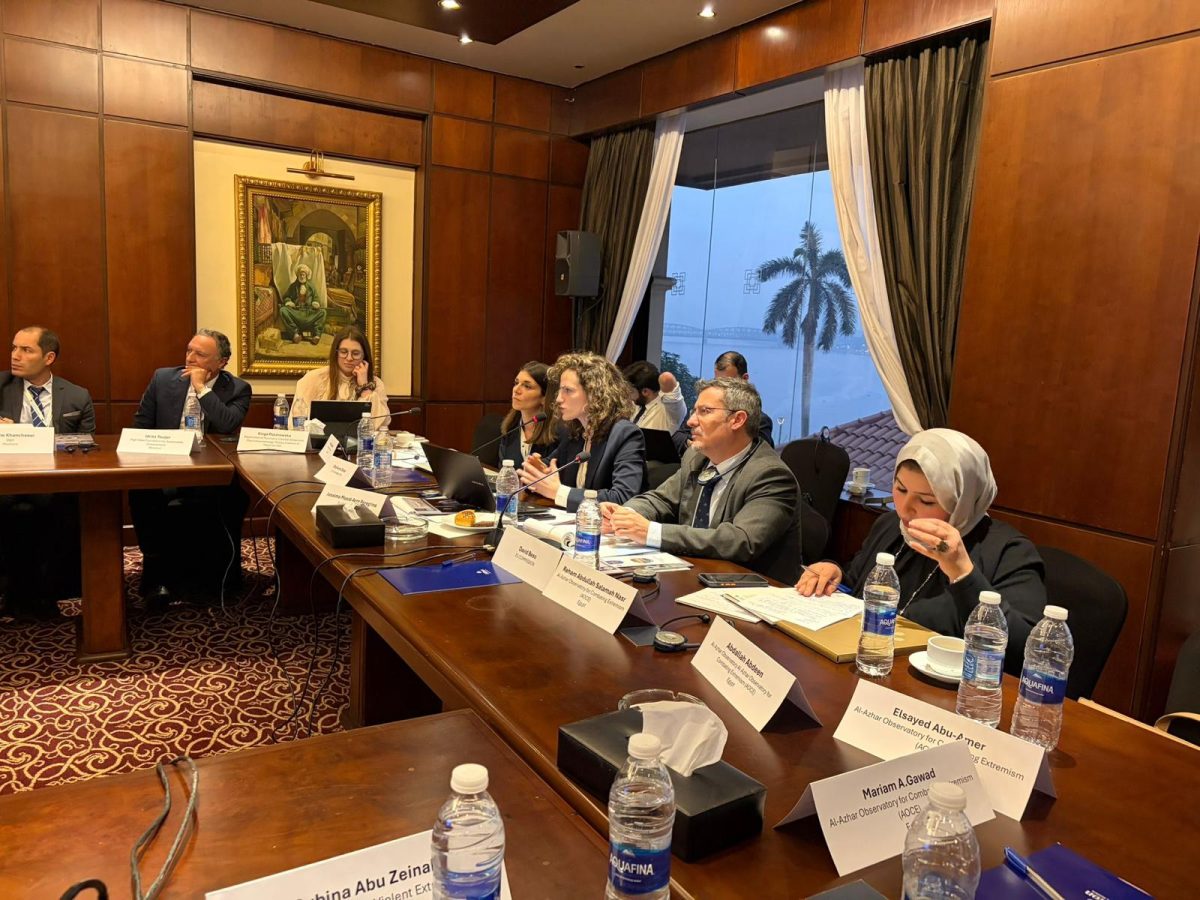
Within the framework of its participation in theEU Knowledge Hub, the Euro-Arab Foundation for Higher Studies took part in the MENA region study visit titled: “Preventing Radicalisation and Building Youth Resilience: Insights from Al-Azhar Observatory for Combating Extremism.”
The meeting, organized by the EUKH and the European Commission on 21 and 22 January, brought together policymakers and practitioners from EU Member States and MENA countries in the Egyptian capital to analyze successful models in Preventing and Countering Violent Extremism (PCVE).
The Egyptian model and the role of narratives
During the visit, the delegation gained in-depth insights into the Egyptian prevention model, with a particular focus on the work of the Al-Azhar Observatory. Experts, including Euro-Arab Foundation researcher Jusaima Moaid-azm, analysed how this center integrates constant monitoring, deep analysis, and the production of effective alternative narratives.
The visit provided first-hand knowledge of the Observatory’s communication strategies to dismantle extremist discourse—an area where the Euro-Arab Foundation has an extensive track record through its various research projects. This analysis was linked to a comparative study on youth vulnerability and resilience in the face of social, economic, and digital pressures in both Europe and the MENA region, based on the premise that prevention is not an isolated task, but rather a systemic challenge.
Three researchers from the Euro-Arab Foundation for Higher Studies actively participated in the first Joint Thematic Panel Meeting of the EU Knowledge Hub (on the Prevention of Radicalisation), held on 21 January at the headquarters of the European Commission’s Directorate-General for Migration and Home Affairs.
This gathering marked the start of a pivotal year for security and PCVE (Preventing and Countering Violent Extremism) in Europe, where the primary focus will evolve from theoretical learning to practical implementation.
Towards a more practical and connected prevention
The hybrid meeting brought together co-leaders, Research Secretariats from the seven Thematic Panels, and Special Advisors of the EUKH. The core objective of the day was to define the strategic guidelines that will provide EU Member States with concrete tools and high-impact orientations to tackle current PCVE challenges.
Key points highlighted during the working sessions included:
Cross-panel synergies: The assembly identified the need to tackle complex issues through a multidisciplinary lens, bridging areas of expertise such as the intersection of online radicalisation and youth.
Knowledge translation: The 2026 strategy will focus on ensuring that conclusions and recommendations do not remain mere reports but are “translated” into effective public policies and practices for practitioners across Europe.
Strategic impact: Thanks to insights from experts and Special Advisors, new communication initiatives have been established to ensure that knowledge directly reaches decision-makers.
Commitment of the Euro-Arab Foundation
The presence of the Euro-Arab Foundation’s researchers—Paula Cano and José Luis Salido (Research Secretariat for Thematic Panel 5: ‘Lone Actors and Mental Health’) and Isabel Pérez (Research Secretariat for Thematic Panel 1: ‘Ideologies and Conspiracy Narratives’)—reinforces the Euro-Arab’srole as an essential bridge between academic research and the social application of prevention policies. Through this participation, the Foundation continues to contribute actively to community resilience and democratic security within the European framework.
Last week, the introductory session of the VicTory project’s online training took place. In the online meeting, the Euro-Arab Foundation for Higher Studies, as the coordinator of the VicTory project, actively participated in the introductory session of the online training, welcoming participants and presenting the comprehensive victim-centered and restorative justice approach that characterizes the project. During the session, the purpose and scope of the training were explained, combining an online course with in-person exchange events, and the importance of the work of professionals who provide justice and empowerment to victims every day was emphasised.
The session also offered participants the opportunity to get to know each other better and begin building networks of collaboration among professionals from different European countries, fostering constructive and enriching exchanges. It was highlighted that criminal justice and victim support go beyond legal and institutional procedures, and that training professionals working in this field is essential to ensure effective and humane assistance.
The Digital Dimension of Harm and Training for Victim Support Professionals
For many people affected by hate crimes or extremism, the harm does not end with the incident itself. This is particularly evident in digital environments, where the ongoing circulation of images, narratives, comments, or threats can prolong suffering, increasing distress and uncertainty beyond the original event. However, despite the growing prevalence of this reality, victims often face these digital aftereffects with limited information and uneven support. Professionals may lack up-to-date knowledge about online risks, particularly regarding the interaction of generative artificial intelligence and algorithmic biases, while digital platforms face challenges in moderating “gray” content and removing it effectively.
Despite these challenges, victim support professionals consulted within the VicTory project emphasize that the digital world can also offer opportunities to improve victim safety, recovery, and reporting, helping to reduce secondary harm. Therefore, the VicTory project highlights the need for clearer professional practices and greater institutional awareness that recognizes the digital dimension of harm, ensuring that information, support, and protective measures are available both in-person and online. This is one of the topics covered in our online training course.
Registration and participation in the online training remain open. This training is aimed at professionals working in the field of support for victims of hate crimes and violent extremism in Europe and is available in Spanish, English, and other languages. Interested individuals can register and obtain more information through the following link: https://lnkd.in/dFysTwaS
This Wednesday, 17 December, the headquarters of the Euro-Arab Foundation hosted the first meeting of the Local Working Group on the Protection of Places of Worship in Granada, a new platform arising from the joint work of the Euro-Arab Foundation and the Granada City Council, with the aim of enhancing the security of religious spaces and communities in the city.
The creation of this Working Group is part of the SHIELDed project, co-funded by the European Commission under the Internal Security Fund, in which the Euro-Arab Foundation participates alongside various partners. This first meeting brought together representatives of Granada’s main religious communities, civil society organisations, academia, and members of the State Security Forces and Corps.
During the meeting, opened by the Executive Secretary of the Euro-Arab Foundation, Antonio Sánchez, and the Councillor for Social Policy, Family, Disability and Older People of the Granada City Council, Amparo Arrabal Martín, the objectives and lines of action of the SHIELDed project were first addressed. Key municipal initiatives were also presented, such as the Municipal Participatory Round Table for Religious Diversity, the Municipal Round Table for Intercultural Dialogue, and the Municipal Observatory against Hate Crimes. These presentations were delivered by Councillor Amparo Arrabal Martín and by the Technical Director and Coordinator of both Municipal Round Tables, María Eugenia Luzón Molero.
The session concluded with a participatory exercise that allowed members of the Working Group to share and express their views on the security of places of worship in the city. Through this exercise, threats, protection needs, challenges, and existing good practices were identified, with the aim of laying the foundations for an action plan to guide the work of the group and define security priorities for religious communities and the institutions involved.
The Euro-Arab Foundation highly values the outcome of this first meeting, highlighting the high level of engagement, interest, and willingness shown by all participants. It also thanks the Granada City Council and the participating organisations for their close collaboration, expressing confidence that this line of joint work will be consolidated over time and that this Working Group will become a useful forum for strengthening coexistence, peace, and security in the city.
The Euro-Arab Foundation for Higher Studies has participated in the Steering Committee and the Training of Trainers (ToT) initiative of the DATA Equality project that took place on December 3rd and 4th at the Center for Security Studies (KEMEA) in Athens, Greece. The ToT’s objective was to ensure that all consortium members fully understand and acquire the skills necessary to utilise and test the new methodology developed by the project. This prepares them to become a pool of expert trainers for the upcoming cascade training phase scheduled for Spring 2026, and that will be developed by the Euro-Arab Foundation.
In addition to the ToT progress, the researcher and project coordinator of the Euro-Arab Foundation, José Luis Salido Medina, and the researcher, Paula Cano Cruz, shared the latest updates of the European Handbook on Equality Data during the Steering Committee.
The Euro-Arab Foundation is part of the consortium of DATA EQUALITY project, an initiative that has developed a methodology to endorse inclusive data practices for civil society. The project has established as a high priority the guarantee of inclusive data practices on the security and justice work fields, giving its impact on citizens, with the Court of Appeal of Venice, Italy, as the coordinator, alongside partners such as the High Prosecutorial Council of Albania.
The Euro-Arab’s contribution is based on its extensive experience on cooperation, training and research between Arab and European States. Therefore, its role is to promote studies and research, platforms and forums, as well as methodology development and capacity building.
The session was attended by more than 40 representatives from politics, civil society, and law enforcement agencies, hailing from 28 different organizations across 10 EU Member States. The event also featured researchers from the Euro-Arab Foundation for Higher Studies, whose work is specifically focused on the analysis and fight against hate speech within the framework of various European projects in which the Foundation participates.
The final session will take place in Belgium, from November 26 to 27, 2025.
About the EOOH
The European Observatory of Online Hate (EOOH) is a project supported by the European Commission dedicated to combating illegal hate speech and disinformation in the digital environment, aiming to promote a safer online space aligned with the EU’s Digital Services Act (DSA). Its strategy is based on a triple approach: Identification (using advanced AI technology to detect harmful content in multiple languages), Analysis (investigating the nature and trends of online hate), and Action (collaborating with law enforcement and civil society to report and address this content, strengthening cooperation and training key actors in the fight against hate narratives such as antisemitism, Islamophobia, and LGTBphobia)
The Faculty of Social Sciences at Pablo de Olavide University (UPO) hosted the workshop ‘Artificial Intelligence against hate and disinformation’ on November 19th. This training session, included in the European project Hatedemics, allowed for a practical and participatory exploration of how these phenomena operate in the digital environment and what strategies and tools can be used to detect, prevent, and combat them.
The meeting, co-organized by the Center for Andalusian Studies Foundation (CENTRA), the Euro-Arab Foundation for Higher Studies (FUNDEA), and the Maldita.es Foundation, all project members, brought together around thirty students of Sociology, Social Work, Political Science, Pedagogy, and Social Education, as well as professors and representatives from the third sector. They were all interested in delving into the risks posed by disinformation and hate speech in the digital environment and learning tools to identify and curb them.
The first part of the session, led by Vivian Rangel (Maldita Educa), focused on understanding the workings of the disinformation ecosystem: the motivations that drive it, the most frequent narratives, and the formats that make it especially persuasive. Through applied exercises, attendees learned key skills for detecting manipulated content, identifying warning signs, and applying verification strategies designed for critical information consumption.
Among the proposed tools, attendees practiced lateral reading to check the reliability of a website or a source. This exercise allows for a deeper contextualization of information online by answering these questions: Who authored the content? Is the author identifiable? Are they an expert on the subject? Is the information based on facts and data? What evidence is there? Has this information been corroborated by other reliable sources? What do those sources say?
Euro-Arab Researcher Lucía G. del Moral during her presentation
In the second part, Lucía G. del Moral (Euro-Arab Foundation) presented the progress of the Hatedemics digital platform, currently under development. This platform uses artificial intelligence to analyze hate and disinformation dynamics on social networks and offers training resources, exercises, and counter-narrative proposals with the aim of strengthening critical thinking. During the workshop, several of these functionalities were tested, especially the educational activities and pedagogical resources aimed at understanding, identifying, and counteracting online hate, and those focused on user training through the writing of specific composition exercises.
The Hatedemics Project
Hatedemics is a project funded by the European Commission (CERV-2023-CHAR-LITI-101143249) whose purpose is to combat hate speech and disinformation in the digital environment. Its main objective is to train NGOs, civil society organizations, media professionals, authorities, and young activists to effectively identify and respond to these phenomena, with special attention to their impact on the most vulnerable groups.
The project focuses on the intersection between hate speech and disinformation—two closely related issues often addressed independently—in order to promote a more comprehensive and coordinated response to these challenges.
The Euro-Arab Foundation for Higher Studies has participated in the online seminar “Understanding and Countering Gendered Far-Right Narratives Among Youth,” held on November 18. This workshop was organized within the framework of the European project YOU-DARE(YOUth Debunking the gendered Arguments of far-Right Extremism), an initiative funded by the European Commission.
The Foundation’s participation was led by Lucía G. del Moral, a member of its Research and Projects Department. The seminar served as a key space for the exchange of knowledge and the discussion of effective strategies to address one of the most complex and growing phenomena in the European political and social landscape: the use of gender narratives by far-right movements to mobilize and radicalize young people.
The YOU-DARE project, which began in February 2025 and will run until 2028, specifically seeks to generate knowledge and develop practical tools so that policymakers, civil society, and young people themselves can counter these divisive and anti-democratic discourses, promoting values of equality and respect for human rights.