Categories
News Projects Rebel EN

Researchers from the Euro-Arab foundation discuss the results of the REBEL project with students in Granada

On the 6th May, researchers from the Euro-Arab Foundation in Granada held a workshop with over thirty-five high school students and staff at the prestigious educational Instituto Padre Suárez in Granada, to discuss the results of the EU funded ReBel project.

The Euro-Arab researcher, Karen L. Hough, presented the results of the ReBel project, which is being conducted along with Visio and Laurea University in Finland and What Design Can Do in Amsterdam. The researchers -with the assistance of Cecilia Pérez López del Moral, an English teacher at the same institute – engaged with the students to discuss pertinent themes related to migrant belonging. The students talked about their experiences in Spanish and English and suggested ways to better improve migrant integration, including the need for quicker recognition of academic qualifications and better measures to fight discrimination.

The students will be awarded certificates for their participation and will be invited to engage in future activities, which will involve policy roundtables in Spain with local, national and international policy makers.

Categories
IN2PREV-en News Projects

Safeguarding individual rights and freedoms in the face of the security challenge

On 28 April, the third Network Panel Thematic Debate, organised by the Euro-Arab Foundation for Higher Studies (FUNDEA) and Innovative Prison Systems (IPS), examined the intersections between migration and security, and the risks of unlawful profiling of refugees and asylum seekers in Europe. This online debate brought together key actors and organisations, including law enforcement, non-governmental organisations (NGOs), as well as experts, to discuss how to prevent radicalisation in a way that does not unduly undermine fundamental rights, including the right to non-discrimination and the right to asylum, in line with the objectives of the IN2PREV project.

To this end, the event benefited from contributions from the International Centre for Counterterrorism, as well as from the Euro-Arab Foundation whose researcher, Lucía Alonso Pérez, provided guidance to help prevent profiling based on discriminatory criteria when conducting risk assessments of violent extremism. The conference concluded with a presentation by the Guardia Civil, which presented the protocols and practices currently applied in Spain to prevent unlawful profiling, followed by an exchange of experiences and reflections with participants from NGOs and law enforcement agencies from across Europe.

About IN2PREV

The European IN2PREV project is a European initiative that started in September 2022 and in which the Euro-Arab Foundation for Higher Studies participates as a member, together with partners from Poland, Portugal, Romania, Republic of Moldova, Slovakia and Bosnia and Herzegovina.

The aim of the project is to facilitate the integration of refugees and asylum seekers and prevent their radicalisation through early identification of vulnerability risk factors. The successful inclusion of refugees as a way to prevent radicalisation is an issue that, despite its acknowledged importance and growing concern, has not received adequate attention and action, and is often addressed through highly securitarian approaches.

Last March, the project brought a seminar to Bratislava to improve the skills of law enforcement and non-governmental organisations working on the frontline with refugees and asylum seekers in preventing radicalisation. Euro-Arab researcher Lucía Alonso Pérez gave a presentation that explored in depth the practices of preventing violent extremism in order to ensure their compliance with fundamental rights and ethical principles. In her intervention, she addressed issues such as respect for human dignity, the right to non-discrimination and privacy, and the importance of guaranteeing access to international protection. In addition, he stressed the need to implement action protocols that prioritise the protection of the rights of refugees, especially those in vulnerable situations.

Categories
EN PARTES News Projects

Debate on ‘Spirituality, youth and gender in the 21st century’ at the Euro-Arab Foundation

On April 30, the seminar ‘Spirituality, youth and gender in the 21st century’ was held at the Euro-Arab Foundation. Its main objective was to provide a space for women and young believers of different faiths to share their experience of how they live their spirituality today. The seminar was moderated by Soukaina Belkat and José Luis Salido Medina, researchers at the Euro-Arab Foundation, and was attended by members of Muslim, Catholic, Protestant and Buddhist faiths.

The activity, organised by the Euro-Arab Foundation in the framework of the European project PARTES, addressed a series of guiding questions on gender and current social dynamics. It was divided into two parts, one dedicated to the role of women in the different religions represented and the other to the experience of young people with their faith.

The role of women in religion

The round table ‘The role of women in religion’ was given by Lola Parras Chica, Tibetan Buddhist and former director of the Nagarjuna Buddhist Centre in Granada; Khatarina Zimmerhofer, Catholic and student of Theology; Zoraida Ali Morell, Muslim, philosopher and psychologist; and Eva Domínguez Sosa, pastor of the Protestant church of San Pablo in Granada, Spain, and Eva Domínguez Sosa, pastor of the Protestant church of San Pablo in Granada.

Lola addressed the situation of women in Buddhism, pointing out the persistence of patriarchal patterns in religions. These patterns are manifested in the allocation of gender roles, such as motherhood, the development of which is influenced by the socio-cultural context. Therefore, Lola argued that not all religious precepts should be accepted uncritically. She emphasised the importance of not naturalising maternal roles that deprive women of time for activities such as meditation. She advocated a stance of zero tolerance towards patriarchy, but devoid of hatred. Finally, she stressed that self-knowledge and deep understanding lead to enlightenment in three fundamental areas: ethics, conduct, concentration-meditation and wisdom.

Khatarina emphasised that baptism confers fundamental and equal dignity from birth. She then elaborated on the Ignatian principle of ‘seeing Christ in one’s neighbour’, explaining how this perspective invites us to recognise the inherent worth of each individual, transcending social or gender distinctions. In her analysis of women in the Bible, she highlighted the central figure of the Virgin Mary, whose role is crucial in the Christian narrative. In addition, she referred to the ‘three Teresas’: St. Teresa of Avila, a leading figure of mysticism and reformer of Carmel; the Venerable Servant of God Teresa de Jesús Jornet e Ibars, founder of the Little Sisters of the Disabled Elderly; and St. Teresa of Avila, founder of the Little Sisters of the Disabled; and St. Teresa of Avila, founder of the Little Sisters of the Disabled, founder of the Little Sisters of the Disabled.

Eva addressed critical feminisms and the perspective of intersectionality, pointing out that we live in a social reality deeply marked by patriarchy and with a significant Judeo-Christian heritage. In relation to the role of religion in the configuration of gender roles, she mentioned how historically some religions instructed women in the essential aspects of carrying out their purification rites, as in the case of Muslim practices. In contrast, she highlighted a significant moment in the Christian tradition where Jesus Christ gave a crucial role to Mary Magdalene by making her the first witness of his resurrection, sending her to announce this good news to the other disciples. This act challenged the social norms of the time and elevated one woman’s witness to a foundational position within Christianity.

Youth and religion. Experiences from today

The second round table “Youth and religion. Experiences from the present day” featured presentations by Isairis Valerio Domínguez, a Catholic and theology student, and Brahim Iguizol, a Muslim, sociologist specialising in anthropology and trends in Islamic thought.

Isairis began his intervention at the table on spirituality and young people by emphasising the importance of coherence between personal values and authenticity. She proposed that the daily examination of spiritual conscience, together with the experiences, should be cultivated in a space of recollection.

She underlined that a pluralistic society offers the valuable benefit of reasoned questioning. In this sense, she advocated ‘resuscitating’ those elements that favour individual spiritual freedom. Isairis contrasted polarisation with the need for deep internal dialogue, pointing out the importance of not giving in to hatred and the discourses that promote it, but embracing a freedom that opens us to connection with others. Finally, she stated that intolerance is rooted in fear, but that society must adopt a critical and reflective stance in order to overcome it.

Brahim suggested that returning to a space of recollection could generate a multiplicity of interpretations, thus encouraging a secular modernisation of spiritual understanding. He proposed the need for a contemporary spirituality that transcends traditional religious institutions, allowing individuals to experience the sacred directly and personally. He also highlighted how Islam can be a tool to combat arrogant selfishness, exploitation and abuse of power, promoting active participation in building a more just society. In his conclusion, Brahim emphasised the imperative need for dialogue, based on the humility to learn from others, in order to work together to solve global challenges. This dialogue requires a framework of equality, devoid of power relations and intolerance.He lamented the inadequacy of current trans-religious dialogue, calling for more interfaith learning and cooperation as a way to mitigate growing social polarisation.


PARTES will end next June

In response to the rising tide of attacks and hate crimes targeting places of worship in Europe and globally since 2023, the PARTES project has emerged as a crucial initiative. Mosques, synagogues and churches have become vulnerable targets, a situation that has been exacerbated by the rise of online hate crimes and cyber-attacks, sometimes intertwined with physical campaigns. These acts of violence are a reflection of a deeper extremist problem, fuelled by toxic discourses, a lack of intercultural and inter-religious understanding, and insufficient societal engagement in preventing extremism.

The seminar “Spirituality, youth and gender in the 21st century” represented the culmination of the project’s activities, preceding the closing event to be held in Vienna on 16 June.

A key achievement of PARTES has been the development of the “PARTES Guardian Approach”, a comprehensive prevention model designed to strengthen the security of places of worship across Europe and thus mitigate hate crimes affecting religious communities. The project has focused on key pillars such as the strengthening of cooperation between public authorities and religious communities, the implementation of awareness-raising campaigns, the organisation of specialised trainings and seminars, and the thorough evaluation and exchange of best practices and tools available in this field. A tangible result of this effort is the “Action Sheets” developed by the PARTES consortium, a valuable compilation of effective practices implemented in the European Union to optimise the protection of places of worship.

Categories
IN2PREV-en News

Human Rights and Refuge: Essential Training for Frontline Professionals

From March 25 to 27, a training seminar took place in Bratislava, Slovakia, framed within the European project IN2PREV, of which the Euro-Arab Foundation is a part. This initiative supports the improvement of the skills of security forces and non-governmental organizations working on the frontlines with refugees and asylum seekers, in the prevention of radicalization. The Euro-Arab Foundation researcher, Lucía Alonso Pérez, participated with a presentation that delved into the practices of preventing violent extremism to ensure their compliance with fundamental rights and ethical principles. In her speech, she addressed issues such as respect for human dignity, the right to non-discrimination and privacy, and the importance of ensuring access to international protection. Furthermore, she highlighted the need to implement action protocols that prioritize the protection of the rights of refugees, especially those in vulnerable situations.

Lucía Alonso Pérez, Euro-Arab Foundation’s researcher, during her intervention in the training

The event served to exchange experiences and improve the capacity to prevent and identify the factors of vulnerability to radicalization in refugees and asylum seekers, to transform these vulnerabilities into protection factors.

About IN2PREV

The European project IN2PREV, with the participation of the Euro-Arab Foundation and partners from various countries, seeks to prevent the radicalization of refugees and asylum seekers by facilitating their integration and early detection of risk factors. Faced with the growing refugee crisis in Europe, aggravated by conflicts and the pandemic, the project focuses on improving cooperation between security forces and NGOs, developing tools to assess vulnerability, implementing mentoring programs, and training frontline professionals.

Categories
EN Conflicto armado EN Derechos de la mujer EN Diversidad cultural EN Efectos politicos y socioculturales EN Multiculturalidad News

Intervention by Jusaima Moaid-azm, member of the Anna Lindh Foundation and researcher at the Euro-Arab Foundation, at the Forum on the Future of the Mediterranean

In her intervention, part of the second session dedicated to “Specific Challenges Posed by Migratory Flows in the Mediterranean Region,” Jusaima Moaid-Azm Peregrina, Euro-Arab Foundation researcher and member of the Spanish networkf of Anna Lindh, addressed migratory challenges in the Mediterranean from a human rights and regional co-responsibility perspective, emphasizing the need to move towards fairer, more inclusive, and sustainable migration policies.

This session, held on April 3rd, was moderated by the Vice-President of the Egyptian House of Representatives, Mohamed Aboueleneen, and featured the notable participation of the Secretary of State for Migration, Pilar Cancela Rodríguez.

The sessions of the Forum on the Future of the Mediterranean, held from April 2nd to 4th in Granada, were opened by King Felipe VI and included the participation of high-ranking representatives from the Parliamentary Assembly of the Union for the Mediterranean (PA-UfM).

This forum, organized under the Spanish presidency of the Assembly, serves as a key platform to address issues such as migration, climate change, youth employment, and gender equality.

Categories
News Projects VANGUARD

Euro-Arab Foundation at EU Agency for Law Enforcement Training Scientific Conference

The CEPOL (The EU Agency for Law Enforcement Training) Scientific Conference, a crucial platform for disseminating cutting-edge research and fostering collaboration among key stakeholders in the European security landscape, took place in Ostia, Rome, from March 25th to 27th.

The conference attracted a distinguished audience comprising prominent figures from law enforcement agencies, academic institutions, and international organizations. Notably, the event witnessed the participation of Julia Viedma, the Head of the Operational and Analysis Centre at Europol, who demonstrated a keen interest in the project’s practical applications for enhancing operational effectiveness. Magnus Brunner, the Commissioner for Internal Affairs and Migration at the European Commission, also attended, underscoring the project’s strategic importance in shaping EU policy on migration and security.

Karen Hough, a researcher at the Euro-Arab Foundation for Higher Studies presented the results of the Horizon Europe VANGUARD, a project which aims to enhance the understanding and response to the complex challenges posed by human trafficking networks. With a Consortium of seven Police and Border Guard Authorities (including from countries of origin and transit of THB networks and countries neighbouring Ukraine), one Police Academy, eight research/academic institutions, four industry partners (including two SMEs), two CSOs, and one International Organisation, VANGUARD delivers a strong representation of the challenges, requirements, and tools to meet its objectives.

Categories
News Projects VIRTUOUS en

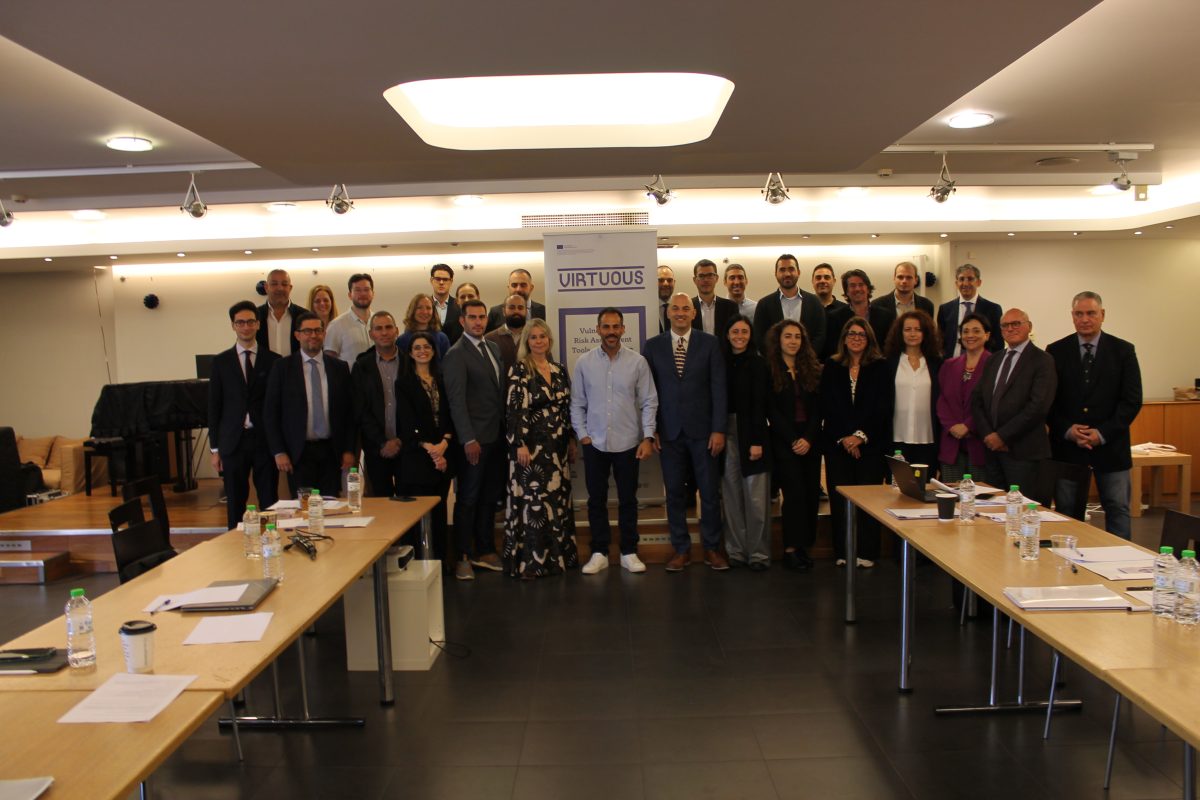
VIRTUOUS: A New Project to Strengthen the Security of Places of Worship in Europe

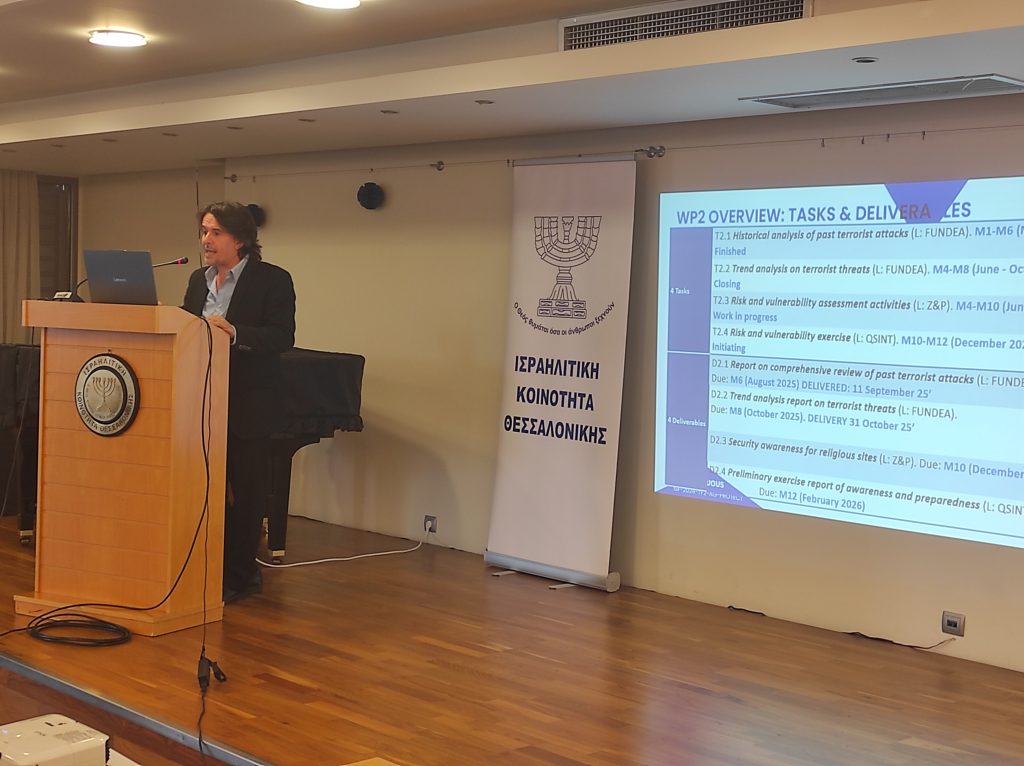
The launch of VIRTUOUS, a European project financed by the European Fund for Internal Security in which the Euro-Arab Foundation participates as a partner, took place in Limoges (France) on 19 March. During the event, José Mª González Riera, deputy director of the Euro-Arab Foundation’s Research and International Projects Department, outlined the Foundation’s essential role in the project: analysing past terrorist attacks, identifying threat trends, assessing the security of religious sites, and training religious leaders and security experts. In addition, the Foundation will lead the production of microlearning materials for religious communities.

The central objective is to strengthen cooperation and response to threats to places of worship through collaboration between religious communities, authorities and security forces.

Safer and more resilient environments for religious communities

VIRTUOUS proposes an innovative and multi-faceted approach, establishing an unprecedented collaboration between religious communities, authorities, security forces and security service providers. By integrating cutting-edge technologies, such as Building Information Modelling (BIM), the project aims to accurately identify vulnerabilities and improve understanding of potential threats. This effort represents a crucial step towards creating a safer and more resilient environment for religious communities in Europe, based on innovation, cooperation and a strong commitment to the values of the European Union.

The VIRTUOUS project is strategically aligned with key EU documents, including the EU Counter-Terrorism Agenda and the EU Security Union Strategy. By prioritising the physical protection of places of worship and fostering inter-religious dialogue, VIRTUOUS contributes directly to the EU’s objectives of ensuring security and promoting inclusiveness in European societies. In addition, the project emphasises the fight against hatred in all its forms, in line with the Joint Communication ‘No place for hatred: a Europe united against hate’, reinforcing its role in upholding fundamental rights and values.

Key Objectives:

  • In-depth understanding: analyse trends and recurring patterns of terrorist attacks against places of worship in Europe.
  • Identification of vulnerabilities: Use innovative technologies to assess and mitigate risks in these spaces.
  • Awareness and preparedness: Develop recommendations, training programmes and strengthen cooperation between stakeholders.
  • Broadening the scope: Extend protection to educational institutions and community gathering spaces associated with religious denominations.
  • Interfaith dialogue: Foster cooperation, communication and dialogue to strengthen the resilience of religious communities.
Categories
data quality en News Projects

Presentation of the results of the Needs Assessment of the DATA EQUALITY project

On 28 March, the First Policy Event of the European DATA EQUALITY project to prevent and combat intersectional data discrimination was held in an online format. This activity aimed to present the most relevant insights from the Needs Assessment activities, as well as to discuss possible solutions based on the Technical Roadmap elaborated on the evaluation of existing AI solutions for predictive justice and for pre-existing OSINT (Open Source Intelligence) platforms to be free of bias in collecting and processing data.

The meeting was attended by researchers from the Euro-Arab Foundation, Rascha Albaba Acosta, Jose Luis Salido Medina and Paula Cano Cruz. The latter was in charge of presenting the results of the Needs Assessment, a task led by the Foundation, which aims to illustrate the roadmap and innovative ideas for data collection and elaboration through AI-based tools, involving stakeholders such as Judicial Authorities, LEAs (Law Enforcement Agencies), technology companies, research centres and representatives of CSOs (Civil Society Organisations).

The results of the Needs Assessment, gathered through desk research activities, a survey and semi-structured interviews, have highlighted the gap in both the public and private sectors in the collection, management and analysis of discrimination data, including the lack of knowledge on the general issue of data-based discrimination.

Categories
News Projects Rebel EN

Jury Selects Finalists for its Redesigning Belonging (ReBel) Project

On March 19th, the Rebel Jury convened at WDCD’s headquarters in Amsterdam and selected 11 finalists from 56 applications received during an open call that invited designers, students, creative makers, thinkers, and innovators to contribute to the ReBel project’s goal: developing innovative integration models and solutions for diverse EU contexts.

An international jury of over 21 experts in service design, social anthropology, migration, and other fields, including the Euro-Arab Foundation as a project partner, selected the finalists from several EU countries. The winning projects will be chosen through a public vote on March 26th.

Categories
EN Hatedemics News Projects

We participated in the International Conference ‘Artificial Intelligence against Hate and Disinformation’

Last Thursday, March 13th, the Euro-Arab Foundation for Higher Studies participated in the international conference ‘Artificial Intelligence against Hate and Disinformation’ in Brussels, organized by ALDA (European Association for Local Democracy) and the Hatedemics’ Consortium.

The conference featured the presentation of initial findings from the Hatedemics project, which is developing advanced tools to detect, analyze, and counter harmful narratives, including racism, xenophobia, conspiracy theories, and intolerant discourse.

Lucía García del Moral, a researcher and international project manager at the Foundation, presented the methodological approach for the effective implementation of the Hatedemics Advanced Platform. She emphasized the importance of actively engaging NGOs, CSOs, fact-checkers, journalists, and young activists in the daily use of this tool to effectively combat hate and disinformation.

About the Hatedemics Project:

Following the conference, the Hatedemics project consortium held an internal meeting. HATEDEMICS, funded by the European Commission, aims to combat online hate speech and disinformation. The Euro-Arab Foundation leads the research component of the consortium.

The project’s primary goal is to empower NGOs, civil society organizations, media professionals, public authorities, and young activists to address these issues, with a focus on their impact on vulnerable groups. HATEDEMICS addresses the interconnected nature of hate speech and misinformation in the digital sphere.