Categories
News Projects victory

VicTory: First Exchange Event to Combat Hate and Extremism in Europe

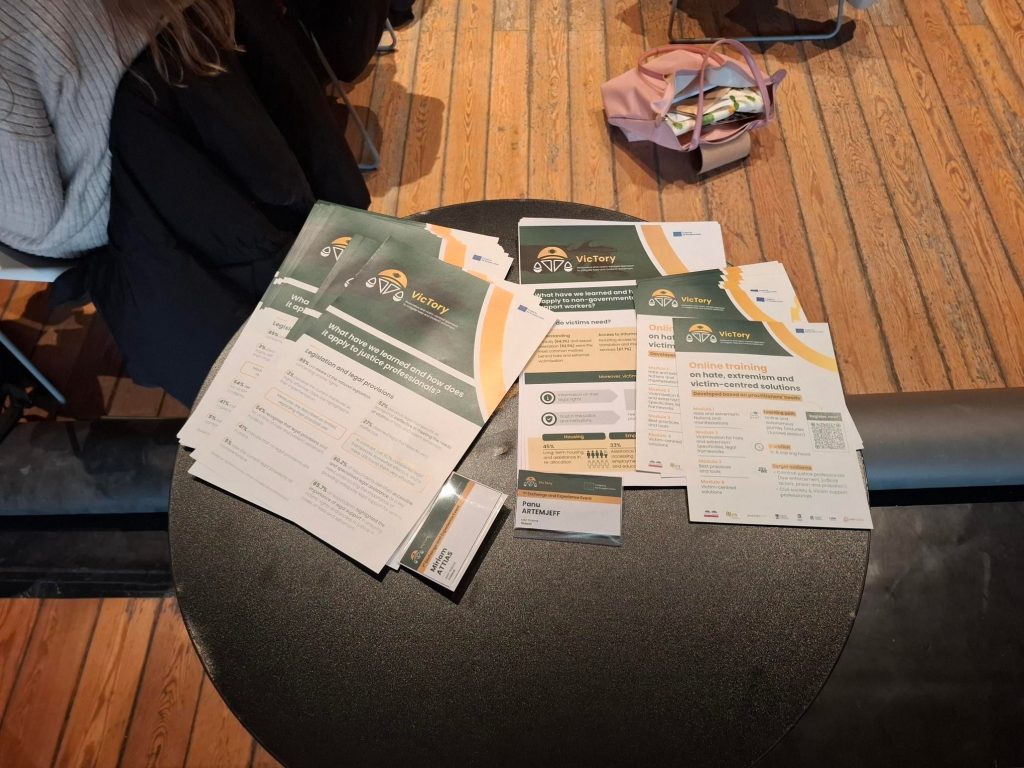
The European project VicTory has successfully concluded its first Experience and Exchange Training Event, held from February 10th to 12th, 2026. Over three intensive days, professionals from five partner countries gathered to comprehensively address the worrying rise in intolerance and its impact on victimization.

The meeting brought together a multidisciplinary group composed of victim support professionals—specifically those working with victims of hate crimes—judicial authorities, and civil society prevention experts.

Support for Victims of Hate Crimes and Violent Extremism with a Rights-Based Perspective

Throughout the three-day program, participants discussed comprehensive strategies to support victims of hate crimes and violent extremism, highlighting the importance of a person-centered approach oriented toward restorative justice.

In a joint session led by Rascha Albaba, a researcher from the Euro-Arab Foundation for Higher Studies, and the Ararteko (Ombudsman of the Basque Country), it was emphasized that victims should not be reduced solely to their status as victims: they are human beings with fundamental rights, and all support services must guarantee their dignity and safety.

The sessions emphasized the implementation of a human rights-based approach, explaining how victims’ rights are protected under international frameworks and within the European Union. Professionals were provided with existing mechanisms through which they can indirectly reinforce this protection at an international level. Additionally, practical “dos and don’ts” guidelines for victim care were provided to avoid causing further harm (secondary victimization) during the reporting and recovery processes.

The Ararteko delved into the role of key institutions in protecting victims’ rights, presenting concrete examples of restorative justice that balance the reparation of harm with the safety and well-being of those affected.

Theory and Practice in Action

The sessions combined theory and practice, including a site visit to the Rete di Dafne project in Palazzolo. There, participants observed how community networks transform vulnerability into strength by providing support, validation, and security to victims. This holistic approach demonstrated how collaboration between professionals and communities can significantly improve the protection and accompaniment of victims of hate crimes and extremist violence. The event was characterized by its human focus, allowing participants to hear real testimonies from both victims of extremism and individuals who had caused harm.

Next Steps for the VicTory Project

VicTory is an international initiative that seeks to improve responses to hate and extremism through cooperation between judicial, law enforcement, and victim support actors. With an approach based on the victim and restorative justice, it promotes a safer and more resilient Europe.

This event in Brescia marks the beginning of a series of three exchange meetings planned within the project. The participation of the Euro-Arab Foundation in these forums reinforces its position as a leader in applied research and training regarding the prevention of extremist violence and the protection of human rights—even for the most vulnerable—proving that in the face of transnational challenges, the solution must be shared and coordinated.

Categories
News Projects

The Euro-Arab Foundation’s Participation in the ‘Mediterranean Progressive Academy’

The Mediterranean Progressive Academy is hosting a three-day meeting in Barcelona (from 18 to 20 February) focused on identity, cooperation, and the future of the Euro-Mediterranean region. The main objective of the program is to commemorate 30 years of the Barcelona Declaration, while also analyzing dialogue and shared challenges within the current geopolitical context.

In the panel “What Unites Us in the Mediterranean?”, which took place on Wednesday, 18 February , Jusaima Moaid-azm Peregrina, a researcher at the Euro-Arab Foundation for Higher Studies and professor at the University of Granada, offered a review of the Barcelona Process 30 years after the 1995 Declaration. During her intervention, she explained the foundational ambition of promoting a Euro-Mediterranean space of peace, prosperity, and cooperation through three pillars (political-security, economic, and social-cultural) and its subsequent evolution with the creation of the Union for the Mediterranean as a more operational framework.

Moaid-azm’s intervention highlighted key achievements—such as the consolidation of a common language of cooperation, dialogue networks, and a sustained Euro-Mediterranean agenda—while also analysing structural limits that have hindered regional integration, such as the persistence of the socioeconomic gap, challenges in governance and stability, and the need to adopt an approach centered on civil society.

In 2025, the Euro-Arab Foundation also celebrated the 30th anniversary of its creation, a milestone that coincides with the three decades of the Barcelona Process analysed during the conference. Through its research and academic work, the institution continues to consolidate itself as a strategic bridge for peace and shared prosperity in the region.

Categories
EN Hatedemics News Projects

Final Conference of HATEDEMICS in Granada

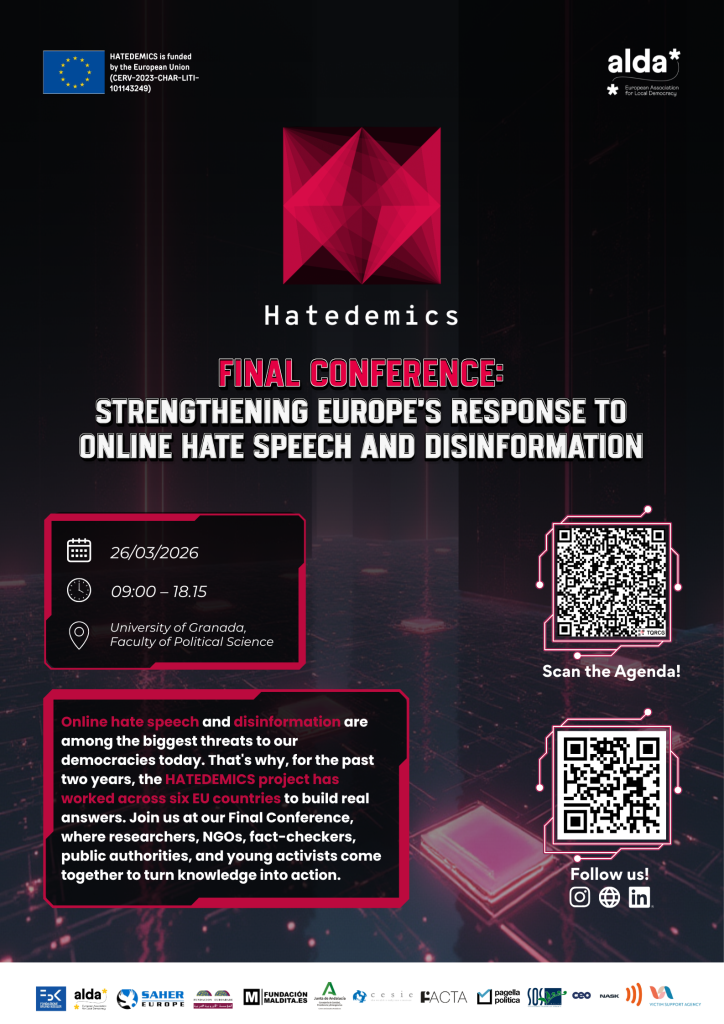
On March 26, the final conference of HATEDEMICS will take place in Granada under the title “Strengthening Europe’s Response to Online Hate Speech and Disinformation.” The event will be held at the Aula Magna of the Faculty of Political Science and Sociology at the University of Granada, from 9:00 a.m. to 6:00 p.m. It will be organized in a hybrid format (in person and online) and will bring together policymakers, academics, civil society organizations, technology professionals, young people, fact-checkers, and journalists, offering a unique opportunity to exchange perspectives and reflect on current challenges and future strategies at the European level.

This one-day conference represents a key milestone in the HATEDEMICS project’s efforts to address online hate speech and disinformation. By combining artificial intelligence and human expertise, the project has developed innovative tools to monitor, detect, and counter harmful narratives, while promoting ethical, inclusive, and democratic digital spaces.

The conference will present the project’s main results and will feature roundtables, presentations, and interactive workshops where participants will be able to test the AI-based tools created to detect disinformation and hate speech.

Registration to attend the event is now open and can be completed through this link.

Download the event agenda.

Categories
News PARTES-COM EN

PARTESS-COM and EFUS present a series of European training sessions to strengthen security in public spaces

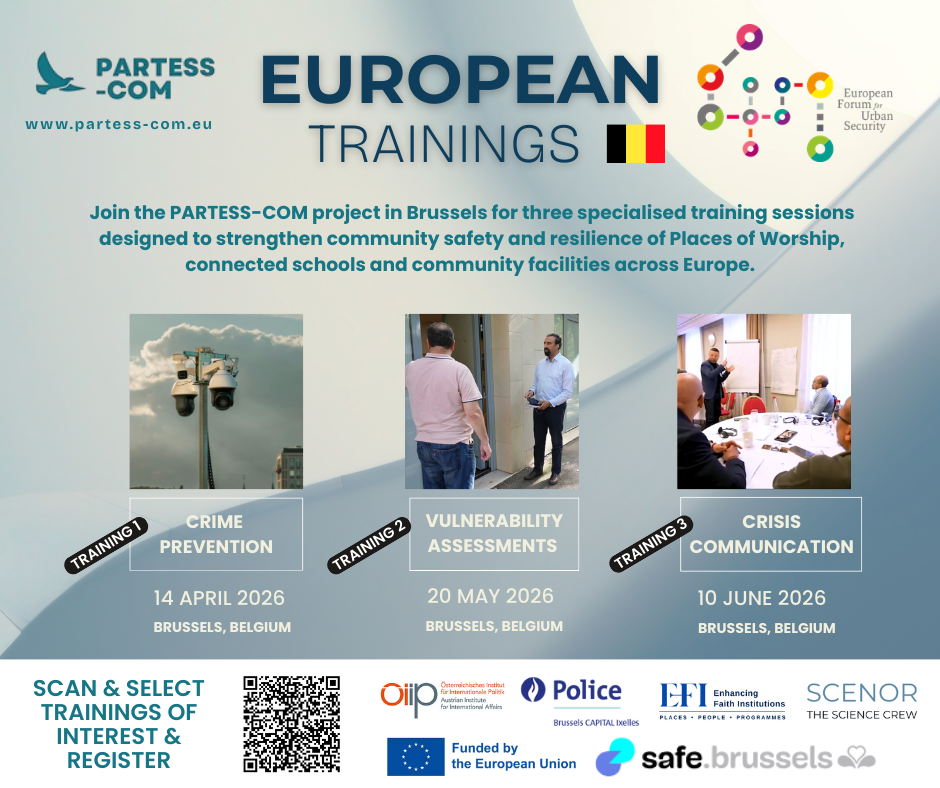
The PARTESS-COM project, in which the Euro-Arab Foundation participates, in collaboration with EFUS (European Forum for Urban Security) and with the support of the Brussels Police (PolBru) and safe.brussels, announces the launch of a series of European training sessions aimed at professionals interested in improving the security of public spaces and places of worship.

These training sessions aim to strengthen prevention, protection, and resilience capacities in the face of risks and threats that may affect gathering places and the public at large. The project promotes cooperation among local communities, authorities, and professionals to exchange promising practices and build effective strategies in the field of urban security.

The training series consists of three one-day in-person sessions to be held in Brussels throughout 2026:

  • From risk assessment to resilience: local crime prevention strategies for safer public spaces.
  • Protecting what matters: assessing and reducing vulnerabilities in places of worship.
  • Communication under pressure: managing communication before, during, and after a crisis.

The sessions will provide transferable tools and methodologies to develop approaches tailored to different environments and contexts, with particular attention to educational institutions and places of worship such as synagogues, mosques, or churches.

Practical information:

  • Session dates: April 14, May 20, and June 10, 2026.
  • Location: Brussels (Belgium).
  • Coverage: The project covers participants’ travel, accommodation, and subsistence costs.
  • Language: The sessions will be conducted primarily in English, with possible simultaneous interpretation into French.
  • Registration: Registration (via this link) does not guarantee participation. Final selection will aim to ensure balanced representation among stakeholder groups, geographical areas, and available places.

This training cycle represents a unique opportunity for local officials, law enforcement representatives, community leaders, and civil protection professionals to update their knowledge and share experiences in a European context.

Categories
EN Hatedemics News Projects

HATEDEMICS: Conference “Internet in 2026: Disinformation, Polarisation and Hate”

The MALDITA Foundation, the Andalusian Centre for Studies, and the Euro-Arab Foundation for Higher Studies are co-organising the event “Internet in 2026: Disinformation, Polarization and Hate”, which will take place free of charge at the Palacio de la Prensa in Madrid on 19 February. The event is part of the European project Hatedemics, funded by the European Union, and brings together civil society organisations, experts and academics to discuss current challenges on the internet—such as the spread of hate speech and polarising content—and to explore possible solutions.

Registration is available through the following form:
https://bit.ly/4tmUBVK

More information:
https://maldita.es/nosotros/20260205/fundacion-malditaes-co-organiza-la-jornada-internet-en-2026-desinformacion-polarizacion-y-odio/

Categories
News Projects VIRTUOUS en

VIRTUOUS: Assessment exercise of religious communities’ preparedness for threats to places of worship

On 5 February, the Euro-Arab Foundation took part in a simulation exercise organised in Rome within the framework of the European project VIRTUOUS, aimed at assessing the level of awareness and preparedness of religious representatives in the face of security threats to places of worship. The activity brought together representatives of the Christian, Jewish and Muslim faiths, as well as members of various law enforcement agencies and security experts from different European Union countries.

The event opened with statements from religious representatives and members of the VIRTUOUS project consortium, who highlighted freedom of religion as a fundamental right in democratic societies, stressing that the protection and security of places of worship are essential conditions for its effective exercise. The Euro-Arab Foundation was represented at the meeting by José María González Riera, Deputy Director for Research and Projects and VIRTUOUS Coordinator at the Foundation.

The exercise was followed by a training session in which various methods for protecting places of worship were analysed and put into practice, including risk assessment, techniques for identifying suspicious behaviours and situations, as well as de-escalation strategies and crisis management.

The activity also coincided with the celebration of World Interfaith Harmony Week, proclaimed by the United Nations, which was reflected in the atmosphere of cooperation, mutual respect and interreligious understanding fostered among all participants throughout the exercise.

About the VIRTUOUS Project

The VIRTUOUS project is a European Union–funded initiative aimed at strengthening the resilience and security of places of worship through cooperation between religious communities, public authorities and security experts. The project promotes the exchange of good practices, specialised training and the development of practical tools to prevent risks, manage crises and protect both people and places of worship, always with full respect for fundamental rights and religious diversity.

VIRTUOUS officially began its second year of implementation with the Consortium Meeting held in Rome on 4 February. This third in-person meeting allowed partner organisations to review the main achievements to date, as well as to define and coordinate the remaining tasks to be developed. The simulation exercise held on 5 February marked the conclusion of activities related to the state of the art on terrorist attacks and risk and vulnerability assessment.

Categories
EUKH EN News Projects RADICALIZACION EN

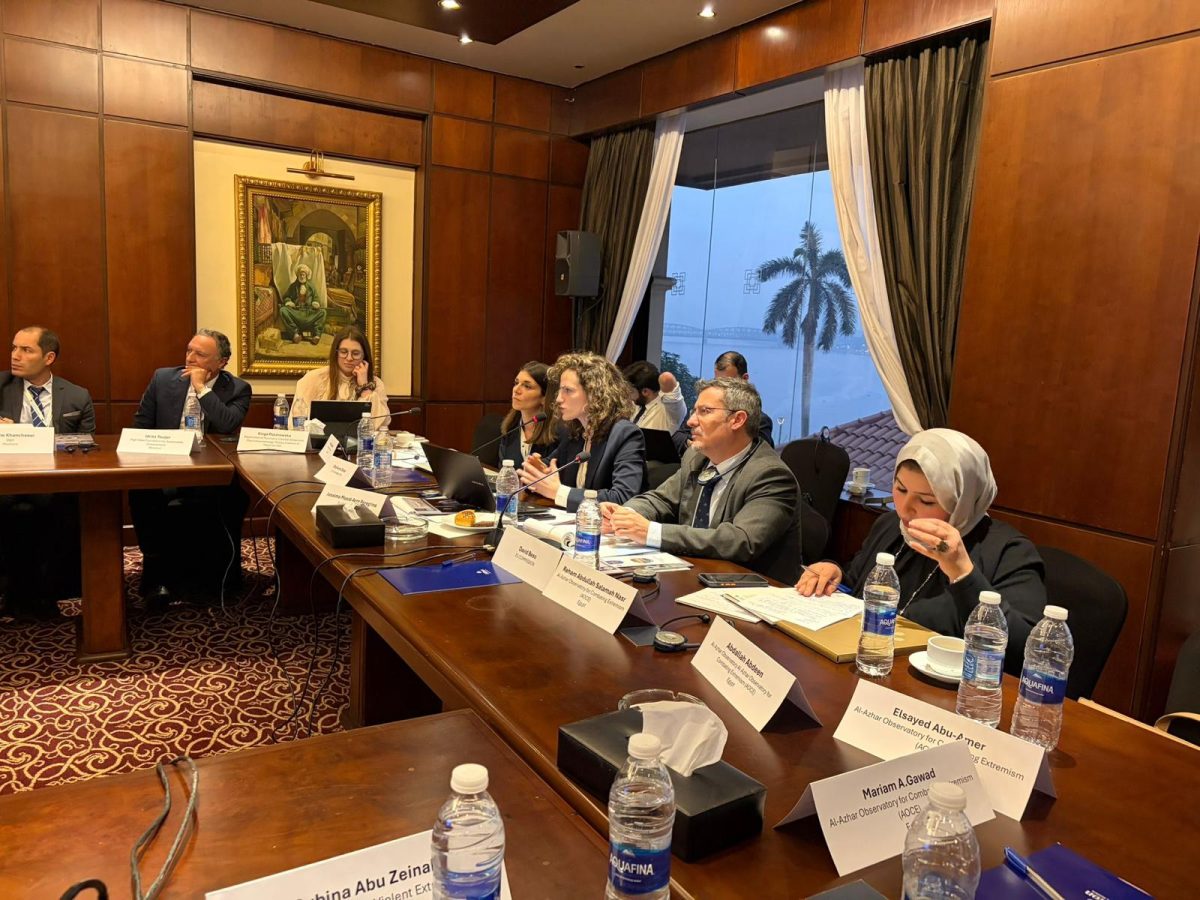
The Euro-Arab Foundation participates in a study visit on youth resilience and radicalisation prevention in Egypt

Within the framework of its participation in the EU Knowledge Hub, the Euro-Arab Foundation for Higher Studies took part in the MENA region study visit titled: “Preventing Radicalisation and Building Youth Resilience: Insights from Al-Azhar Observatory for Combating Extremism.”

The meeting, organized by the EUKH and the European Commission on 21 and 22 January, brought together policymakers and practitioners from EU Member States and MENA countries in the Egyptian capital to analyze successful models in Preventing and Countering Violent Extremism (PCVE).

The Egyptian model and the role of narratives

During the visit, the delegation gained in-depth insights into the Egyptian prevention model, with a particular focus on the work of the Al-Azhar Observatory. Experts, including Euro-Arab Foundation researcher Jusaima Moaid-azm, analysed how this center integrates constant monitoring, deep analysis, and the production of effective alternative narratives.

The visit provided first-hand knowledge of the Observatory’s communication strategies to dismantle extremist discourse—an area where the Euro-Arab Foundation has an extensive track record through its various research projects. This analysis was linked to a comparative study on youth vulnerability and resilience in the face of social, economic, and digital pressures in both Europe and the MENA region, based on the premise that prevention is not an isolated task, but rather a systemic challenge.

Categories
EUKH EN News Projects RADICALIZACION EN

The Euro-Arab Foundation participates in Brussels in the strategic boost of the EU Knowledge Hub for 2026

Three researchers from the Euro-Arab Foundation for Higher Studies actively participated in the first Joint Thematic Panel Meeting of the EU Knowledge Hub (on the Prevention of Radicalisation), held on 21 January at the headquarters of the European Commission’s Directorate-General for Migration and Home Affairs.

This gathering marked the start of a pivotal year for security and PCVE (Preventing and Countering Violent Extremism) in Europe, where the primary focus will evolve from theoretical learning to practical implementation.

Towards a more practical and connected prevention

The hybrid meeting brought together co-leaders, Research Secretariats from the seven Thematic Panels, and Special Advisors of the EUKH. The core objective of the day was to define the strategic guidelines that will provide EU Member States with concrete tools and high-impact orientations to tackle current PCVE challenges.

Key points highlighted during the working sessions included:

  • Cross-panel synergies: The assembly identified the need to tackle complex issues through a multidisciplinary lens, bridging areas of expertise such as the intersection of online radicalisation and youth.
  • Knowledge translation: The 2026 strategy will focus on ensuring that conclusions and recommendations do not remain mere reports but are “translated” into effective public policies and practices for practitioners across Europe.
  • Strategic impact: Thanks to insights from experts and Special Advisors, new communication initiatives have been established to ensure that knowledge directly reaches decision-makers.

Commitment of the Euro-Arab Foundation

The presence of the Euro-Arab Foundation’s researchers—Paula Cano and José Luis Salido (Research Secretariat for Thematic Panel 5: ‘Lone Actors and Mental Health’) and Isabel Pérez (Research Secretariat for Thematic Panel 1: ‘Ideologies and Conspiracy Narratives’)—reinforces the Euro-Arab’srole as an essential bridge between academic research and the social application of prevention policies. Through this participation, the Foundation continues to contribute actively to community resilience and democratic security within the European framework.

Categories
News Projects victory

Initial Session of the VicTory Course, Focused on Victims and Restorative Justice

Last week, the introductory session of the VicTory project’s online training took place. In the online meeting, the Euro-Arab Foundation for Higher Studies, as the coordinator of the VicTory project, actively participated in the introductory session of the online training, welcoming participants and presenting the comprehensive victim-centered and restorative justice approach that characterizes the project. During the session, the purpose and scope of the training were explained, combining an online course with in-person exchange events, and the importance of the work of professionals who provide justice and empowerment to victims every day was emphasised.

The session also offered participants the opportunity to get to know each other better and begin building networks of collaboration among professionals from different European countries, fostering constructive and enriching exchanges. It was highlighted that criminal justice and victim support go beyond legal and institutional procedures, and that training professionals working in this field is essential to ensure effective and humane assistance.

The Digital Dimension of Harm and Training for Victim Support Professionals

For many people affected by hate crimes or extremism, the harm does not end with the incident itself. This is particularly evident in digital environments, where the ongoing circulation of images, narratives, comments, or threats can prolong suffering, increasing distress and uncertainty beyond the original event. However, despite the growing prevalence of this reality, victims often face these digital aftereffects with limited information and uneven support. Professionals may lack up-to-date knowledge about online risks, particularly regarding the interaction of generative artificial intelligence and algorithmic biases, while digital platforms face challenges in moderating “gray” content and removing it effectively.

Despite these challenges, victim support professionals consulted within the VicTory project emphasize that the digital world can also offer opportunities to improve victim safety, recovery, and reporting, helping to reduce secondary harm. Therefore, the VicTory project highlights the need for clearer professional practices and greater institutional awareness that recognizes the digital dimension of harm, ensuring that information, support, and protective measures are available both in-person and online. This is one of the topics covered in our online training course.

Registration and participation in the online training remain open. This training is aimed at professionals working in the field of support for victims of hate crimes and violent extremism in Europe and is available in Spanish, English, and other languages. Interested individuals can register and obtain more information through the following link: https://lnkd.in/dFysTwaS

Categories
News PARTES-COM EN

The Euro-Arab Foundation takes part in a European Panel on the Protection of Places of Worship and Religious Communities

On 12 December, the Euro-Arab Foundation for Higher Studies took part in the online panel “Protection of Places of Worship and Religious Communities as Critical Infrastructure”, organised by the Austrian Institute for International Affairs (oiip) in cooperation with the University for Continuing Education Krems (UWK) and the European project PARTESS-COM.

The panel brought together researchers and practitioners from different European countries to analyse the current threat environment affecting places of worship and religious communities, which are increasingly exposed to acts of extremism, hate crime and ideologically motivated violence. In this context, religious spaces were addressed as critical infrastructure requiring greater attention in terms of security and resilience.

The Euro-Arab Foundation was represented by José Luis Salido, researcher and project coordinator who highlighted the importance of comprehensive prevention approaches based not only on physical security measures, but also on soft security strategies, community engagement, and improved communication channels between religious communities, local authorities and security actors.

During his presentation, Salido analysed the current global threat landscape and presented the results of a study based on the analysis of 25 hate crime case studies across 13 European countries, highlighting that places of worship and related spaces have become critical targets. Salido delved into the ideological and strategic characteristics of the extremist groups perpetrating these attacks, warning that the transition from hate speech to physical aggression is a growing concern that demands a coordinated response between local authorities, national governments, and European Union institutions

The participation of the Euro-Arab Foundation in this panel reinforces its commitment to applied research, intercultural dialogue and the prevention of violent extremism, in line with its work on European projects focused on social cohesion and democratic security.

The panel was held within the framework of the European project PARTESS-COM, an initiative funded by the European Commission in which the Euro-Arab Foundation is a partner. The project aims to improve the protection of places of worship and religious communities against terrorist and extremist threats by fostering cooperation, communication and trust among religious actors, public authorities and security forces. It promotes preventive and participatory approaches, as well as the development of practical tools and recommendations to strengthen security without compromising fundamental rights or social cohesion.

More information about the event:
https://www.oiip.ac.at/events/online-panel-discussion-protection-of-places-of-worship-and-religious-communities-as-critical-infrastructure/