Categories
News VIRTUOUS en

Key insights and recommendations from the ‘European Conference on Security in Public Spaces and Protection’

The Euro-Arab Foundation, a key institution for the protection of places of worship

The document Building Safer Public Spaces: Key Learnings and Recommendations from the 2026 European Conference on Security in Public Spaces and Protection sets out the main conclusions of a conference held on 12 June 2026 in Nicosia, Cyprus. The event brought together more than 180 participants from 60 organisations based in 14 European countries, joined by representatives from Brazil, Japan and China.

In the words of Zenonas Tziarras, Professor in the Department of Turkish and Middle Eastern Studies at the University of Cyprus, “the imperative is not to imagine a world without risk, as none has ever existed, but to cultivate the capacity to live with uncertainty without allowing it to erode trust, deepen social fragmentation or undermine democratic life. All of this requires preparedness, effective institutions and robust security policies.”

“the imperative is not to imagine a world without risk, as none has ever existed, but to cultivate the capacity to live with uncertainty without allowing it to erode trust, deepen social fragmentation or undermine democratic life. All of this requires preparedness, effective institutions and robust security policies.” Zenonas Tziarras

Among the cases examined in the document was the attack that took place in the centre of Modena, Italy, on 16 May. Several organisations had received advance warnings, which highlights the absence of official channels for sharing such information, channels that could have triggered a coordinated intervention.

As a result of the various panel discussions, six actions were recommended:
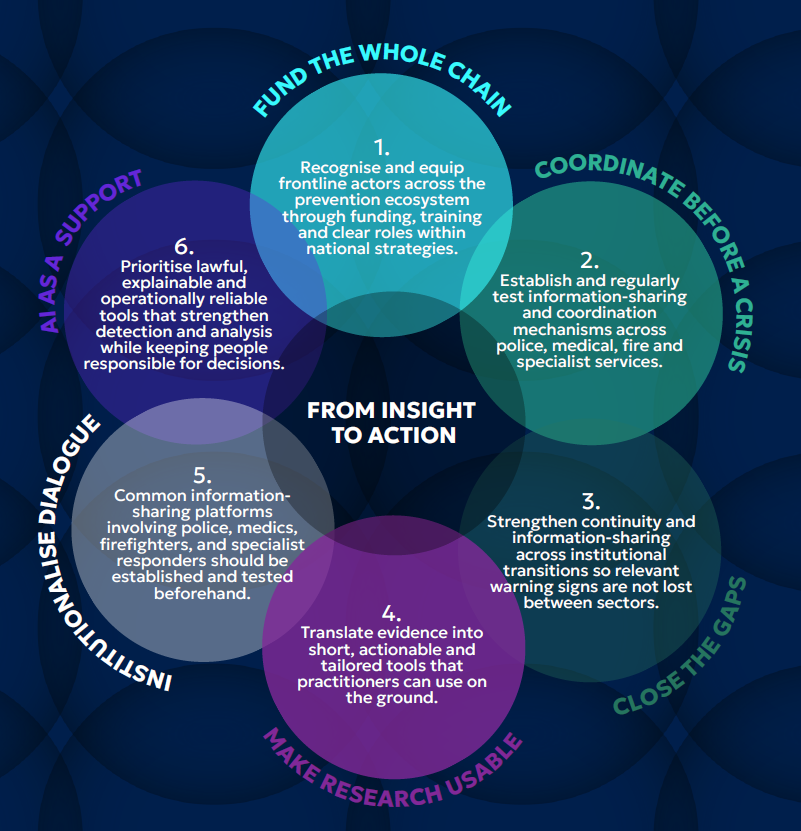
  1. Establish the full chain for training, detecting and responding to risk situations, with frontline personnel and clearly defined roles within national strategies.
  2. Ensure crisis coordination through shared-information exercises and coordination mechanisms across law enforcement, medical personnel, and rescue and emergency services.
  3. Close existing gaps by strengthening the continuity and sharing of information when risk warnings are issued, in order to prevent loss of information between parties.
  4. Design practical, evidence-based tools for professionals working in the field.
  5. Institutionalise dialogue through platforms that connect law enforcement, medical professionals and first-response teams.
  6. Prioritise reliable, accessible and operational tools for risk detection and analysis, while preserving human responsibility in decision-making.

The convergence of these six pillars enables these findings to be translated into action in support of cooperation, preparedness and resilience across the entire security ecosystem.
Categories
VANGUARD

The Euro-Arab Foundation brings its work on AI and human trafficking to the University of Brescia

The Euro-Arab’s researcher, Karen Hough, contributed to the doctoral programme reflects the importance of interdisciplinary research and academic exchange

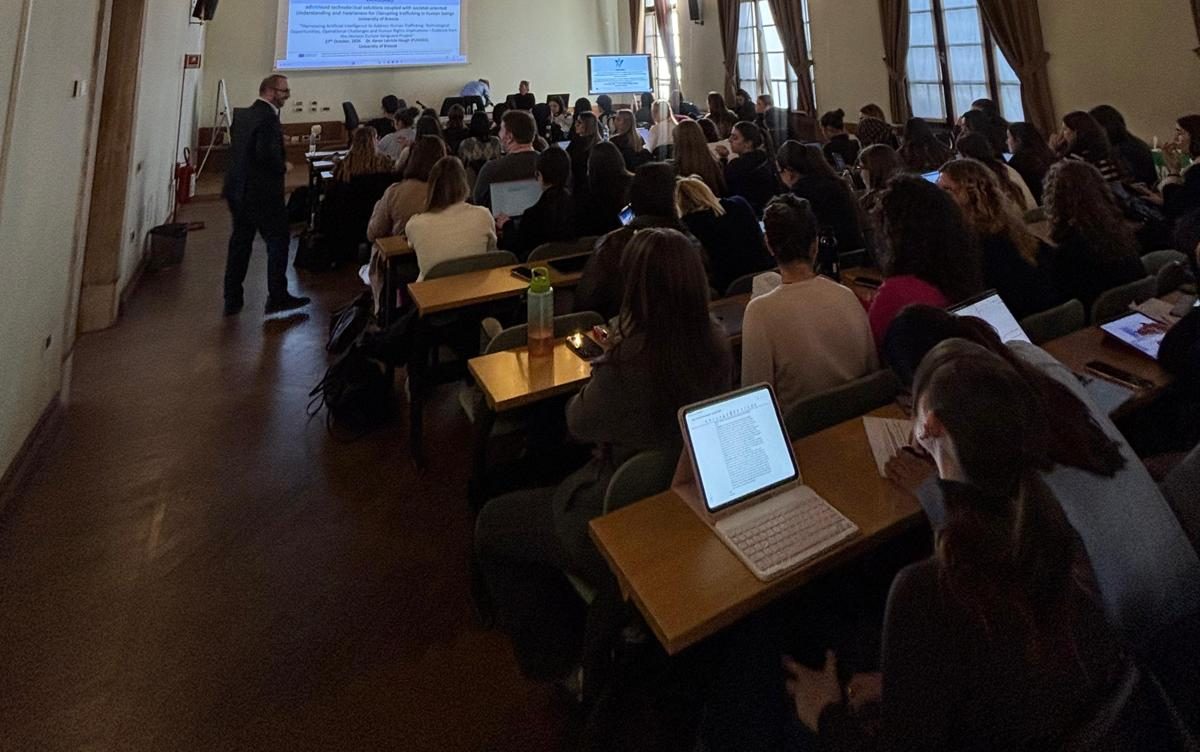
On 27 October, Karen Latricia Hough, researcher at the Euro-Arab Foundation , delivered a presentation at the University of Brescia (Italy) as part of the PhD Programme ‘Rights, Person, Innovation and Market’; hosted by the Department of International Law .

The lecture, entitled ‘Harnessing Artificial Intelligence to Address Human Trafficking: Technological Opportunities, Operational Challenges and Human Rights Implications—Evidence from the Horizon Europe Vanguard Project’, explored the growing role of artificial intelligence (AI) in tackling human trafficking, as well as the opportunities and challenges of deploying emerging technologies against it.

Drawing on evidence from the Horizon Europe Vanguard Project, Hough examined how AI-powered tools and technological innovation can strengthen efforts to identify, prevent and respond to human trafficking. She also addressed the operational challenges of implementing these technologies, alongside the critical human rights considerations that must guide their development and use.

As AI continues to reshape approaches to security, justice and human rights protection, the discussion highlighted the importance of ensuring that technological solutions are effective, ethical and grounded in human rights principles. It also underscored the need for collaboration between researchers, policymakers, legal experts and practitioners to ensure that innovation translates into meaningful, responsible action against human trafficking.

The importance of ensuring that technological solutions are effective, ethical and grounded in human rights principles

Hough’s contribution reflects the value of interdisciplinary research and academic exchange in addressing pressing global challenges at the intersection of technology, international law, human rights and social protection. This visit also gave the Euro-Arab Foundation the opportunity to share the Horizon Europe VANGUARD Project with the academic community and to contribute to the debate on how emerging technologies can support more effective and human-rights-centred responses to human trafficking.

Innovation in human rights protection

For the Euro-Arab Foundation, this participation is part of the ongoing analysis of AI as a technology with a dual nature: it can be misused by criminal networks but it can also propels the protection of trafficking victims The doctoral programme, which combines cultural, technological and methodological innovation, is closely aligned with VANGUARD, particularly with the design of ‘Red Flags: a serious game’, a video game for children and teenagers that takes into account their environment: family, educators, friends and social communities.

VANGUARD project, which concluded on October with a final conference at the Center for Security Studies (KEMEA), puts in practice innovation not only on the process of developing tools, but also in how to ensure the accessibility of these tools reinforced by the design of engagement and awareness actions, with the involvement of science communicators with a more approachable and age adequate to the targets digital languages.

Categories
News VANGUARD

Horizon’s project VANGUARD concludes highlighting social science contributions to tackling human trafficking

The Horizon Europe project VANGUARD (adVANced technoloGical solutions coupled with societal-oriented Understanding and AwaReness for Disrupting trafficking in human beings) concluded on 19 October with a final conference. The Euro-Arab Foundation, a member of the project consortium, was represented by its researcher Karen Latricia Hough, who has worked on VANGUARD throughout its three years.

The event took place at the Center for Security Studies (KEMEA) in Athens Greece with key experts and professionals in the field of human trafficking for a high-level conference and roundtable discussion. It provided a platform for knowledge exchange, interdisciplinary dialogue, and collaboration among experts committed to strengthening the understanding of human trafficking and identifying approaches to address this complex and multifaceted phenomenon.

A key highlight of the conference was the expert panel, ‘Human trafficking through a social scientific lens: from understanding to action’ moderated by Karen Hough from the Euro-Arab Foundation. The discussion explored the importance of applying social scientific perspectives to the study of human trafficking, highlighting the value of research, evidence-based approaches, and collaboration in informing effective responses.

The roundtable that followed brought together expertise from across the field, encouraging participants to reflect on the challenges associated with human trafficking and the importance of translating knowledge and research into practical action. Through open discussion and the exchange of professional insights, participants contributed to a broader dialogue on how multidisciplinary cooperation can support efforts to prevent and address human trafficking.

The final conference marked an important milestone for the VANGUARD project, providing an opportunity to share knowledge, consolidate discussions, and reinforce the importance of cooperation among researchers, practitioners, survivors, policy makers, LEAs, technological experts and other stakeholders working to combat human trafficking.

Categories
News VIRTUOUS en

VIRTUOUS holds public innovation laboratories in Budapest to protect places of worship

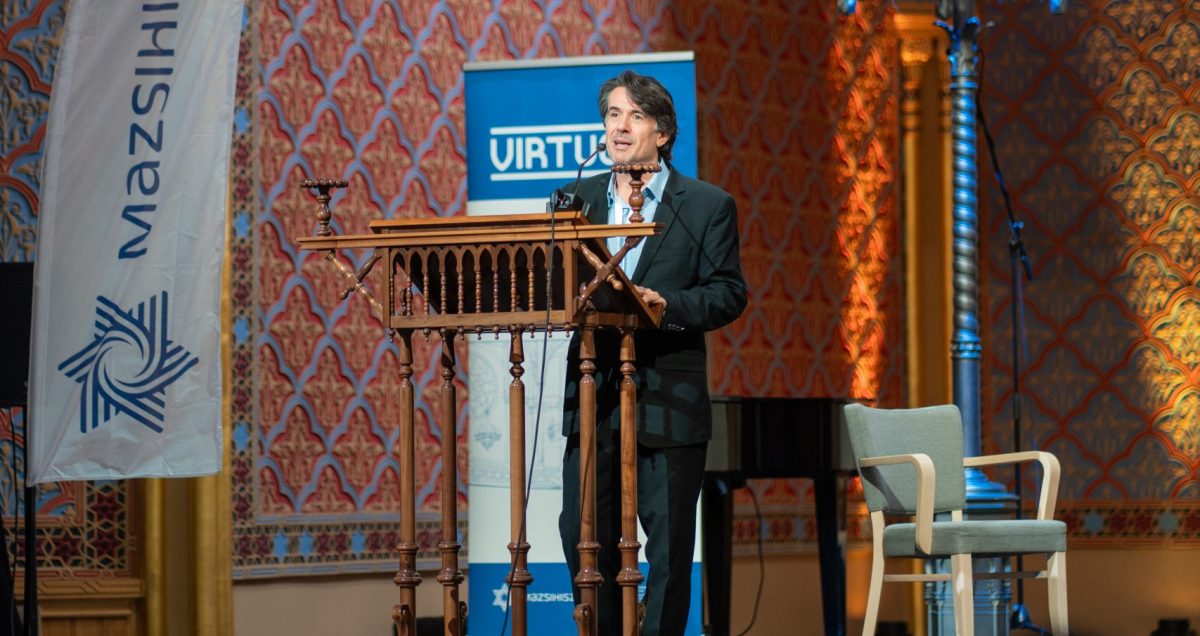
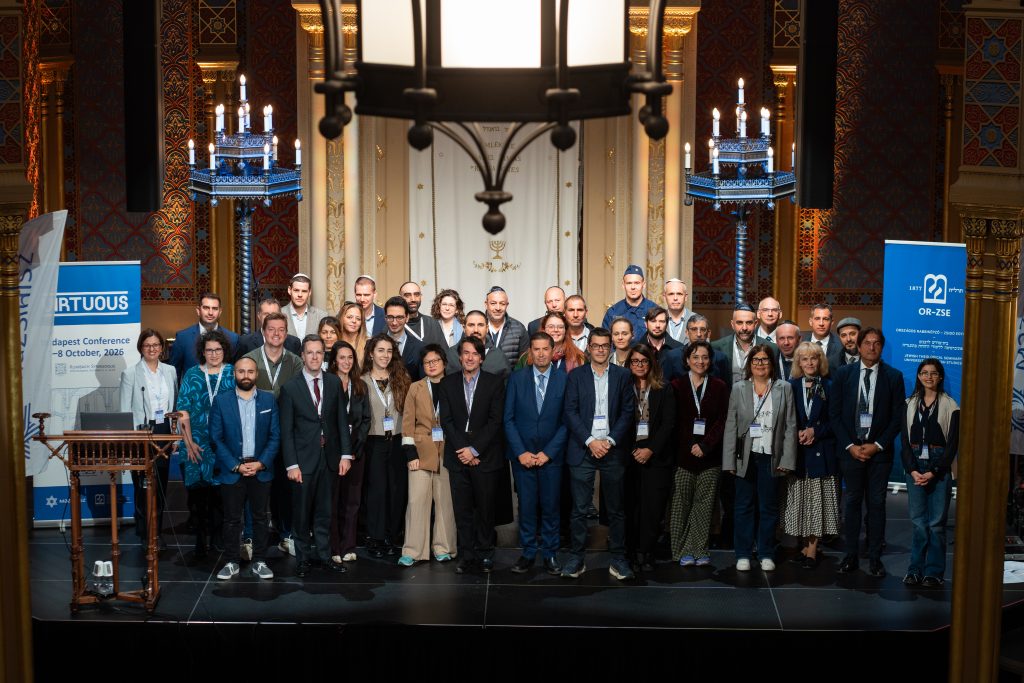
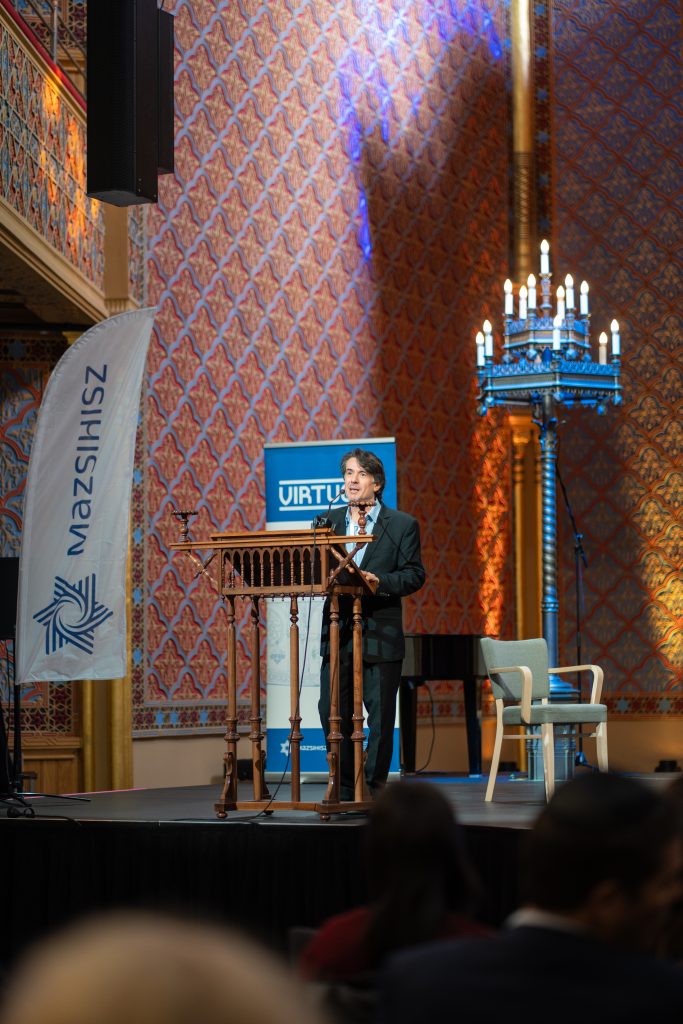
On 7 October, José María González Riera, Deputy Director of the Research and Projects Department at the Euro-Arab Foundation, presented the main findings of the study on attacks against places of worship carried out within the VIRTUOUS project. Two comprehensive quantitative and qualitative analyses identified the patterns observed between 1980 and 2025, current trends and potential future risks. The results, coordinated and supervised by the Euro-Arab Foundation, were presented at the official opening of the VIRTUOUS conference in Budapest, in the presence of senior representatives of the Hungarian government, members of the Hungarian academic community and representatives of the United Nations.

The Euro-Arab Foundation shared the most relevant and recurrent findings of the research conducted by the VIRTUOUS consortium, which brings together 21 organisations from 11 countries. The analyses supervised by González Riera for Christian, Jewish and Muslim communities provided the basis for applying the Building Information Modelling (BIM) system to the protection of places of worship. This approach relies on a collaborative methodology that preserves the spatial openness of these sites and respects their primary functions, while integrating up-to-date security measures into the building.

“Although case study analyses have been carried out for each religious community, the commonalities detected are cross-cutting, and the adaptation is made according to the characteristics and resources of each place of worship.” José María González Riera, The Euro-Arab Foundation

Ignacio Ibáñez, Head of the United Nations Office of Counter-Terrorism in Spain, endorsed the assessment presented by the Foundation. He underlined the importance of sustained cooperation among public authorities, institutions, security forces and religious communities to ensure effective prevention of risk situations. Ibáñez also highlighted the role of cybersecurity, noting that data breaches affecting worshippers can expose their identities and make them potential targets of attacks.

“Maintaining a relationship with communities is not only about communicating when there is a risk situation, but also about asking communities what they need and informing them of how they can be helped.” Ignacio Ibáñez, United Nations

Public innovation laboratories

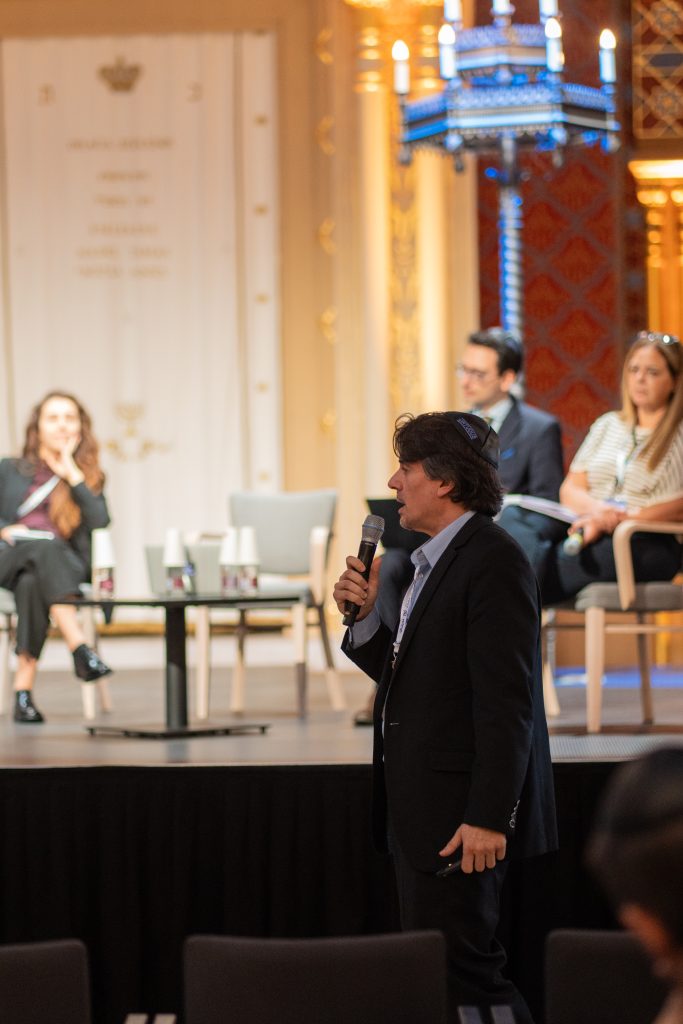
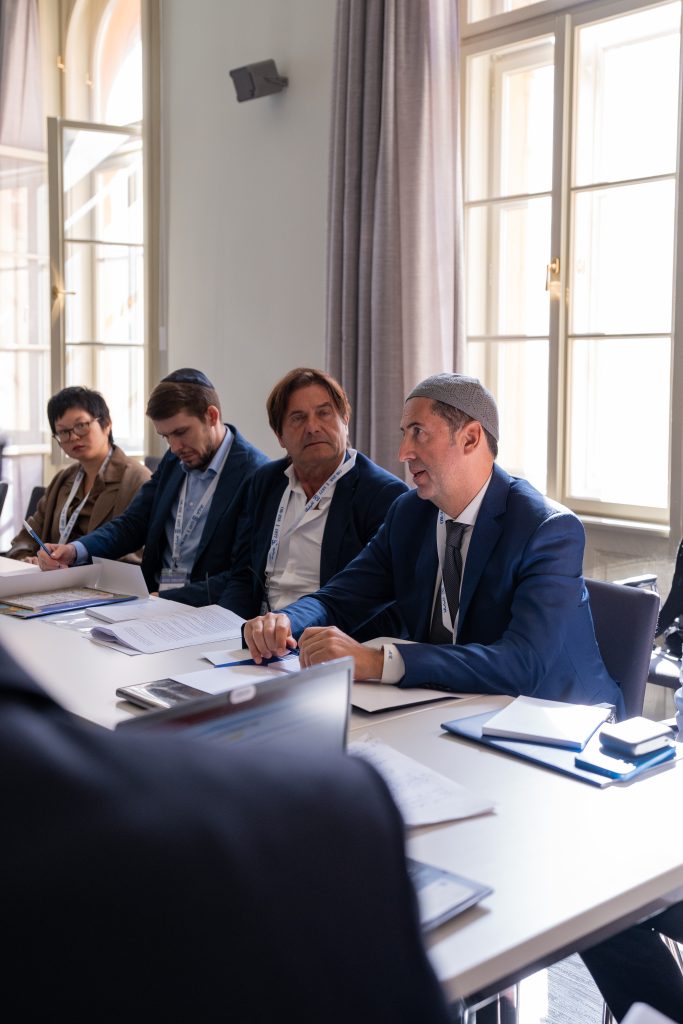
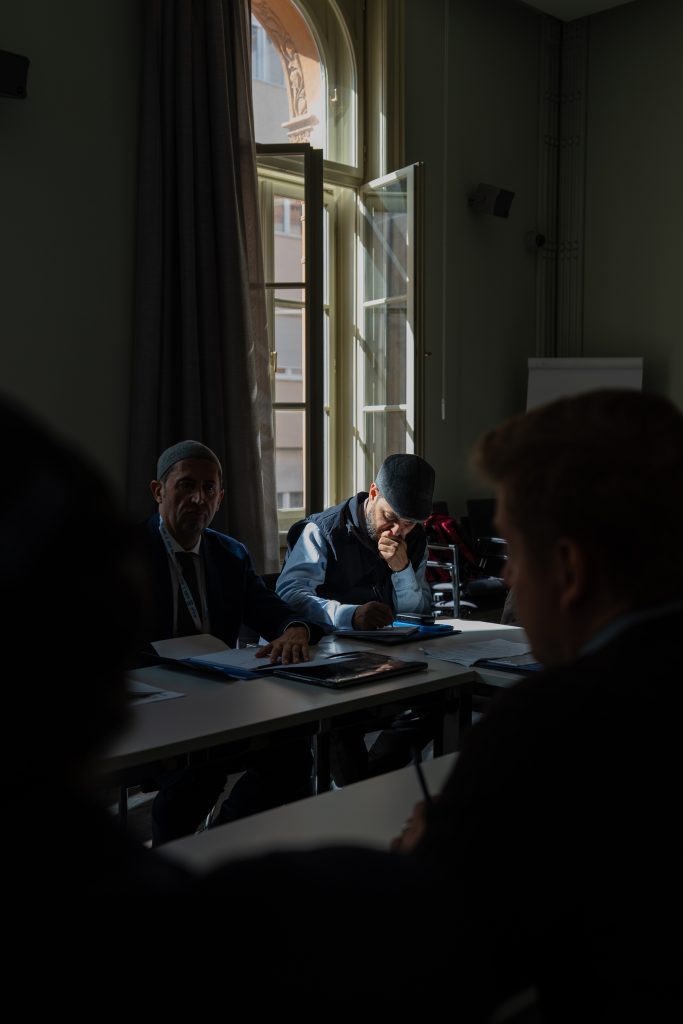
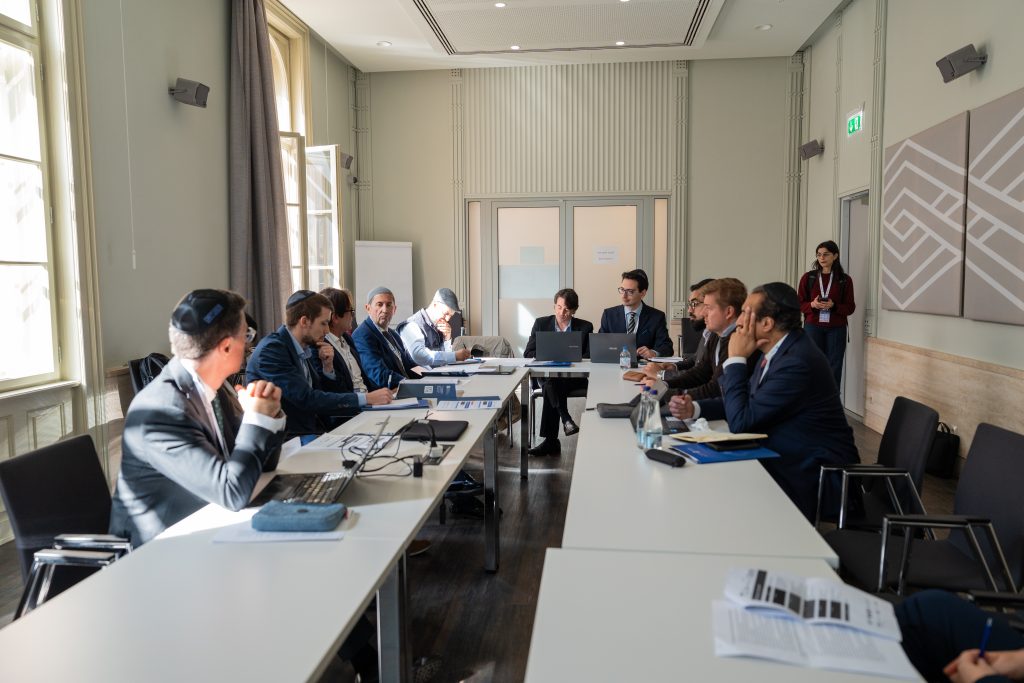
During the Budapest conference, the Euro-Arab Foundation facilitated the second session of the public innovation laboratory with Muslim communities. The first part examined potential threats to places of worship in greater depth, while the second focused on lessons learned and on strategies for preparing for crisis and emergency situations.

Representatives of the United Nations and the Hungarian government took part in the session and put forward possible avenues for institutional support to these communities. In the joint session with Christian, Jewish and Muslim communities, the contributions of religious leaders were compared and discussed. They were followed by the perspective of law enforcement, with participation from the Budapest Police and the Cyprus Police, as well as experts in technological security measures.

Debate and Future lines of research

Experts and law enforcement representatives raised key questions, including where to draw the line between prevention and racial profiling when reporting suspects, and how to measure the effectiveness of prevention when its success is defined by the absence of attacks. These questions open new lines of research for the project.

In the final panel discussion, the Euro-Arab Foundation and the other consortium partners responsible for the public innovation laboratories with Christian and Jewish communities shared the new questions that emerged during the sessions, with a view to examining them further. According to González Riera, the main issues included the tendency of some Muslim communities to keep a low profile in order not to stand out from their surroundings and thereby avoid becoming a target, the type of buildings, which makes them harder to protect, and the lack of institutional recognition of certain sites as places of worship in some European countries.

The closing session concluded that dialogue is one of the founding values of the European Union, and that security is not an exact science: it has psychological dimensions and is a complex matter shaped by many factors. In this context, establishing institutional processes that address specific situations and are sustained over time is essential.

Categories
VANGUARD VANGUARD

The Euro-Arab Foundation leads the awareness-raising and dissemination campaign for the video game ‘Red Flag’

The Euro-Arab Foundation leads the awareness-raising and dissemination campaign for the video game ‘Red Flag‘, designing a key action to strengthen its educational impact and its level of socio-community outreach among young people and adolescents, as potential victims of human trafficking networks, both online and offline. To this end, the Foundation collaborates with psychologist Isabel Duque, a professional who works with the virtual codes and interactive languages used in the digital spaces that minors engage with on a daily basis.

The campaign design began at the start of the year and concluded at the end of September. It consisted of identifying candidate profiles and assessing them against rigorous suitability criteria, given the high sensitivity of the subject matter and of the target audience: minors and their closest support networks. The criteria included a significant social media presence, assessed not only by number of followers but also by the size and characteristics of their digital communities, that is, by the profile of the users who trust the judgement of the person disseminating the content. In addition, profiles were required to focus their content on social justice (given the subject of human trafficking), a gender perspective (as the ‘lover boy’ method targets, and its victims are, women and girls), and the education of minors, as this is a free public-service action.

Following several months of outreach to a range of professionals, always under the coordination and supervision of the Euro-Arab Foundation, and in partnership with the German association specialised in combating human trafficking, Gemeinsam gegen Menschenhandel e.V. (GGMH), the first design phase of the prevention campaign for adolescents concluded when Isabel Duque, a psychologist better known as ‘La Psicowoman‘, agreed to collaborate with the Foundation. Ms Duque has a professional career spanning more than two decades, delivering lectures, facilitating workshops and maintaining a proactive online presence across several digital platforms, including TikTok and Instagram, which are widely used by adolescents. She is also the author of several books on emotional education and prevention, and focuses her work on in-person sessions delivered in schools and secondary education centres throughout Spain.

Finally, as a reinforcement of the ‘Red Flag’ campaign, a serious game against the recruitment of minors on social media and in their everyday lives, which remains ongoing, the collaboration with Isabel Duque took place on Monday 28 and Wednesday 30 October. It achieved more than 200 likes and over 9,200 views within three days (a figure that continues to grow), with a potential reach of nearly 82,000 followers.

Categories
EN PARTES

The Euro-Arab Foundation leads the first National Network of Experts for PARTESS-COM

The Euro-Arab Foundation is organising the first meeting of the National Network of Experts of the European research project PARTESS-COM. It will take place online on Tuesday 6 October.

The online format allows participation from different regions. Participants will share their religious needs and discuss how various actors and sectors could support the protection of places of worship.

The session begins at 10:00 (CEST) and lasts approximately 90 minutes. It will present examples of international intercommunity cooperation. Participants will also discuss the current state of security measures and how to update, improve or modify them.

The meeting is aimed at professionals whose work involves religious communities, security in places of worship and faith-based spaces. Its objective is to develop initiatives that are not only responsive to the communities they serve and support, but also led by them. These initiatives should be pragmatic and adapted to the characteristics, circumstances and realities of each space and its users.

Who is the National Network of Experts for?

  • Local leaders
  • Community representatives
  • Security professionals

What topics will be addressed?

  • Common challenges
  • Emerging trends
  • Opportunities for cooperation

Tuesday 6 October 2026, 10:00–11:30 (CEST)

How to register

Places are limited to 12 participants to allow for in-depth discussion. Please register using the form below. The meeting link will be sent once your registration is confirmed.

Categories
News VANGUARD VANGUARD

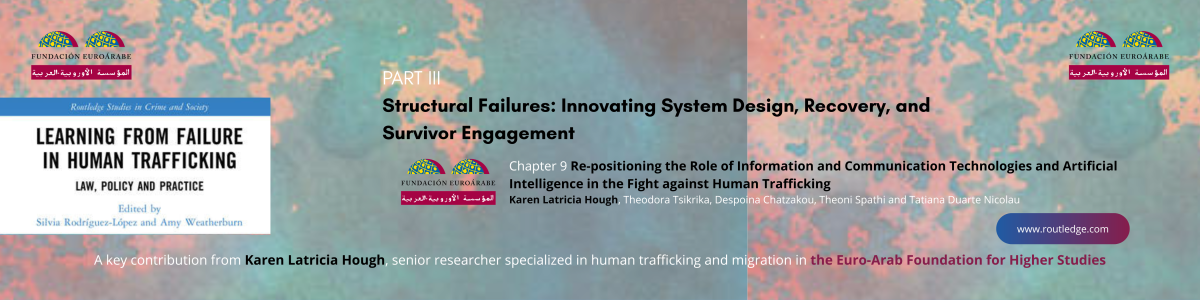
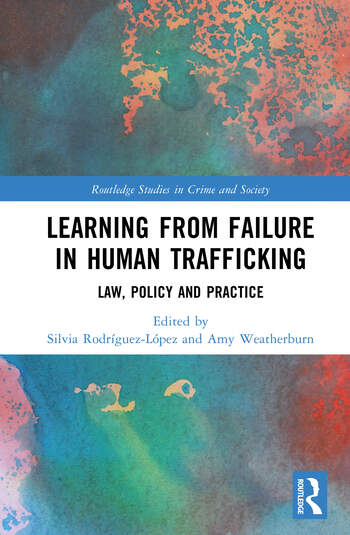
Karen Latricia Hough, VANGUARD project’s researcher, contribute to the volumen ‘Learning from Failures in Human Trafficking’

Hough co-authors chapter 9 ‘Re-positioning the Role of Information and Communication Technologies and Artificial Intelligence in the Fight against Human Trafficking’

Karen Latricia Hough, senior researcher at the Euro-Arab Foundation for Higher Studies currently developing VANGUARD project, has analyzed the importance of information and technological advances—such as artificial intelligence—alongside fellow researchers Theodora Tsikrika, Despoina Chatzakou, Theoni Spathi, and Tatiana Duarte Nicolau.

The article co-authored by Hough, Tsikrika, Chatzakou, Spathi, and Duarte Nicolau constitutes Part III of a publication supervised by Silvia Rodríguez-López, a senior researcher in criminal law at the University of A Coruña, and Amy Weatherburn, an FWO Senior Postdoctoral Fellow at the KU Leuven Institute for European Law, specializing in human trafficking, forced labor, migration, and fundamental rights law.

A collection published by the prestigious Routledge, structured around three core pillars

This monograph lays the groundwork for a paradigm shift in the anti-human trafficking literature, identifying where current approaches fall short and how these shortcomings might be addressed. Its approach is accessible and multidisciplinary, bringing together academics and legal practitioners to identify critical gaps in global response systems.

The volume is structured around three foundational pillars. The first part challenges outdated definitions of exploitation, particularly with regard to the criminal exploitation of minors, sex work, and labour trafficking. The second evaluates operational failures in victim identification and protection, drawing on recent, real-world case studies from across different continents, including cross-border drug smuggling in Chile, cyber-scam compounds in Southeast Asia, and the high-profile case of Dominic Ongwen at the International Criminal Court. Finally, the monograph turns to structural failures, highlighting the role of artificial intelligence in the fight against human trafficking, as well as the importance of integrating survivor testimony and lived experience into research, legislative, and policy-making processes.

The ultimate aim is to analyse why past measures have failed and to provide actionable, evidence-based, survivor-centred solutions to redefine future legislation, policy, and practice worldwide.

Categories
News victory

Third VicTory Project Training Course on Restorative Justice, Reparation and Resolution

Researcher Rascha Albaba Acosta, from the Fundación Euroárabe, took part, from 15 to 17 June, in the third and final in-person training of the VicTory project, held in Helsinki.

The event brought to a close the approach developed at the first in-person training, held from 10 to 12 February, with Fundación Euroárabe leading the facilitation together with Ararteko (the Basque Ombudsman’s Office), as well as its continuation from 21 to 23 April, hosted by the Hungarian Helsinki Committee — part of a series of workshops delivered in hybrid format, both online and in person.

A victim-centred programme to prevent revictimisation

The workshop opened with remarks from Margarida Damas of IPS – Innovative Prison Systems, followed by an introduction from Miriam Attias (MAP Finland), Roberto Moreno and Nahikari Borda (Ararteko). Over the course of three days, participants explored approaches to responding to hate incidents, conducting individual interviews through vulnerable listening, and facilitating the collective contribution to the community of testimonies from victims of political violence, through symbolic reparation, memory and transitional justice.

Categories
News VANGUARD VANGUARD

Red Flags: a serious game against child trafficking developed by VANGUARD

Accessible online for all audiences

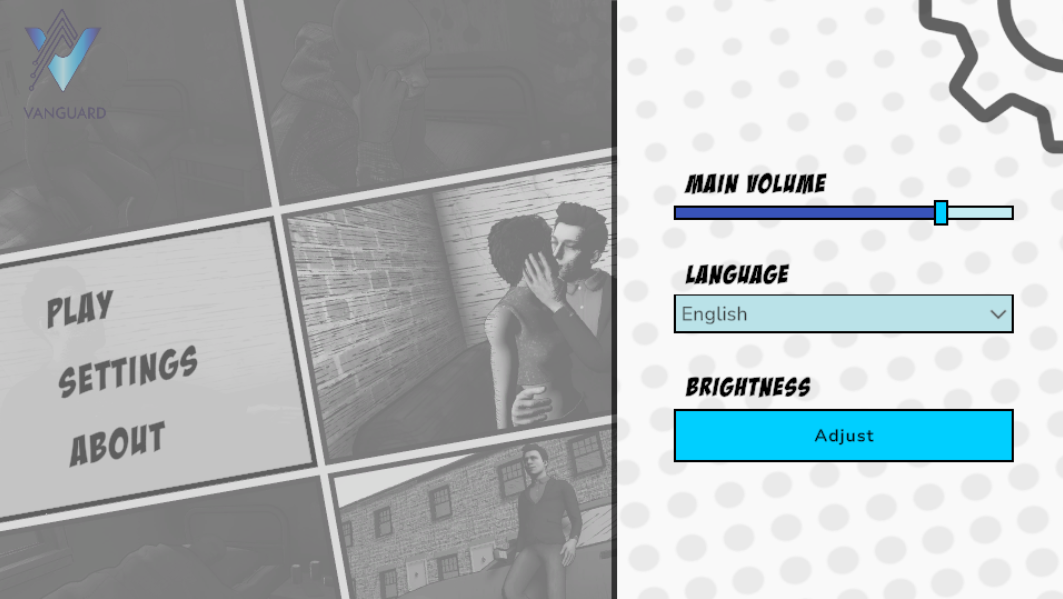
The VANGUARD project, focused on developing technological solutions against human trafficking, has launched the game ‘Red Flags’, whose development involved the Euro-Arab Foundation in the design and oversight of the content script, a key piece given that it is an interactive, role-based game built around a series of dialogue sequences.

VANGUARD is a highly innovative, interdisciplinary project running over three years, involving a total of twenty-two partners from twelve countries, and backed by €4.5 million in funding. Part of this budget has been allocated to ‘Red Flags’, a serious game that adopts an engaging format prioritizing broad, straightforward accessibility aimed at social and educational professionals as well as parents and adolescents.

The goal is to educate people about one of the most common strategies used to recruit victims: the ‘loverboy’ method and the ‘love bombing’ tactic, which use supposed romantic relationships to attract, persuade, and ultimately subdue those who end up in a situation of risk until they are sexually exploited.

A campaign against the recruitment of minors through social media

The ‘Red Flags’ campaign has been designed for social media with one of the groups at highest risk of being recruited online in mind: adolescents and minors. Using accessible language, an informal style, and a series of short videos shared on the channels that are part of this population segment’s everyday life, ‘Red Flags’ is being introduced to young people in Spanish, English, German, Italian, Portuguese, and Greek.

Categories
News Projects VIRTUOUS en

VIRTUOUS launches #PlacesOfWorship micro-learning material for religious communities campaign

The VIRTUOUS project, an EU-funded initiative bringing together 21 partners from 11 countries, has launched #PlacesOfWorshipForAll, a communication campaign developed under the lead of Euro-Arab Foundation for Higher Studies as launched #PlacesOfWorshipForAll, a communication campaign developed within the VIRTUOUS project, an EU-funded initiative bringing together 21 partners from 11 countries.

The campaign combines multidisciplinary expertise, interreligious perspectives, the operational experience of Law Enforcement Agencies, including the Police of Madrid, Murcia and Cyprus, and technological innovations in architectural security developed by Yuppies.

#PlacesOfWorshipForAll brings together 15 stakeholder perspectives in a shared commitment to enhancing the safety and peace of mind of all people of faith through interreligious solidarity and multi-agency collaboration.

The campaign features voices from three religious traditions: Islam, Judaism and Christianity (the latter including Evangelical Christianity, Greek Orthodoxy and Catholicism). The religious communities were represented by Massimo Abdellah Cozzolino, Dr Umar Al-Qadri, Rav Scialom Bahbout, Mr Lazaros Sefiha, Mr Rinalds Grants, Fr Christos A. Mitsiou, Fr Stanisław Stelmaszek and Fr Krzysztof Deja. Drawing on their experience as religious leaders and trusted community representatives, the campaign identifies key security challenges faced by places of worship and provides practical guidance to help religious communities strengthen preparedness and resilience.

Beyond prevention, #PlacesOfWorshipForAll also addresses the aftermath of security incidents, highlighting the importance of preserving the openness, accessibility and welcoming nature of places of worship while strengthening protective measures.

The videos are available for public through VIRTUOUS official social media profiles under the name Virtuous project in Facebook, LinkedIn and Instagram.

A campaign guided by security, data protection and ethics

Given the sensitive nature of the subject, the campaign has been developed following strict security, legal and ethical standards.

Within the VIRTUOUS consortium, QUINTUM SCUTUM, the organisation responsible for analysing attack methodologies, has ensured that the materials provide practical and relevant knowledge without compromising the safety of religious communities. At the same time, TECOMS has overseen compliance with data protection requirements and ethical principles throughout the development of the campaign.