Categories
EN Hatedemics News Projects

Hatedemics Workshop: Artificial Intelligence against Hate and Disinformation

The Faculty of Social Sciences at Pablo de Olavide University (UPO) hosted the workshop ‘Artificial Intelligence against hate and disinformation’ on November 19th. This training session, included in the European project Hatedemics, allowed for a practical and participatory exploration of how these phenomena operate in the digital environment and what strategies and tools can be used to detect, prevent, and combat them.

The meeting, co-organized by the Center for Andalusian Studies Foundation (CENTRA), the Euro-Arab Foundation for Higher Studies (FUNDEA), and the Maldita.es Foundation, all project members, brought together around thirty students of Sociology, Social Work, Political Science, Pedagogy, and Social Education, as well as professors and representatives from the third sector. They were all interested in delving into the risks posed by disinformation and hate speech in the digital environment and learning tools to identify and curb them.

The first part of the session, led by Vivian Rangel (Maldita Educa), focused on understanding the workings of the disinformation ecosystem: the motivations that drive it, the most frequent narratives, and the formats that make it especially persuasive. Through applied exercises, attendees learned key skills for detecting manipulated content, identifying warning signs, and applying verification strategies designed for critical information consumption.

Among the proposed tools, attendees practiced lateral reading to check the reliability of a website or a source. This exercise allows for a deeper contextualization of information online by answering these questions: Who authored the content? Is the author identifiable? Are they an expert on the subject? Is the information based on facts and data? What evidence is there? Has this information been corroborated by other reliable sources? What do those sources say?

Euro-Arab Researcher Lucía G. del Moral during her presentation

In the second part, Lucía G. del Moral (Euro-Arab Foundation) presented the progress of the Hatedemics digital platform, currently under development. This platform uses artificial intelligence to analyze hate and disinformation dynamics on social networks and offers training resources, exercises, and counter-narrative proposals with the aim of strengthening critical thinking. During the workshop, several of these functionalities were tested, especially the educational activities and pedagogical resources aimed at understanding, identifying, and counteracting online hate, and those focused on user training through the writing of specific composition exercises.

The Hatedemics Project

Hatedemics is a project funded by the European Commission (CERV-2023-CHAR-LITI-101143249) whose purpose is to combat hate speech and disinformation in the digital environment. Its main objective is to train NGOs, civil society organizations, media professionals, authorities, and young activists to effectively identify and respond to these phenomena, with special attention to their impact on the most vulnerable groups.

The project focuses on the intersection between hate speech and disinformation—two closely related issues often addressed independently—in order to promote a more comprehensive and coordinated response to these challenges.

Categories
News

Bilbao hosts European meeting on responses to hate-motivated harm and extremism

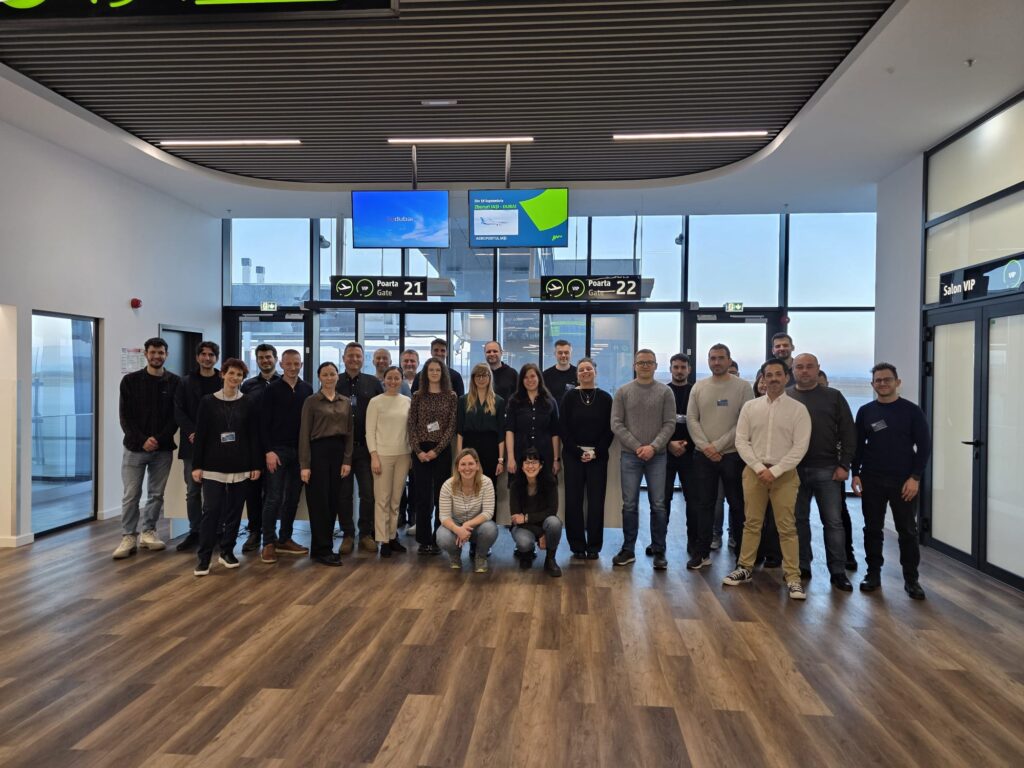
On Tuesday 8th November, a full-day European seminar in Bilbao (Spain) brought together criminal justice professionals, restorative justice practitioners, law enforcement agencies, victim support workers, and civil society organisations, to improve victim support responses to hate-motivated and extremism-related harm. The event was organised under the VicTory initiative and included participants from Spain, Portugal, Finland, Hungary, Italy, Belgium, and Northern Ireland. The objective of this seminar was to improve multi-agency cooperation in victim support, where professionals shared experiences from their own countries and worked jointly to develop practical and cross-country solutions in victim support.

Experts identified multi-agency cooperation as a key area for improvement, particularly for victims of hate crime and violent extremism. Such victims often have specific needs, experiencing the harm done to them as an attack on their perceived identity. A well-functioning multi-agency model, with clear standards and protocols, is therefore essential to prevent secondary victimisation. Moreover, hate-motivated incidents can impact not only the victim that was targeted, but the entire community in which the incident took place. Consequently, coordinated responses have a more positive impact with they also address these broader effects but also strengthens social trust and ensures that the rights and needs of victims remain at the centre.

The event, held at the Bizkaia Aretoa, University of the Basque Country, also showcased new initiatives and approaches being developed by the transnational partnership to enhance access to support, information, and safe reporting routes for victims affected by hate and extremist incidents.

The presentations opened the space for a secure and collective reflection at the state of victim support across partner countries. Speakers outlined the lessons taken from the national workshops held earlier in the project, including what victims need at the first point of contact and where services face the biggest challenges.

Strengthening Victim Support

Restorative justice was a key discussion theme, starting with a roundtable with the project’s external expert advisory board, including representatives from the European Forum for Restorative Justice, and the Spanish Judicial Network for International Cooperation (REJUE). Speakers shared examples of european restorative justice initiatives, lessons learnt, and the importance of this model for victims and perpetrators.

The Euro-Arab’s researcher, Lucía Alonso, participates in the event with a presentation on promoting multi-agency cooperation

Experts underlined that restorative justice can help victims regain a sense of control and when it may not be suitable. The conversation pointed to the complexity of implementing and applying restorative practices in contrast with the linearity of the general justice system, as a difficulty to overcome. In a question-and-answer format, participants were able to engage in this discussion, raising concerns, sharing their own country’s practices, and deepening conversations about restorative justice in the context of hate or war crimes. 

Presenting the main findings from the VicTory National Cooperation Workshops held in each partner country, the project coordinators at the Euro-Arab Foundation for Higher Studies identified national measures that could be used more widely and in other regions. The discussion also covered shortcomings in current systems, such as fragmentation of services and institutional silos, legal gaps and unclear definitions, lack of professional specialised training, and difficulty in ensuring inclusion and adequate representation.

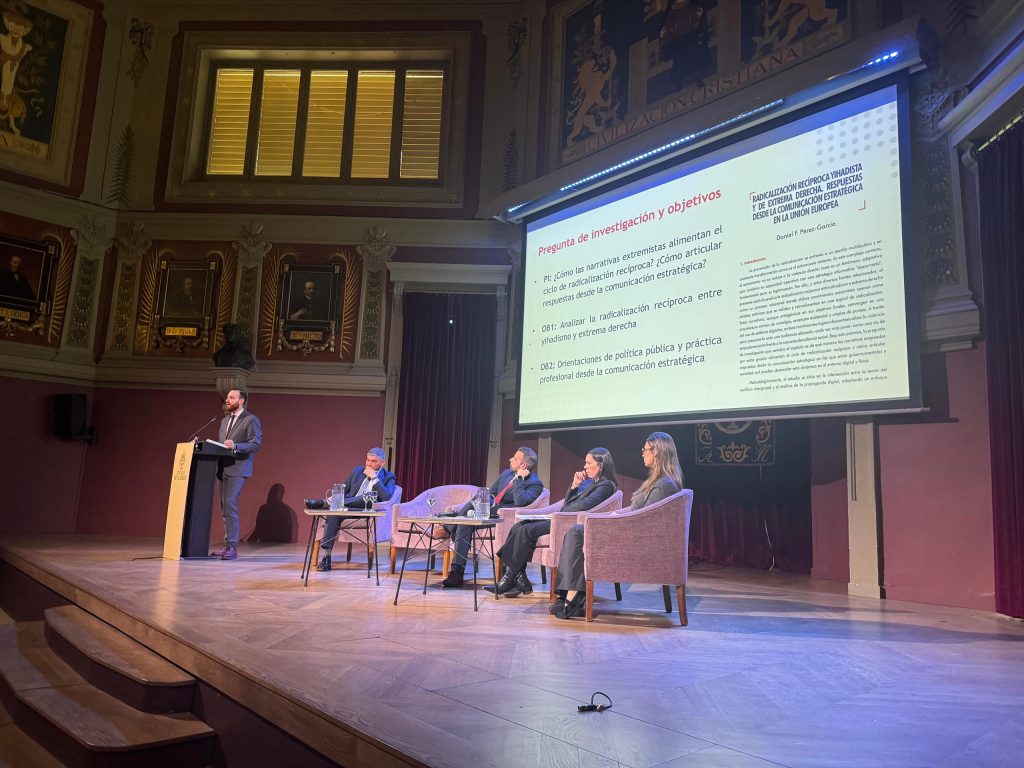
The Euro-Arab’s researcher, Daniel F. Pérez, during the opening session.

Fostering collaboration in the field of victim support was another of the central themes of the day. Involving justice services, civil society groups, and victim support services, the discussions explored how cross-sector ties can improve policy work and field assistance. Participants split into mixed-country groups to work on potential cross-border ideas. The topics included the conditions needed for smooth cooperation between agencies, first contact with victims, ways to offer support that fits their needs, and the role of justice responses. 

Another conclusion shared by different participants regarding how to work from a victim-centred approach was the importance to guarantee the informed self-determination right of victims and to build a secure space to avoid second victimization ensuring proper risk assessment and support based on radical hearing. 

These discussions will feed into VicTory’s planned resources, including the multi-agency cooperation framework due for release in 2026. The seminar also gave space to present the tools that are already available for victims and practitioners, such as the Handbook on Good Practices, the online training courses, and the Information Repository, which provides a detailed source of information for both groups.

The event closed with a call to maintain the pace of the work. Partners will continue refining these tools and preparing the upcoming ones, drawing on the feedback gathered from practitioners during the seminar.

About the VicTory Project

Despite growing concern across Europe, many victims of hate-motivated harm and violent extremism do not report these incidents, often due to fear, stigma, or mistrust in institutions. The VicTory project, a transnational initiative funded by the European Union with two of the partners, IPS_Innovative Prison Systems (Portugal) and the Euro-Arab Foundation for Higher Studies (FUNDEA, Spain), also involved in the EU Knowledge Hub on Prevention of Radicalisation, addresses this challenge by adopting a victim-centred, restorative-led approach. Its goal is to ensure victims receive the support they need and to empower them to participate actively in the recovery process.

The VicTory project – Restorative and victim-centred approach to mitigate hate and (violent) extremism – brings together partners from five countries, including organisations working in victim support, restorative justice, policing, and research, all collaborating to improve multi-agency cooperation and victims’ access to services.

Through a victim-centred approach, which puts the needs, rights, and experiences of victims first, VicTory helps professionals from governmental and non-governmental organisations apply EU legislation and victims’ rights standards effectively. Its restorative-led framework focuses on repairing harm, giving victims a voice, and fostering accountability among those involved. It is designed to prevent secondary victimisation, that is, the additional trauma victims may experience due to insensitive or inadequate responses from institutions.

The project also focuses on enhancing the skills and collaboration of practitioners, including criminal justice professionals, victim support workers, and case managers, so that victims of hate crimes and extremism-related incidents receive better support, guidance, and protection, while ensuring that legislation and best practices are applied consistently across borders.

Categories
EN Hatedemics News Projects

The Euro-Arab Foundation Addresses the Fight Against Far-Right Gender Narratives Among Youth

The Euro-Arab Foundation for Higher Studies has participated in the online seminar “Understanding and Countering Gendered Far-Right Narratives Among Youth,” held on November 18. This workshop was organized within the framework of the European project YOU-DARE (YOUth Debunking the gendered Arguments of far-Right Extremism), an initiative funded by the European Commission.

The Foundation’s participation was led by Lucía G. del Moral, a member of its Research and Projects Department. The seminar served as a key space for the exchange of knowledge and the discussion of effective strategies to address one of the most complex and growing phenomena in the European political and social landscape: the use of gender narratives by far-right movements to mobilize and radicalize young people.

The YOU-DARE project, which began in February 2025 and will run until 2028, specifically seeks to generate knowledge and develop practical tools so that policymakers, civil society, and young people themselves can counter these divisive and anti-democratic discourses, promoting values of equality and respect for human rights.

Categories
EN PARTES EN Shield News PARTES-COM EN Projects

Promoting Interreligious Dialogue in the Training of High-Ranking (Spanish) Civil Guard Officials

The Euro-Arab Foundation for Higher Studies has collaborated in the organisation of a key training session for the University Master’s Degree in Intelligence and Counter-Terrorism at the Civil Guard University Centre. Titled “Interreligious Dialogue Panel: Coexistence, Security, and Cooperation,” the session was dedicated to delving into interreligious dialogue and the challenges of democratic coexistence in a context of growing diversity in Spain.

The session, driven by the Islamic Commission of Spain (CIE) with the collaboration of the Euro-Arab Foundation, was held in person at the headquarters of the Civil Guard Orphans Association (APHGC) and is positioned as a strategic high-level space for the exchange of ideas among actors with public decision-making capacity.

A Strategic Forum for Security and Coexistence

The meeting was aimed at the Master’s students, a multidisciplinary profile that includes high-ranking Civil Guard officials, as well as professionals from the judiciary, ministries, security agencies, and penitentiary institutions. The participation of the Euro-Arab Foundation in this forum underscores its experience and institutional relevance in training management personnel on sensitive issues such as diversity management, the fight against extremism, and the promotion of social peace.

The roundtable panel featured the presence of prominent religious denominations in Spain, such as the Spanish Episcopal Conference, the Federation of Jewish Communities of Spain, and the Islamic Commission of Spain (CIE).

Reflections on Social Cohesion and Diversity

The Islamic Commission of Spain (CIE) was represented by Hicham Oulad Mhammed, a CIE member and expert in interreligious dialogue. During his intervention, he highlighted the need to address the growing social polarisation and the negative impact of hoaxes and narratives that seek the “foreignisation” (“extranjerización”) of Muslim communities in Spain, denying their deep historical roots.

Other key points of his presentation included:

  • The promotion of the positive visibility of Muslims and the importance of Islamic thought being expressed in the Spanish language, while acknowledging the new challenges this generates in the face of intolerance.
  • The recognition of the Spanish legal framework on religious freedom (Law 26/1992) as one of the most advanced, along with the need to improve its practical implementation at the local level.

Hicham Oulad Mhammed stressed that “social cohesion is not built by denying difference, but by integrating it within a framework of mutual respect and real equality,” appealing to the active role of institutions in defending constitutional values.

The Euro-Arab Foundation’s collaboration in the organisation of this event reaffirms its institutional commitment to inter-sectoral cooperation and civic education. By facilitating these high-impact meetings, it directly contributes to the strengthening of interreligious dialogue as an essential tool for democratic coexistence and the prevention of discourses that erode social peace among the State Security Forces and Corps and other key public institutions.

Categories
News Projects Rebel EN

ReBel’s Online Round Table on Integration and Sense of Belonging of Migrant Persons

The upcoming online round table titled “Policy Pathways: Enhancing Migrant Integration and Sense of Belonging in the EU” will take place on November 7, 2025. The event, held via Zoom from 15:00 to 16:30 EET and organised within the framework of the European ReBel project, will focus on inclusive policymaking to drive integration and strengthen migrants’ sense of belonging in the European Union.

This event is a unique opportunity to discover the new insights emerging from the ReBel research project “Redesigning Belonging”. This project, in which the Euro-Arab Foundation actively participates, deeply explores the barriers and resilience strategies of migrant women in Europe, with the primary goal of offering viable recommendations for significant change in integration policies and practices.

What to expect from this online meeting:

  • Key findings from Spain, Finland, and the Netherlands.
  • Expert perspectives on policies, practices, and innovation from Martijn de Waal (Amsterdam University of Applied Sciences, https://www.martijndewaal.nl/), Johannes Jauhiainen (Demos Helsinki, https://demoshelsinki.fi/), and Rowan Aly Razek (migration expert).
  • Practical tools to foster solidarity and empowerment.

Registration is open: https://laurea.zoom.us/meeting/register/UwgKpZ2zQ4GDjqmwKVPA4w

Categories
News Projects VIRTUOUS en

VIRTUOUS project Meeting in Thessaloniki, Greece 

The Euro-Arab Foundation for Higher Studies recently participated in a transnational meeting of the VIRTUOUS project, held in Thessaloniki (Greece). During this meeting, the partners of this project – funded by the European Commission’s Internal Security Fund (ISF) – reviewed progress, shared knowledge, and planned the next steps to ensure the successful implementation of this initiative on the protection of places of worship.

A press conference was also held to showcase the project’s progress to local stakeholders, demonstrating its practical contribution to community security and collaboration across sectors. The press conference emphasized the project’s strong commitment to improving community security, fostering cooperation among the actors involved, and delivering tangible results across the participating countries.

José Mª González Riera (Euro-Arab Foundation) during its intervention in the meeting

Professor Nikolaos Dimitriadis, President of the Center for Ecumenical, Apostolic, and Environmental Studies (CEMES), emphasized the symbolic and practical importance of protecting sacred spaces. “Places of worship represent not only faith but the foundation of peaceful coexistence. Thessaloniki has long been a city where Christians, Muslims, and Jews lived together harmoniously. Protecting these spaces is essential to preserving that legacy,” he stated. 

Likewise, the press conference highlighted that ensuring security in religious sites is not only about physical protection but also about strengthening resilience, fostering interfaith understanding, and maintaining public trust. A message of support from the Office of the Prime Minister of Greece further reinforced the importance of such initiatives. 

The VIRTUOUS Project continues to advocate for coordinated measures that combine faith, knowledge, and community engagement, showing that true security is built on collaboration and solidarity across religious and societal lines. 

Categories
EN Diversidad cultural EN Multiculturalidad News Projects

We Participate in the VII National Congress “Dismantling Islamophobia”

The Euro-Arab Foundation for Higher Studies reinforced its commitment to the fight against racism and discrimination by actively participating in the VII National Congress “Dismantling Islamophobia,” held on October 21 and 22 at the Faculty of Education of the University of Málaga.

The Congress, organized by the Moroccan Association for the Integration of Immigrants, brought together experts, academics, and activists to analyze the complex manifestations of Islamophobia in Spain and Europe, and to propose effective strategies for its eradication.

The Euro-Arab Foundation’s participation, part of the activities of its Research and Projects Department, featured the double intervention of its experts, Rascha Albaba and Lucía G. del Moral.

Institutional Training as a Prevention Tool

The Euro-Arab researcher, Rascha Albaba, during her intervention.

The Euro-Arab Foundation researcher, Rascha Albaba, presented her paper titled “Institutional training: preventing Islamophobia from within”, highlighting the essential work of the Euro-Arab Foundation in providing specialized training aimed at various key actors:

  • Security Forces and Bodies: for a better understanding and management of diversity.
  • Civil Society and Experts: to strengthen their intervention capabilities.
  • Institutional Actors: at the state and European level.

This training addresses crucial topics such as Islamophobia, interreligious dialogue, intercultural coexistence, and human rights.

Albaba emphasized both the activities developed within the framework of European projects and the Foundation’s own initiatives, stressing the accumulated experience of its experts and the solid institutional connections of the Euro-Arab Foundation.

Furthermore, the expert underlined the importance of human rights mechanisms as fundamental vehicles for transferring Spain’s situation regarding Islamophobia to the international sphere, using political and international dialogue as a crucial method for prevention.

The Euro-Arab researcher, Lucía G. del Moral, during her presentation.

For her part, Lucía García del Moral participated in the panel dedicated to analyzing institutional Islamophobia, with a paper titled “From Theory to Practice: European projects that transform the institutional response to Islamophobia.”

The participation of the Euro-Arab Foundation in this important national forum reaffirms its commitment to promoting the values of tolerance, diversity, and respect for human rights, and its active role in the fight against all forms of discrimination.

Categories
News Projects victory

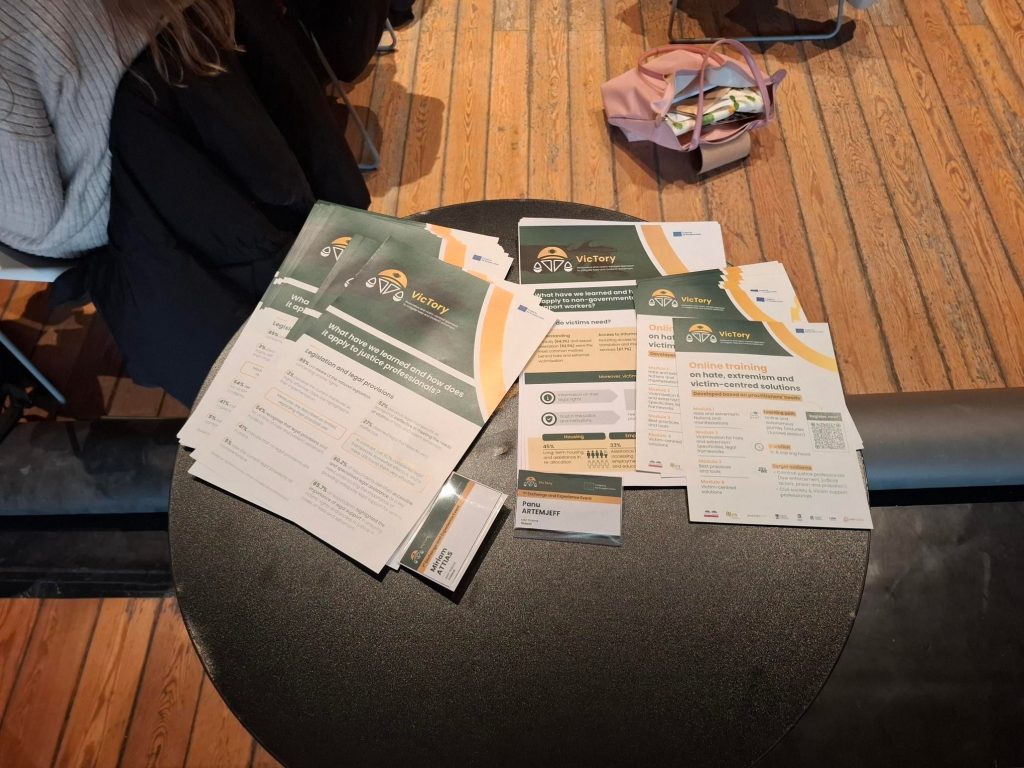
Online training on hate, extremism and victim-centred solutions

The European project VicTory Project – Restorative and victim-centred approach to mitigate hate and (violent) extremism, in which the Euro-Arab Foundation takes part as a partner, is developing two free online courses adapted to the most up-to-date knowledge and current challenges, to train professionals who support victims of hate and extremism.

The objective is to ensure that professionals working with cases of hate and extremism —including law enforcement, judicial personnel, prison and probation staff, case managers, and victim support staff— can implement a victim-centred approach, applying effective techniques and legally sound procedures aimed at restorative justice. If you reside in Italy, Finland, Hungary, Portugal, or Spain, you can register via the link! Registrations from other countries are also accepted.

Register here: https://lnkd.in/dFysTwaS

They will inform you of the course dates later.

Categories
IN2PREV-en News Projects

The Euro-Arab Foundation Presents the Ethical and Human Rights Work at the IN2PREV Project’s Final Conference

The Euro-Arab Foundation for Higher Studies participated in the IN2PREV Project’s Final Conference, held on October 1st in the Portuguese city of Porto, where 50 participants gathered to share and enhance the impact of this prevention initiative focused on promoting the successful inclusion of refugees and preventing their radicalisation.

The event took place at the Faculdade de Direito da Universidade do Porto and brought together experts and professionals from across Europe. The meeting facilitated discussions on refugee integration, public policy coordination, and ethical considerations in reception and support. The conference also included panels on hate crime, radicalisation prevention, and professional practices in social inclusion.

The Euro-Arab Foundation’s Contribution: Ethics and Human Rights

The Euro-Arab Foundation, through its researchers Lucía Alonso and Rascha Albaba, highlighted its role within the project, specifically in the areas of human rights and ethics, with the ethical and legal review of the FEVR-SES tool, which is designed to identify vulnerabilities related to radicalisation among refugees and asylum seekers in Europe, ensuring that its use respects current legislation and ethical principles.

Albaba and Alonso also discussed the work carried out with the Human Rights Based Guides, which ensure a human rights-based approach during the pilot phase of the IN2PREV project’s mentoring program, seeking to protect the dignity and rights of refugees and asylum seekers.

Key Results of the IN2PREV Project

The conference highlighted the most significant results of the IN2PREV project:

  • European Cooperation Network: A European network has been established to achieve closer cooperation between law enforcement and NGOs, and to exchange knowledge across countries.
  • FEVR-SES Tool: The FEVR-SES tool offers frontline staff a structured way to assess vulnerability to radicalisation.
  • Mentoring Program: A mentoring program provides practical guidance and stability to refugees and asylum seekers in the partner contexts of the project.
  • Training Offers: The project has also developed blended and online training offers that are already helping professionals strengthen their skills.

The day concluded with a roundtable on how these efforts are supporting frontline practice and cross-sector collaboration, showcasing first-person experiences on the impact of the IN2PREV project.

Categories
EN Hatedemics News Projects

Pilot Test of HATEDEMICS AI Tool in Coria del Río

Young people, teachers, and educators will gather next Thursday, October 23, at the Museum of Andalusian Autonomy in Coria del Río to participate in the pilot test of the HATEDEMICS project. This initiative, in which the Euro-Arab Foundation is involved, aims to develop tools to combat hate speech.


A Two-Session Day

The initiative will take place over the course of a day divided into two training sessions.

  • In the morning, from 10:00 to 13:00, the activity will be aimed at a young audience.
  • In the afternoon, from 16:30 to 19:30, the session will be specifically geared toward teachers and educators.

The event will offer attendees the opportunity to learn first-hand about the tools being developed to identify and confront hate speech in various contexts. This pilot is a key step in the implementation of the project, and its results will help refine the strategy and materials ahead of the official launch.

The Museum of Andalusian Autonomy, an emblematic site for Andalusian history and culture, thus becomes the setting for this important educational and social initiative, highlighting the importance of education and dialogue in the fight against hate.