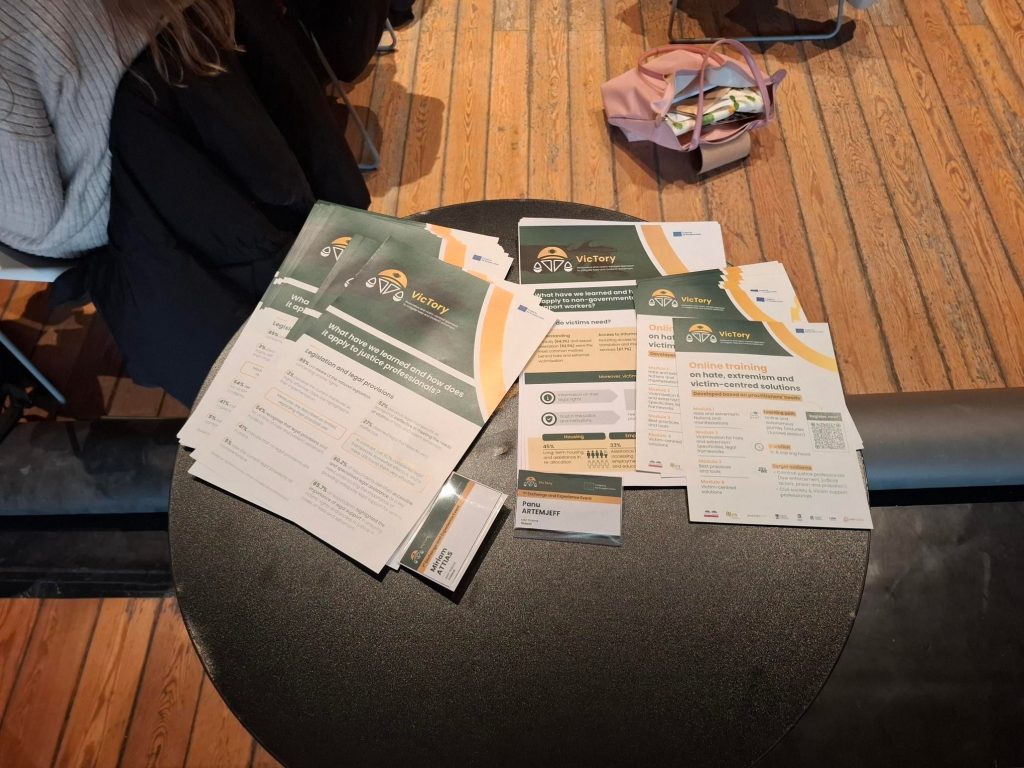
The European project VicTory has successfully concluded its first Experience and Exchange Training Event, held from February 10th to 12th, 2026. Over three intensive days, professionals from five partner countries gathered to comprehensively address the worrying rise in intolerance and its impact on victimization.
The meeting brought together a multidisciplinary group composed of victim support professionals—specifically those working with victims of hate crimes—judicial authorities, and civil society prevention experts.
Support for Victims of Hate Crimes and Violent Extremism with a Rights-Based Perspective
Throughout the three-day program, participants discussed comprehensive strategies to support victims of hate crimes and violent extremism, highlighting the importance of a person-centered approach oriented toward restorative justice.
In a joint session led by Rascha Albaba, a researcher from the Euro-Arab Foundation for Higher Studies, and the Ararteko (Ombudsman of the Basque Country), it was emphasized that victims should not be reduced solely to their status as victims: they are human beings with fundamental rights, and all support services must guarantee their dignity and safety.

The sessions emphasized the implementation of a human rights-based approach, explaining how victims’ rights are protected under international frameworks and within the European Union. Professionals were provided with existing mechanisms through which they can indirectly reinforce this protection at an international level. Additionally, practical “dos and don’ts” guidelines for victim care were provided to avoid causing further harm (secondary victimization) during the reporting and recovery processes.
The Ararteko delved into the role of key institutions in protecting victims’ rights, presenting concrete examples of restorative justice that balance the reparation of harm with the safety and well-being of those affected.
Theory and Practice in Action
The sessions combined theory and practice, including a site visit to the Rete di Dafne project in Palazzolo. There, participants observed how community networks transform vulnerability into strength by providing support, validation, and security to victims. This holistic approach demonstrated how collaboration between professionals and communities can significantly improve the protection and accompaniment of victims of hate crimes and extremist violence. The event was characterized by its human focus, allowing participants to hear real testimonies from both victims of extremism and individuals who had caused harm.
Next Steps for the VicTory Project
VicTory is an international initiative that seeks to improve responses to hate and extremism through cooperation between judicial, law enforcement, and victim support actors. With an approach based on the victim and restorative justice, it promotes a safer and more resilient Europe.
This event in Brescia marks the beginning of a series of three exchange meetings planned within the project. The participation of the Euro-Arab Foundation in these forums reinforces its position as a leader in applied research and training regarding the prevention of extremist violence and the protection of human rights—even for the most vulnerable—proving that in the face of transnational challenges, the solution must be shared and coordinated.