Categories
EN Mirad News Projects RADICALIZACION EN

Round table presentation of conclusions and recommendations of MIRAD project

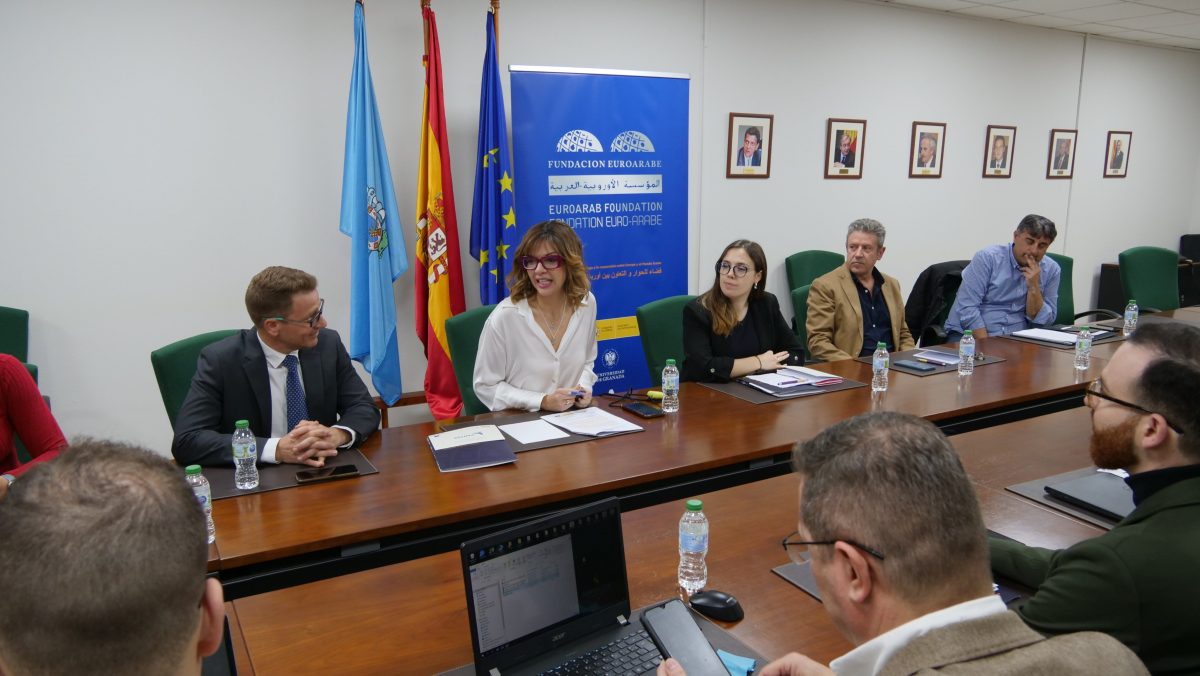
On 30 May, the Euro-Arab Foundation hosted the presentation of the conclusions and recommendations of the MIRAD project (Multi-Ideological Radicalisation Assessment towards Disengagement), a closed-door meeting attended by leading professionals in the prevention of radicalisation and disengagement, belonging to security forces, NGOs and penitentiary institutions.

The conference began with the presentation of the project and the protocols of multi-agency cooperation in de-radicalisation and disengagement work in prison, probation and community contexts. This was followed by the presentation of tools for assessing the risk of radicalisation in the aforementioned contexts, together with the presentation of the tool developed for the assessment of competences and integrity for work in coordination with NGOs.

During this meeting, the invited professionals shared their considerations on the tool and the criteria presented by the project researchers, issuing a final assessment on the identified needs of frontline practitioners.

Categories
EN Bigosint News Projects

Steering Committee Meeting of BIGOSINT project against Human Trafficking

The partners of BIGOSINT, a project dedicated to the fight against Human Trafficking through Big Data and Open Source Intelligence (OSINT) analysis, met on 22 June in Bremen, Germany, for a regular session where they updated on the progress of the different work packages and future activities.

The project, which started in January 2022 and will end in January next year, aims to improve investigations into human trafficking on the internet by analysing how the characteristics of the cyber environment affect the Human Trafficking chain. For that purpose, BIGOSINT combines technological tools such as OSINT and cryptocurrency analysis with the FAST platform to detect existing online markets and networks, collect human-rights compliant digital evidence, share information and develop enforcement countermeasures by leveraging on public-private partnership.

BIGOSINT Consortium members at the steering meeting in Bremen, Germany.

During the meeting there was a review of the project management and coordination carried out by the Public Prosecutor’s Office of Trento, coordinator of the project. Each member updated the status of the different work packages, such as the sustained service delivery led by HFÖV, the dissemination strategy, sustainability and transferability of BIGOSINT as well as the integrated FAST platform for cybercrime investigation, management and coordination, led by AGENFOR, or the work package led by the Euro-Arab Foundation, dedicated to understanding the investigation cycle of Human Trafficking. The session will end with an open debate and final conclusions.

Currently, training sessions are being jointly prepared in the framework of the BIGOSINT and UNCHAINED projects, which will take place on 11 and 12 of July in the city of Murcia, Spain, and on 19 July in Bremen, Germany, for law enforcement and judicial officers. The training consists of practical sessions where participants will be trained in the use of the technological tools OSINT and the FAST platform. In addition, a Virtual Reality immersion will be carried out to combat the chain of human trafficking in cyberspace.

After these trainings, the tools involved will be tested for 5 months by the security forces in order to implement them on a daily basis and thus improve their skills in the fight against trafficking in human beings.

For more information about BIGOSINT, visit the official website: https://www.bigosintproject.eu/
And follow the project on Twitter: https://twitter.com/bigosint

Categories
EN PARTES News Projects

The Euro-Arab Foundation participates in the PARTES project on the protection of places of worship

PARTES project (Participatory approaches to protecting places of worship) proposes a comprehensive model for the protection of places of worship (PoW) that is evidence-based, inclusive and participatory, in order to effectively combat the security threats posed to synagogues, mosques and churches in the European Union, thus also preventing hate crimes against religious communities.

The Euro-Arab Foundation is part of the consortium and leads the “Threats and Responses Landscape” work package, which coordinates research to establish an overview of attacks on religious communities, hate crimes against them and existing protection measures, as well as to identify good practices for cooperation between religious institutions and public authorities, and for the protection of places of worship.

PARTES aims to achieve the following objectives:

  • Map the specific threat landscape of involved religious communities (incl. cyber threats); 
  • Assess and derive lessons learned on vulnerabilities and existing security concepts of involved religious communities and exchange best practices on protective measures Europe-wide; 
  • Establish cooperation and communication structures and channels between religious communities and local authorities; 
  • Develop proactive and preventive security measures; 
  • Carry out trainings and workshops with religious and local authorities; 
  • Raise awareness among the wider population about the threat and strategies of extremist organisations targeting places of worship and involve them in prevention strategies. 

The methodology employed in the project is multi-disciplinary and participatory in nature, involving researchers and end-users within and beyond the consortium, and also citizens. PARTES employs a variety of methods, from desk research and interviews to live labs, workshops and dialogue forums.

The project seeks to make a significant contribution to the improvement of the overall protection of public spaces through the creation and enhancement of PoW’s preventive and security concepts by taking the threat landscape, the online dimension and pre-attack, preventive phases and measures into account, as well as by the newly established communication structures with authorities.

The motivation for this project lies in the recent trend of attacks and hate crimes, both in the digital and physical world, targeting places of worship in Europe and around the world. These attacks are symptomatic of a growing violent extremist phenomenon in Europe, fuelled by extremist rhetoric, ignorance of other religions and cultures, and insufficient societal engagement in preventing extremism.The project considers that this phenomenon needs to be addressed in a more complex way, going beyond architectural security and police presence.

PARTES is funded by the Internal Security Fund of the European Commission. The consortium involves experts of 15 institutions from 10 European countries, where the project coordinator is the Austrian Institute of International Affairs (oiip).

More information about the project on the official website: www.partes-project.eu

Categories
EN Standup News Projects

The Euro-Arab Foundation holds STAND-UP training courses at communication and journalism universities

The first phase of this training has focused on future professionals in this sector, with sessions given last week on 15 and 16 May at the Faculty of Communication Sciences of the University of Malaga (UMA) for students of Citizen Journalism and Social Networks of the Journalism Degree, and for students of Audiovisual Programming and Audience Analysis of the Audiovisual Communication Degree at the University of Granada (UGR).

The training package, developed by the Euro-Arab Foundation researchers Lucía García del Moral, José Luis Salido Medina and Daniel Pérez García, focused on three specific blocks: presentation of the results of the monitoring they have carried out in two fields, Islamophobia and extreme right-wing hate speeches, and a third block on alternative narratives as a response to hate speeches from a holistic perspective.

The Euro-Arab Foundation, a member of the STAND-UP consortium and responsible for its Communication package, has initiated this training as it understands that the media are a fundamental element in the chain of information and education of citizens because, according to the European Code of Ethics in Journalism, approved in 1993 by the Parliamentary Assembly of the Council of Europe, “the media assume an ethical responsibility towards citizens and society that is necessary to remember at the present time, when information and communication are of great importance for the development of citizens’ personalities as well as for the evolution of society and democratic life“.

One of the training sessions given at the University of Malaga

The main objective of the STAND-UP project is to improve inter-agency cooperation in the fight against hate crime through the design, development and implementation of a new inter-agency model led by public authorities. Among the different actions developed by this project, funded by the European Commission’s Directorate-General for Justice and Consumers, is the design and implementation of training for civil society organisations, law enforcement agencies, prosecutors and judges on how to report, investigate, prosecute and prevent hate crime and discrimination.

The model developed by the STAND UP project, which involves institutions from four European countries: Spain, France, Greece and Italy, includes technological tools to improve the reporting, investigation, prosecution and prevention of hate speech and hate crime, as well as the exchange of data between different agencies; an established definition of hate crime; standardised templates for reporting hate crime (for law enforcement and civil society organisations) and an inter-institutional manual for victim support.

Categories
EN Shield News Projects

SHIELD project virtual training on the protection of places of worship

The EU-funded SHIELD project is holding a virtual training on 17 May on the protection of places of worship for representatives of Christian, Jewish and Muslim communities.
The project aims at the interfaith protection of places of worship against possible terrorist attacks. This practical course taught in English will be held online behind closed doors with the project partners and attendees and will last five hours (10:00 – 15:00 CET).

This training session will involve law enforcement, security and risk detection experts and religious organizations. The objective is to train religious leaders in security and teach them how to quickly report suspicious behavior to the relevant authorities, as well as to sensitize their respective communities to the risk of a terrorist attack.

All participants will be trained on security measures, communication, cooperation and prevention. During the session, three specialized workshops will be implemented about each religious community, in order to prepare the different actors to face a possible attack taking into account their specific needs, in order to be able to adopt customized methodological, technological and procedural solutions.

SHIELD is financed by the Internal Security Fund of the European Union and is is comprised of 19 members from 10 countries (Austria, Germany, Belgium, Spain, France, Hungary, Italy, Romania, Poland and Portugal), including the Euro-Arab Foundation. The project is coordinated by the partner SYNYO GmbH from Austria.

You can find more information about SHIELD on its official website (https://shieldproject.eu)

Categories
EN Hope News Projects RADICALIZACION EN

HOPE National Dissemination Workshop on Preventing Radicalisation

On 31 May, the National Dissemination Workshop on the prevention of radicalisation will be held in Granada, at the Euro-Arab Foundation headquarters, in the framework of the HOPE project (Holistic Radicalisation Prevention Initiative), which will end at the end of this year after 3 years of implementation. In this seminar, the research work that has been carried out in each of the phases of the project, as well as the conclusions and recommendations obtained, will be discussed in depth.

The seminar will start with the presentation of the project, which focuses on the prevention of radicalisation in the Balkan countries, comprising Southern and Eastern Europe, through the creation of a support network, continuous training, and the improvement of the transition process between the prison and/or probation systems for those prisoners at risk of radicalisation or who have already been radicalised, and their integration into the community.

The introduction will be followed by a presentation of the different activities developed in HOPE, such as the state of the art analysis document, surveys and interviews with prison professionals, training modules for prison professionals, the creation of a European training and knowledge transfer centre on deradicalisation and disengagement, as well as the creation of a mentoring programme for people in prison for violent extremism.

The seminar programme will conclude with the presentation of the book “La encrucijada entre la radicalización y la desradicalización: Teorías, herramientas y aspectos aplicados” (The crossroads between radicalisation and deradicalisation: Theories, tools and applied aspects) by Josep García Coll and Roberto M. Lobato. This work, published by the Euro-Arab Foundation and Catarata publishing house, was written by its authors using the theoretical framework of the HOPE project. It will be presented through a dialogue between the author and researcher on the prevention of violent radicalisation Josep García Coll and Moussa Bourekba, senior researcher at the CIDOB (Barcelona Centre for International Affairs) whose lines of research cover the greater Mediterranean, global geopolitics and security. This meeting will be followed by a colloquium with the audience.

The seminar is open to the public with prior registration. Register at this link If you want to attend the seminar and get a certificate of attendance.

The HOPE project, in which the Euro-Arab Foundation is a partner, is made up of a consortium involving institutions from Bulgaria, Italy, Norway, Portugal, Romania, Serbia, Slovenia and Slovenia under the coordination of IPS-Innovative Prison Systems, and with funding from Iceland, Liechtenstein and Norway through the EEA-Norway Grant Fund for Regional Cooperation.

Categories
EN Standup Intercepted News Projects

The Euro-Arab Foundation strengthens its commitment against Human Trafficking with the INTERCEPTED project

The new european project INTERCEPTED held its kick-off meeting on April 27 in Trieste, Italy, where consortium partners presented the project, which aims to disrupt the digital business model of human traffickers by enhancing the capabilities of law enforcement and judicial authorities.

At the inaugural meeting the partners presented the different work packages of the project, in which the Euro-Arab Foundation is leading the Communication and Dissemination work package. The INTERCEPTED consortium is led by the Prosecutor Office of Trieste, Italy (TSJudPol) and is composed by the Hellenic Police of Greece (HP), the German Police Academy (HfÖV), the Euro-Arab Foundation of Granada, Spain, the KEMEA Center for Security Studies in Greece and the foundation Agenfor International of Italy.

To disrupt human trafficking, INTERCEPTED focuses particularly on two key points: the recruitment and advertisement that exist on the Internet and the different strategies used by traffickers, according to the diverse types of exploitation and victim profiles. In order to achieve this goal, INTERCEPTED aims to:

  1. Elicit variation in the way the internet is used along the trafficking chain according to target victims’ profiles and types of exploitation.
  2. Design an early interception tool specifically targeting the recruitment of victims and advertisement of services.
  3. Enhance the capabilities of LEAs and Judiciary in public-private cooperation through the planning of OSINT Targeted counter-THB Campaigns.
  4. Establish a common European mechanism for the detection and reporting of suspected online recruitment or advertisement material, fostering strengthened multi-agency cooperation and rapid cross-border responses and ensuring successful use of digital evidence in court.
  5. Strengthen the digital capacities and knowledge base of law enforcement.

INTERCEPTED is conceived as an evolution of the UNCHAINED and BIGOSINT projects, which share the objective of disrupting the online business of Human Trafficking, and also draws on the results and synergies obtained from the MIRROR and PERCEPTIONS projects, in which some of the partners have coincided and collaborated.

The INTERCEPTED project is co-financed by the Asylum, Migration and Integration Fund (AMIF), the Internal Security Fund (ISF) and the Border Management and Visa Instrument (BMVI) of the European Union.

Categories
EN Hope News Projects

The project HOPE holds Transnational Policy Forum and Dissemination Workshop in Albania

On 19 and 20 April, a Transnational Policy Forum and a Dissemination workshop were held in Albania within the framework of the HOPE project “Holistic Prevention of Radicalization Initiative”, a project of which the Euro-Arab Foundation is a member of the consortium along with its partners from Portugal, Norway, Italy, Bulgaria, Serbia, Slovenia, Bulgaria and Romania.

On 19 April , the Transnational Policy Forum (TPF) kicked off the day with a presentation on the approach of the HOPE project, and a talk on best practices in training and cooperation in preventing and countering violent extremism, as well as the results presentation of needs assessment conducted by the project. The first roundtable of the Forum focused on the topic of “How to coordinate CVE activities in the Western Balkans from a policy perspective”, which was followed by a panel on the tangible results of HOPE. The day concluded with a second panel discussion on “Challenges of implementation for endusers: A regional approach”.

On 20 April the Dissemination Workshop was held, divided into a panel on the main results of the HOPE project, and a round table on the “The Future of CVE Training: The Albanian
Context”. The first panel featured Josep Garcia Coll, Euro-Arab Foundation researcher, with the topic “State of the art analysis & European Survey: A regional Approach”.

After three years of implementation, HOPE is coming to an end with a focus on continuous training and knowledge sharing in the countries of the Balkans, Southern and Eastern Europe, as well as on improving the transition process between the prison and/or probation systems and the community, for those prisoners at risk of radicalization or who have been radicalized.

The HOPE project, in which the Euro-Arab Foundation participates, is led by IPS-Innovative Prison Systems, and is funded by Iceland, Liechtenstein and Norway through the EEA-Norway Grant Fund for Regional Cooperation.

Categories
EN Pave News Projects

Project clip on PAVE’s main outputs

The Horizon 2020 research project PAVE investigated the root causes and driving factors of violent extremism and radicalisation over the last three years. Now with the project drawing to a close, a brand-new animated clip has just been released. While highlighting the global issue of radicalisation, it shares the findings from the project’s intense research. The video includes short video snippets from project partners highlighting particular aspects of the research such as the role of the state and education, resilience and the collaboration between civil society, religious actors and policy makers.

Over the last three years, the consortium has greatly enjoyed the collaborative engagement on this timely project, with a diverse set of experienced and complementary partners. Despite the severe challenges posed by the COVID-19 pandemic, PAVE partners managed to build a real team spirit and collegial atmosphere across borders and regions.

Thanks to the dedication of the involved researchers, PAVE results are important milestones on the way to making the prevention of violent extremism more responsive to contextual needs, more tailored to contemporary threats and emerging radicalisation trends, and moving away from securitised approaches. Our practical tools can further contribute to building community resilience from the bottom up.

The video is available on YouTube (https://www.youtube.com/watch?v=NoMq_o2rVG8) and on the PAVE website (https://pave-project.eu), where you will find more information about the project and the results obtained.

Categories
EN Standup News Projects

The project “Stand-Up: fighting against hate crimes in the EU” is holding 4 online seminars in February

In the framework of the project “Stand-Up: fighting against hate crimes in the EU”, they are going to celebrate 4 webinars: 3 national webinars held in Greek, Italian and Spanish, developed by the partners Euroarab Foundation (FUNDEA) from Spain; Fondazione Agenfor Internacional from Italy, and the European Public Law Organization (EPLO) along with the Greek National Comission for Human Rights from Greece. In addition, a fourth webinar will also be held at an pan-european level. The topic of these seminars are about the use of technological tools to monitor hate speech, identifying hateful feelings, areas of intervention, groups at risk and hate narratives on social networks.

The main objective of these seminars is to establish a comprehensive and holistic framework in the fight against hate crimes and hate speech based on the RIPP model (complaint-investigation-prosecution-prevention) from a victim-centered approach. Within the seminars, technological tools as OSINT (Open-Source Intelligence) and FALKOR platform will be presented and the results of monitoring hate speech in every research field.

Pan-european webinar invitation

The pan-european webinar is about “Tackling and monitoring hate phenomena in Europe: right-wing extremism, islamophobia and antisemitism” and it will be held on 22 february. The seminar will be initiated by Viviana Gullo presenting STAND-UP and the preventive and investigative model to tackle the hate phenomena; Yuval Sanders and Lior Mordechai will address the technologies OSINT and Falkor supporting the model. As more, regional OSINT reports will be presented by Katerina Charokopou, Thanassis Dimopoulos, Fabio Frettoli, Lucía García del Moral and Viviana Gullo. Finally, Sergio Bianchi will raise a debate and future opportunities.

Spanish webinar invitation

As for the national online events, the Spanish webinar by FUNDEA, “Narratives and right-wing hate speech and Islamophobia in Spain”, Lucía García del Moral will present the project STAND-UP. As in the Italian seminar, it will also participate Yuval Sanders and Lior Mordechain presenting the tools for hate speech monitoring online OSINT and FALKOR. Finally, Lucía García del Moral and Jose Luis Salido will explain two case studies from Spain: “Islamophobia in social networks: the World Cup in Qatar” and “Narratives of the extreme right: monitoring 20-N and 25-N dates”. The inscription is done by this form.

Italian webinar invitation

The Italian webinar managed by AGENFOR will talk about “Contrast and tracking of hate phenomena in Italy: Veneto Front Skinheads and anti-semitic climate” and it will be on 14 february. The speakers, as the pan-european webinar, will be Viviana Gullo; Yuval Sanders and Lior Mordechain; Fabio Frettoli and Sergio Bianchi, exposing the topics mentioned in the pan-european event. The inscription is done by this form.

About the Greek seminar, EPLO together with the Greek National Comission for Human Rights will celebrate on 15 february the webinar “Confronting Hate Crimes & Hate Speech through OSINT” with Professor Vasilki Artinopoulou, scientific coordinator of the project.

Greek webinar invitation

STAND-UP has as its main objective to improve cooperation between different organizations in the fight against hate crimes through the design, development and implementation of a new inter-institutional model.

This project is financed by the General Directorate of Justice and Consumers of the European Commission and the consortium is formed by the Euro-Arab Foundation of Higher Studies (Spain), Procura della Repubblica di Trento (Italy), The prosecution office of Venice (Italy), Fondazione Agenfor International (Italy), European Public Law Organization (EPLO), Greek National Commision for Human Rights (GNCHR), Association Des Agences de la Démocratie Locale (ALDA) in France.