Categories
EN Hatedemics News

The Center for Andalusian Studies and the Euro-Arab Foundation will work to combat hate speech in a common European project

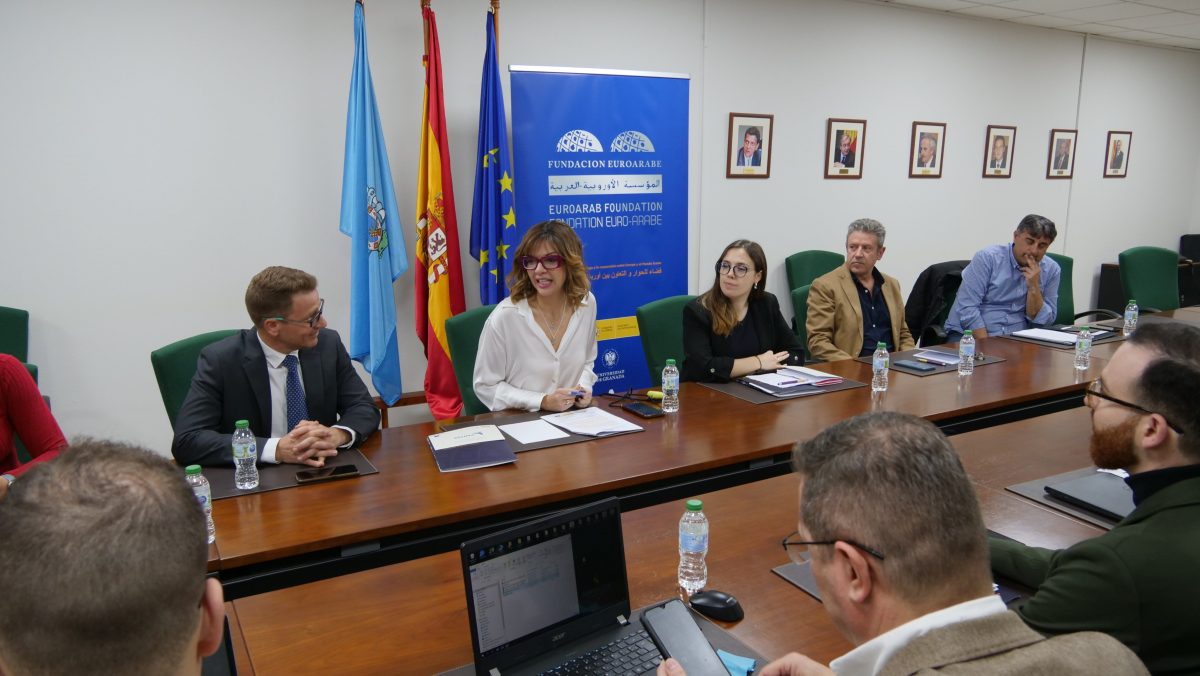
The Andalusian Studies Centre (CENTRA), based in Seville, and the Euro-Arab Foundation for Higher Studies, based in Granada, have held a meeting at the headquarters of the latter to coordinate the latest aspects of the European project HATEDEMICS, which will unite them in the task of preventing and combating polarisation and the spread of racist, xenophobic and intolerant discourses and conspiracy theories through technologies based on Artificial Intelligence (AI).

The project, funded by the European Commission, will be coordinated by the Fondazione Bruno Kessler and has thirteen partners: the Euro-Arab Foundation, CENTRA and Maldita. es in Spain; Saher Europe (Estonia), European Association for Local Democracy (France); CESIE, the Fact-Checking Factory SRL and the Commune of Trento (Italy); Solidarity and Overseas SErvice and the Ministry of Home Affairs, Security, Reforms and Equality (Malta) and the Centre for Citizenship Education, the National Research Institute and the Association of Demagogues (Poland).

The Euro-Arab Foundation will lead the work package that will define the approach, the socio-technical requirements and the methodology to be used, considering both the current trends of hate speech and disinformation, online multi-target discrimination and the needs of the target groups of this project, NGOs and CSOs, policy makers, legal authorities, IT companies, journalists and fact-checkers, the academic and research sector and the general public using the Internet and social networks.

The Andalusian Studies Centre, for its part, will be in charge of the report that will form the basis of the future HATEDEMICS Platform with which to prevent, tackle and denounce multi-target discrimination, online hate and misinformation, with updated, specific and effective indicators for better management of hate speech phenomena, applying the results of focus groups and semi-structured interviews, with recommendations for transferability and adaptability for the promotion of alternative narratives.

One of the main goals of HATEDEMICS is to improve the capacities and critical thinking of the target groups with reliable AI tools, combined with advanced data collection methods, will allow for more tailored online interventions resulting in more efficient and effective efforts of both professionals and volunteers. The vision is to maintain fairness and balance by applying appropriate measures and ensuring compliance with legal and ethical standards.

The launch of the HATEDEMICS project is scheduled to take place on 17 April in the city of Trento with a kick-off meeting attended by all partners.
Categories
EN PARTES News Projects

The Euro-Arab Foundation organises a conference in Melilla on interreligious dialogue and hate crime prevention

Participatory approaches to the protection of places of worship is the title given to the forum hosted by the Government Delegation in Melilla on Thursday, organised by the Euro-Arab Foundation for Higher Studies in the framework of the PARTES project funded by the European Commission. The Government Delegate, Sabrina Moh, opened the event by thanking Melilla for having been chosen as the venue for this forum and pointing out the importance of working for the prevention of hate crimes, inter-religious dialogue, tolerance and respect.

“We are witnessing the emergence of messages of polarisation and tension, and I think it is vital to work to prevent hate crimes, which is something that we must do together institutions and entities while focusing on this issue so that society is aware of this problem and tools are put in place to put an end to it”, Moh indicated.

On his part, the Executive Secretary of the Euro-Arab Foundation, Antonio Sánchez Ortega, recalled that the aim of the organisation he represents is to create bridges of collaboration, knowledge and research. He therefore recognised that Melilla is a “privileged” place, as it is an “estuary of civilisations and cultures which perfectly demonstrates this coexistence and this model of participation”. Sánchez stressed that the results of these conference “will feed into the PARTES project and it will serve as a model for transfer to civil society”.

The working session was also attended by the representative of the European Commission’s funding programme, Tamara Muñoz, representatives of the State Security Forces and Corps, and members of the city’s religious communities, among other civil society organisations.

The PARTES project

The European PARTES project started on 31 March 2023 and is scheduled to end in April 2025. It proposes to develop, through an empirical, inclusive and participatory methodology, a comprehensive prevention model for the protection of places of worship (synagogues, mosques, and churches) in the European Union, thus also preventing hate crimes against religious communities.

The Euro-Arab Foundation leads the “Threats and Responses Overview” Work Package which coordinates the research to establish an overview of attacks on religious communities, hate crimes against them, and existing protection measures. It identifies also good practices for cooperation between religious institutions and public authorities, for the protection of places of worship. The Euro-Arab was also in charge of organising the participatory workshop in Melilla, held on Wednesday at the UGR, and the inter-religious forum on Thursday at the headquarters of the Government Delegation in Melilla.

Euroarab researcher and organiser of the PARTES conference in Melilla, José Luis Salido, giving the participatory workshop, held at the UGR.
Euro-Arab Foundation’s researcher and organiser of the PARTES conference in Melilla, José Luis Salido, giving the participatory workshop, held at the UGR.
Inauguración del taller participativo, celebrado en la UGR, a cargo de César Solano, decano de la Facultad de Ciencias Salud (UGR), Tamara Muñoz, responsable de programa de la Dirección General de Migraciones y Asuntos de Interior de la Comisión Europea y José Luis Salido, investigador de la Fundación Euroárabe y organizador de las jornadas.
Opening of the participatory workshop, held at the UGR, by César Solano, Dean of the Faculty of Health Sciences (UGR), Tamara Muñoz, Programme Officer at the European Commission’s Directorate-General for Migration and Home Affairs, and José Luis Salido, researcher at the Euro-Arab Foundation and organiser of the conference.
Meeting of the Euro-Arab researchers, José Luis Salido and Daniel Pérez, with Fadela Mohatar, Councillor for Culture, Cultural Heritage and the Elderly of Melilla and Marta Marzol, advisor for Culture of the Council, in the framework of the PARTES project conference.
Inauguration of the forum 'Participatory approaches to the protection of places of worship' at the Government Delegation of Melilla, with the Government Delegate, Sabrina Moh, and the Executive Secretary of the Euro-Arab Foundation, Antonio Sánchez Ortega.
Opening of the forum ‘Participatory approaches to the protection of places of worship’ at the Government Delegation of Melilla, with the Government Delegate, Sabrina Moh, and the Executive Secretary of the Euro-Arab Foundation, Antonio Sánchez Ortega.
Categories
EN Standup News Projects

European hate-crime battling project STAND-UP put an end with a seminar in Brussels

Brussels, 11 January 2024.- The closure event of the European STAND-UP project, the seminar “Stand Together Against Hate: A Multi-Agency Initiative”, has taken place this Thursday in the Residence Palace, Brussels, with the intervention of experts on hate speech crime, and the handout of the Victim Support Handbook as an efficient tool to hate monitoring and reporting. The morning session also included the presentation of the EU policy recommendations on supporting multi-agency cooperation in countering hate crime, making a special mention of the use of technologies for this purpose.

The seminar presented the results of various training programmes in different countries included in the project, creating an environment for in-depth discussions and exchanges. Experts such as Menno Ettema, Magdalena Adamowicz, Nataša Vučković, Akis Karatrandos will spoke on the topic of hate speech crime.

The six European project’s partners – National Commission for Human Rights (Greece), Euro-Arab Foundation (Spain), European Public Law Organization (Greece), Agenfor International Foundation (Italy), and European Association for Local Democracy (France), under the coordination of the Public Prosecutor’s Office at the Ordinary Court of Trento (Italy) –  have shared the afternoon session’s panels on interagency cooperation to tackle hate crimes and hate speech, as well as local pilot success stories and results developed in Veneto, Athens, Andalusia and Trentino-Alto Adige.

The STAND-UP project, co-funded with 748,780.66 euros by the European Commission Directorate General for Justice and Consumers, has taken place from January 2022 and January 2024 and it has focused on public authorities and Civil Society Organizations (CSOs)’ responsibilities and relationships with victims. It has enhanced multi-agency cooperation by establishing harmonized definitions of hate crime, embedded within a blueprint framework for cooperation, and it standardizes reporting procedures through the co-design and validation of reporting forms for law enforcement agencies, and CSOs/NGOs. STAND-UP has deepened the relevant actors’ point of view of hate speech and hate crime, including the sentiments behind them on a local level.

Project’s web page.

Categories
EN PARTES News Projects

The Euro-Arab Foundation participates in the PARTES project on the protection of places of worship

PARTES project (Participatory approaches to protecting places of worship) proposes a comprehensive model for the protection of places of worship (PoW) that is evidence-based, inclusive and participatory, in order to effectively combat the security threats posed to synagogues, mosques and churches in the European Union, thus also preventing hate crimes against religious communities.

The Euro-Arab Foundation is part of the consortium and leads the “Threats and Responses Landscape” work package, which coordinates research to establish an overview of attacks on religious communities, hate crimes against them and existing protection measures, as well as to identify good practices for cooperation between religious institutions and public authorities, and for the protection of places of worship.

PARTES aims to achieve the following objectives:

  • Map the specific threat landscape of involved religious communities (incl. cyber threats); 
  • Assess and derive lessons learned on vulnerabilities and existing security concepts of involved religious communities and exchange best practices on protective measures Europe-wide; 
  • Establish cooperation and communication structures and channels between religious communities and local authorities; 
  • Develop proactive and preventive security measures; 
  • Carry out trainings and workshops with religious and local authorities; 
  • Raise awareness among the wider population about the threat and strategies of extremist organisations targeting places of worship and involve them in prevention strategies. 

The methodology employed in the project is multi-disciplinary and participatory in nature, involving researchers and end-users within and beyond the consortium, and also citizens. PARTES employs a variety of methods, from desk research and interviews to live labs, workshops and dialogue forums.

The project seeks to make a significant contribution to the improvement of the overall protection of public spaces through the creation and enhancement of PoW’s preventive and security concepts by taking the threat landscape, the online dimension and pre-attack, preventive phases and measures into account, as well as by the newly established communication structures with authorities.

The motivation for this project lies in the recent trend of attacks and hate crimes, both in the digital and physical world, targeting places of worship in Europe and around the world. These attacks are symptomatic of a growing violent extremist phenomenon in Europe, fuelled by extremist rhetoric, ignorance of other religions and cultures, and insufficient societal engagement in preventing extremism.The project considers that this phenomenon needs to be addressed in a more complex way, going beyond architectural security and police presence.

PARTES is funded by the Internal Security Fund of the European Commission. The consortium involves experts of 15 institutions from 10 European countries, where the project coordinator is the Austrian Institute of International Affairs (oiip).

More information about the project on the official website: www.partes-project.eu

Categories
EN Standup News Projects

The Euro-Arab Foundation holds STAND-UP training courses at communication and journalism universities

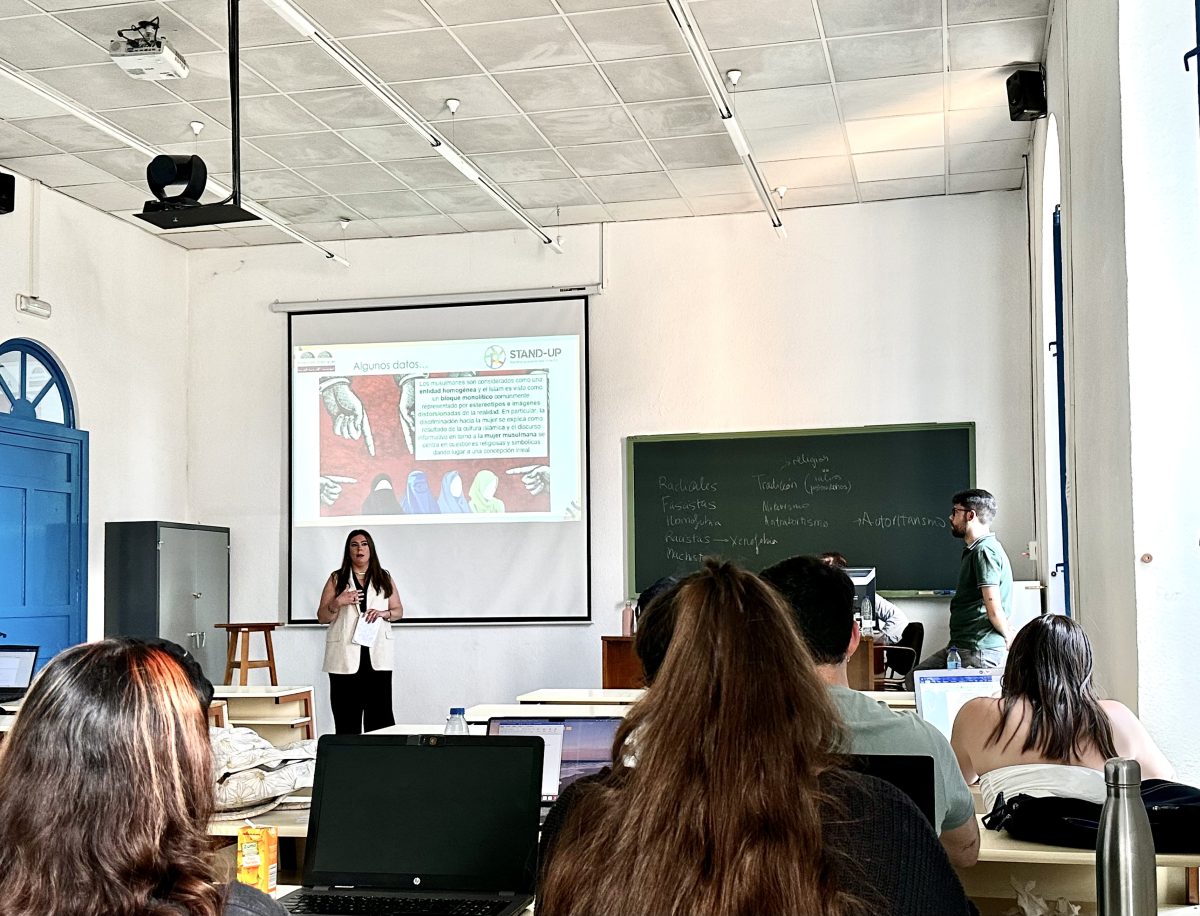
The first phase of this training has focused on future professionals in this sector, with sessions given last week on 15 and 16 May at the Faculty of Communication Sciences of the University of Malaga (UMA) for students of Citizen Journalism and Social Networks of the Journalism Degree, and for students of Audiovisual Programming and Audience Analysis of the Audiovisual Communication Degree at the University of Granada (UGR).

The training package, developed by the Euro-Arab Foundation researchers Lucía García del Moral, José Luis Salido Medina and Daniel Pérez García, focused on three specific blocks: presentation of the results of the monitoring they have carried out in two fields, Islamophobia and extreme right-wing hate speeches, and a third block on alternative narratives as a response to hate speeches from a holistic perspective.

The Euro-Arab Foundation, a member of the STAND-UP consortium and responsible for its Communication package, has initiated this training as it understands that the media are a fundamental element in the chain of information and education of citizens because, according to the European Code of Ethics in Journalism, approved in 1993 by the Parliamentary Assembly of the Council of Europe, “the media assume an ethical responsibility towards citizens and society that is necessary to remember at the present time, when information and communication are of great importance for the development of citizens’ personalities as well as for the evolution of society and democratic life“.

One of the training sessions given at the University of Malaga

The main objective of the STAND-UP project is to improve inter-agency cooperation in the fight against hate crime through the design, development and implementation of a new inter-agency model led by public authorities. Among the different actions developed by this project, funded by the European Commission’s Directorate-General for Justice and Consumers, is the design and implementation of training for civil society organisations, law enforcement agencies, prosecutors and judges on how to report, investigate, prosecute and prevent hate crime and discrimination.

The model developed by the STAND UP project, which involves institutions from four European countries: Spain, France, Greece and Italy, includes technological tools to improve the reporting, investigation, prosecution and prevention of hate speech and hate crime, as well as the exchange of data between different agencies; an established definition of hate crime; standardised templates for reporting hate crime (for law enforcement and civil society organisations) and an inter-institutional manual for victim support.