


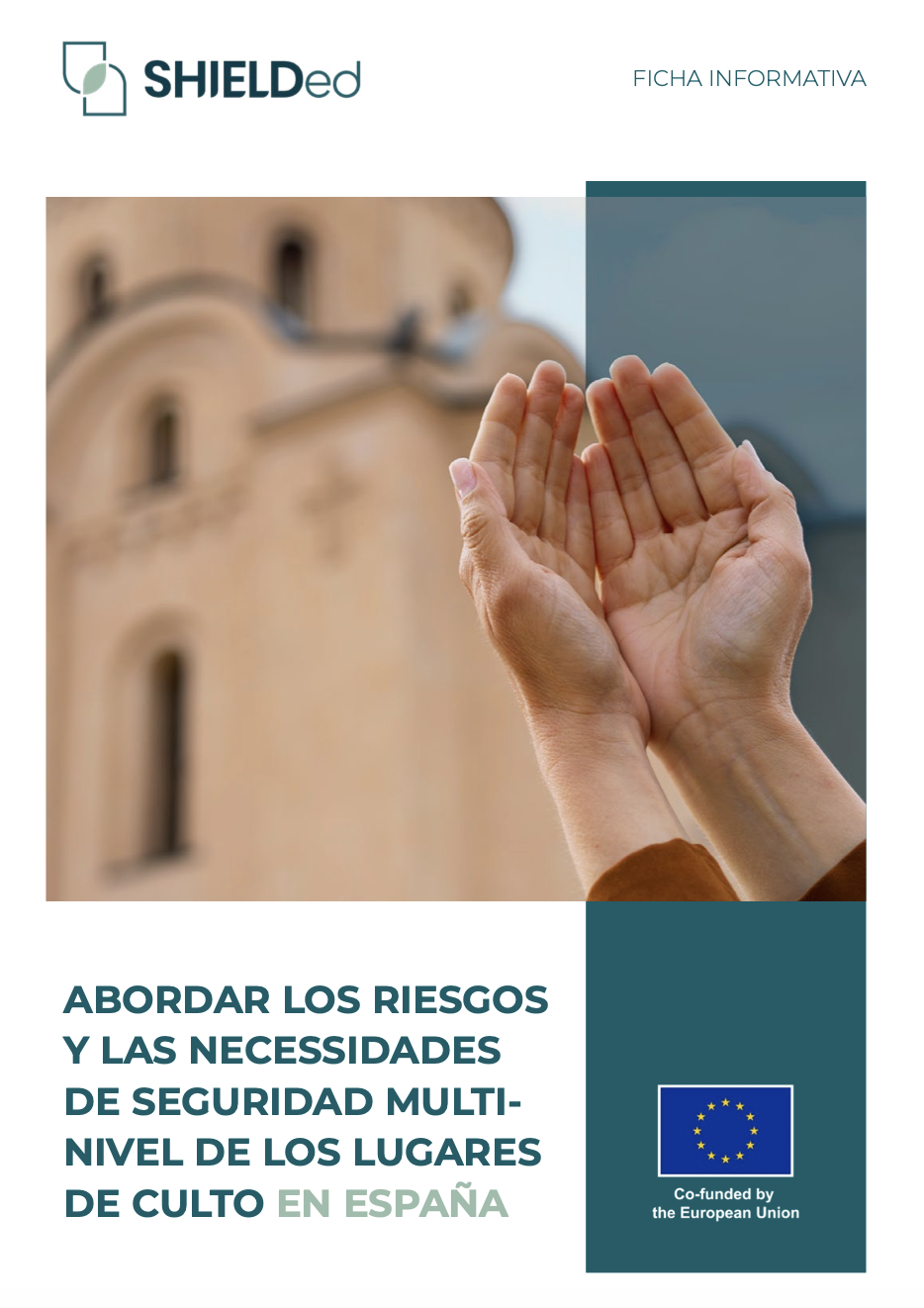
The Euro-Arab Foundation (Fundación Euroárabe), a consortium partner in the EU-funded European project SHIELDed, presents the factsheet outlining the main findings for Spain of a multi-level study on the vulnerabilities, risks and security needs of religious communities and their places of worship.
The research, conducted between March and June 2026, covers eight European countries (Austria, France, Germany, Ireland, the Netherlands, Poland, Portugal and Spain) and combines desk research, interviews, focus groups and an anonymous open call for contributions. A total of 256 stakeholders took part, 53 of them in Spain, including religious leaders, law enforcement agencies, public authorities, civil society representatives and academics.
From Physical to Digital Protection
Participants agree that protecting places of worship requires addressing not only vandalism and physical attacks, but also the growing threats posed by hate speech, disinformation and polarisation in the digital environment. Key findings include:
- Growing social polarisation: Law enforcement agencies in Spain have highlighted a 25% increase in hate crimes, identifying social polarisation as one of the main emerging risks leading to exclusion and confrontation.
- The stigma of being perceived as “foreign”: A recurring issue is the perception of certain religious communities, particularly Muslim communities, as “foreign” or outside the national fabric, despite the fact that many of their members are Spanish citizens.
- Risks of mistaken identity: A lack of religious literacy means that some groups are targeted on the basis of assumed identities. For example, the Bahá’í community is occasionally mistaken for the Muslim community and subjected to the same prejudices.
- The normalisation of hostility: Religious leaders report experiencing daily “microaggressions”, including mockery and verbal abuse, which are often normalised and consequently remain chronically underreported.
- Digital hostility: Online hate speech represents a major challenge. Social media platforms are the main channels through which narratives targeting certain communities are spread, and 65.3% of stakeholders acknowledge that their communities need greater support to protect themselves in the digital environment.
Recommendations
The factsheet recommends strengthening local and cross-sector cooperation mechanisms between religious leaders, civil society and law enforcement agencies; implementing integrated action plans that include tackling disinformation and online polarisation; promoting awareness-raising campaigns and reporting mechanisms; providing police officers and frontline personnel with training on religious diversity; encouraging interfaith and intergenerational dialogue; standardising threat assessments; and fostering proactive public communication, including statements of solidarity following incidents and the recognition and celebration of different religious festivals.
Find Out More
The Spain factsheet is available here:
For a more in-depth understanding of the findings, the full report is available here:


